

Audio By Carbonatix
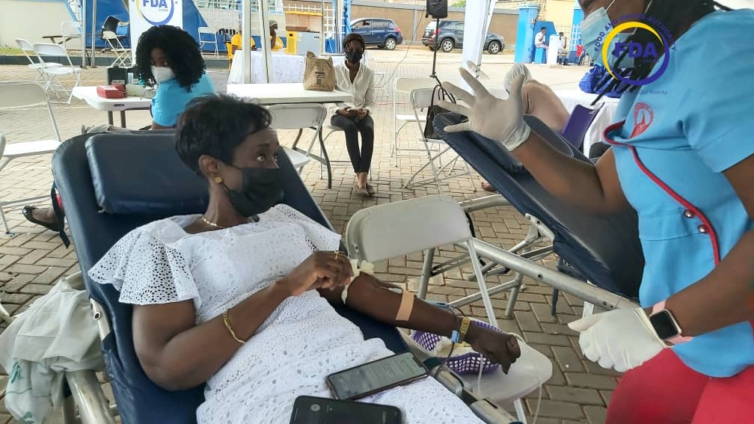
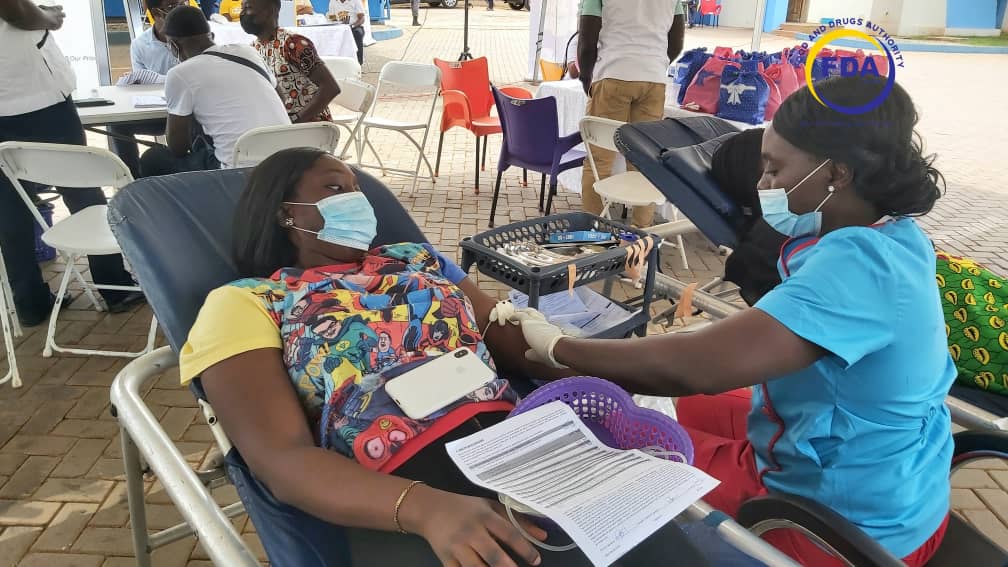
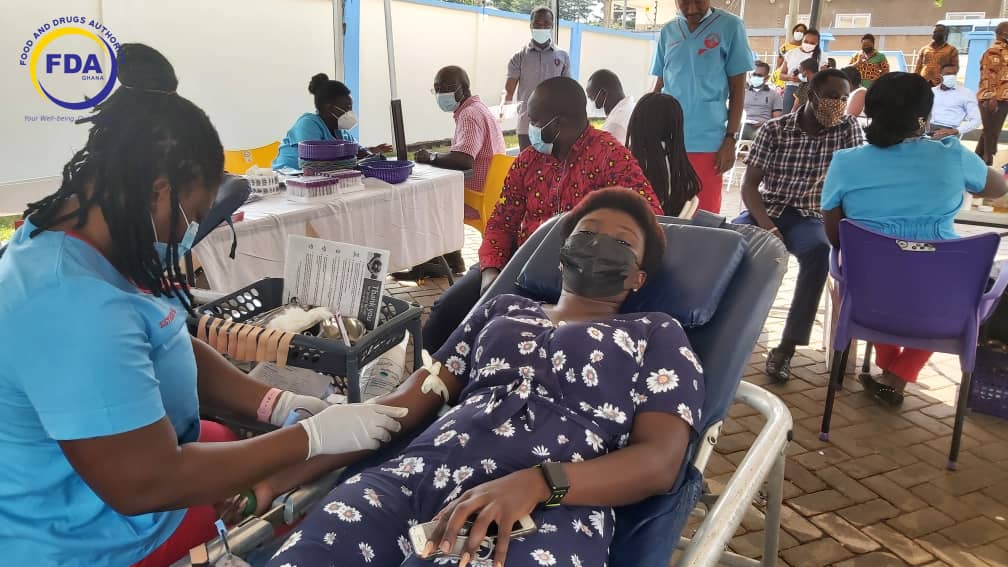
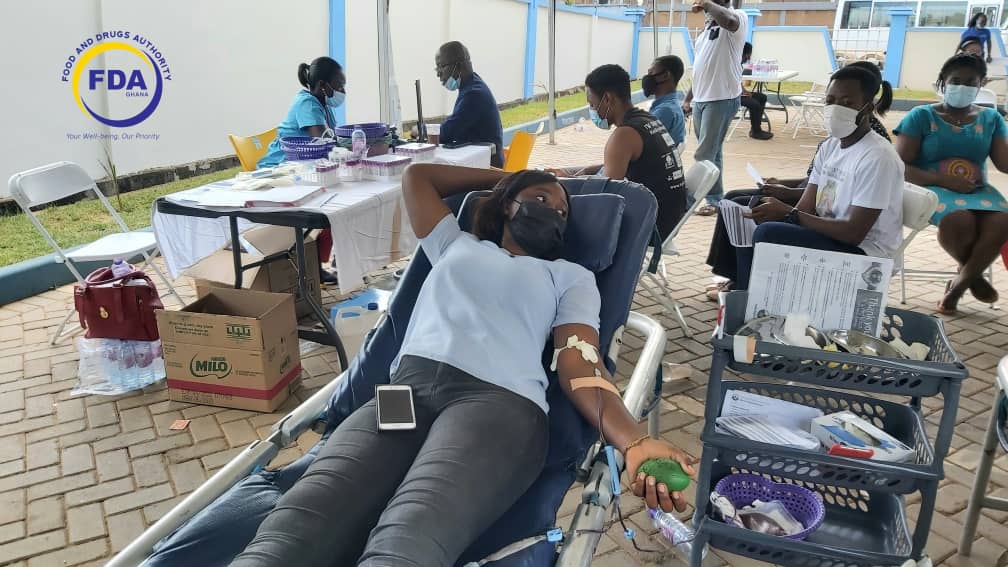
The Management and Staff of the Food and Drugs Authority (FDA) in collaboration with the National Blood Donors Association, Ghana (NABDAG) on Friday, embarked on a Voluntary National Blood Donation exercise.
It was under the theme, ‘Donate blood, Save a life’ to shore up blood at the National Blood Bank as part of its Corporate Social Responsibility.
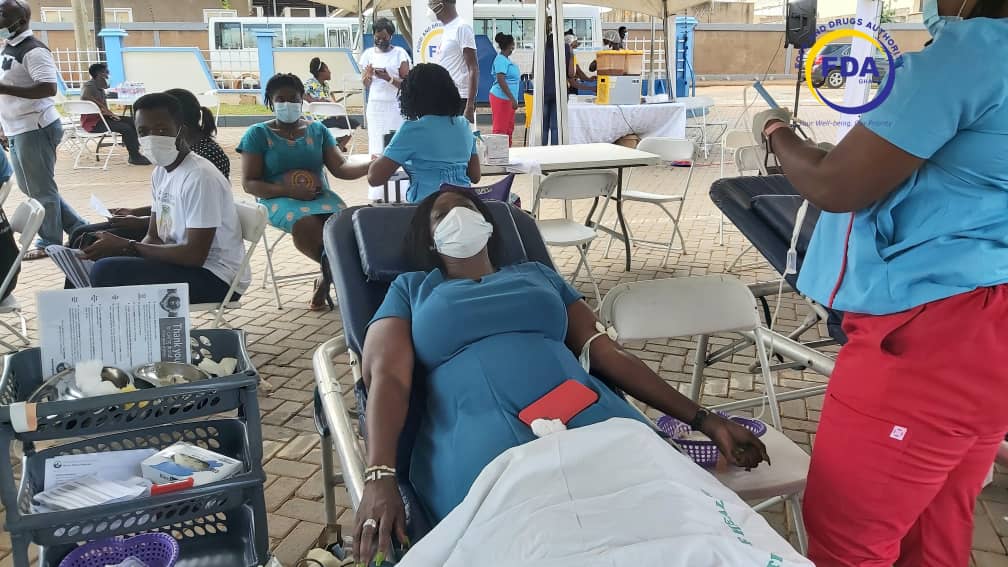
The CEO of the FDA, Delese Darko in a speech read on her behalf by Seth Seaneke, Deputy CEO in Charge of Health Products and Technology, said the Authority has since 2016 organised an annual blood donation exercise to stock the blood bank.
The exercise was being replicated in all the FDA regional offices in collaboration with the regional hospitals.
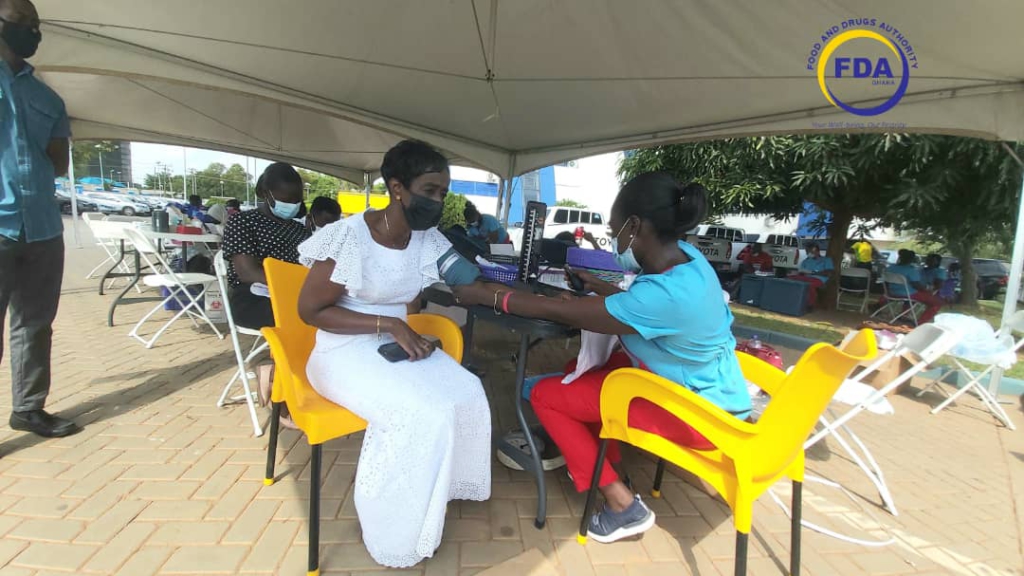
She underscored the importance of blood and the need for all to join hands to volunteer to donate blood for the blood bank which is always in need.
She said the FDA has since 2016 donated 1000 pints of blood and was looking forward to adding another 1000 pints with this voluntary national blood donation exercise.
According to the CEO, the World Health Organization (WHO) considers blood under the definition of a drug and has established, principles and guidelines as well as regulatory requirements to be followed to ensure the quality and safety of blood and blood products to meet the clinical needs of patients.
The CEO said the FDA has been regulating blood and blood products as an essential biological medicinal product since 2015 using specific guidelines provided for in the Public Health Act, Act 851 of 2012.
The FDA has conducted extensive regulatory inspections of over 80 facilities nationwide leading to the licensing of seven blood banks in the Greater Accra and Ashanti Regions.
She explained that blood regulation was necessary as blood from donors goes through a procedure before it is administered to the recipient and for that matter that procedure must be regulated to guarantee safety and quality of the blood.
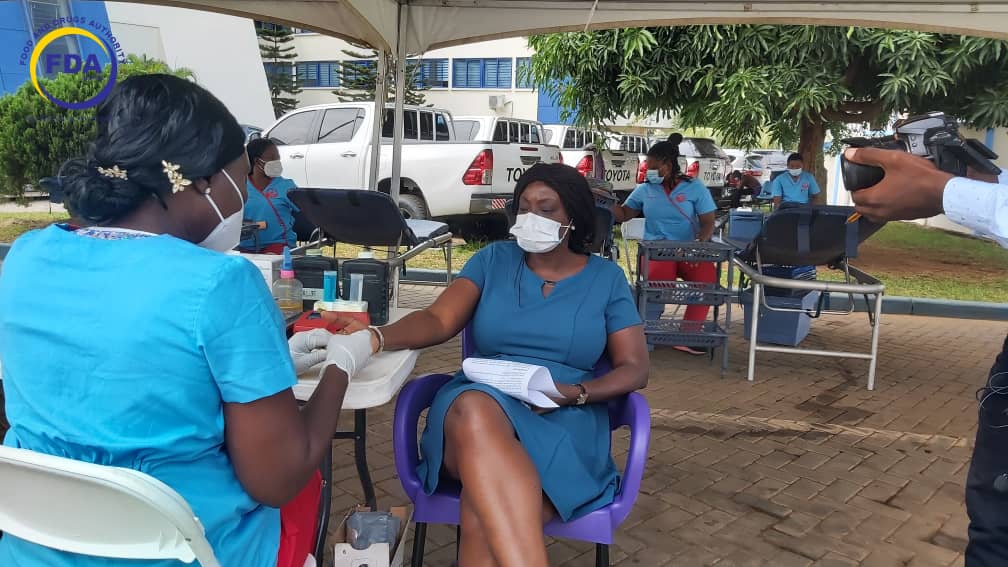
Marcella Ababio, a nurse with the National Blood Service assured donors that they will be counselled and screened before their blood will be taken.
She further assured the general public that the donated blood will also be screened for other diseases like hepatitis and HIV Aids before transfusion to another person.
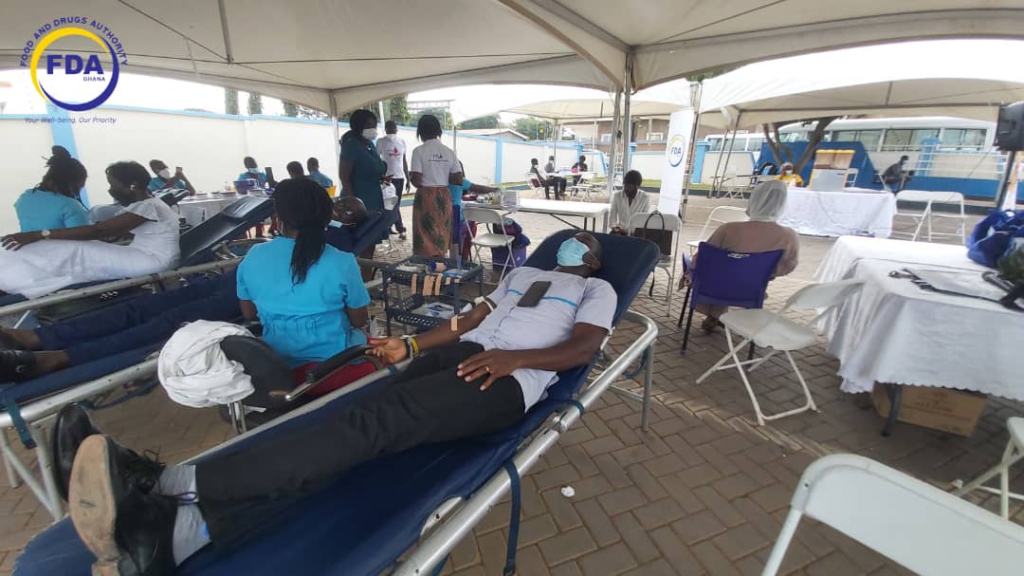
Edward Bannor of the National Blood Donor Association, Ghana (NABDAG) urged the public to disregard the myths about blood donation.
Highlighting on some benefits of blood donation, he stated that he had donated 83 times since 1976, the highest blood donor in Ghana and has only stopped donating because he was over 60 years, but he had never taken ill.
He urged the general public to donate to stock up the blood bank to help during emergencies.
Latest Stories
-
Church of Pentecost supports over 2,000 BECE candidates in Obuasi with career guidance seminar
41 minutes -
Brandon Asante and Coventry all but promoted to Premier League despite Sheffield Wednesday draw
1 hour -
GPL 2025/26: Late Kwartemaa strike downs Hearts in Tema
1 hour -
Ghana Faces Sierra Leone Moment as Prosecutorial Powers come under strain
1 hour -
Don’t consume fish or seafood from Tema Shipyard until further notice – FDA warns
1 hour -
Why volunteering might be Africa’s most underrated career accelerator
1 hour -
ActionAid Ghana raises concern over gender gaps in Feed Ghana Programme
2 hours -
Windstorm wreaks havoc in Gushegu, displacing nearly 2,000 residents and damaging schools
2 hours -
Friends of Bridget Bonnie Marks her 35th birthday with donation to Kasseh Model Health Centre
2 hours -
From Ekumfi Kokodo to the Pulpit Stage: Essi Donkor’s gospel journey takes shape
3 hours -
Landfilling waste management creates no value, it’s an economic waste
3 hours -
Photos: Speaker Bagbin Commissions MPs constituency office under parliamentary decentralisation programme
3 hours -
Black Stars technical advisor Winfried Schäfer sacked as GFA shakes up backroom staff
3 hours -
Wenchi water project almost complete, critical to gov’t agenda – GWL MD
3 hours -
Anti-LGBTQ+ bill not part of government’s legislative agenda – Inusah Fuseini
3 hours