

Audio By Carbonatix
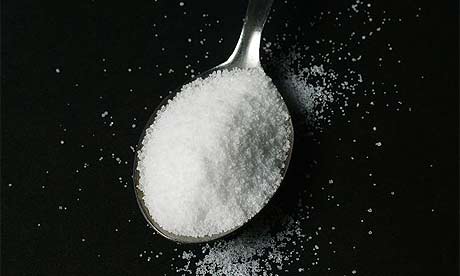
The Food and Drugs Authority (FDA) says it would soon clamp down on non-iodised salt products on the markets to curb the occurrence of iodine deficiency disorders.
The Authority stressed that producers found culpable would be made to face the law for flouting the regulation.
Salt is a core ingredient in almost every meal and holds essential nutrients for the development and survival of the human body.
However, it has been identified that most local salts on the market do not have the required iodine content, therefore, putting consumers at risk.
Consuming non-iodised salt products could lead to iodine deficiency disorders such as goitre, infertility, growth delays, and intellectual disability among others.
To ensure public safety, the Food and Drugs Authority with support from the United Nations International Children's Emergency Fund is sensitizing artisanal salt producers on the need to add iodine to their products.
The Director of the Food Safety and Consumer Education Directorate at FDA, Faustina Atupra, said the initiative would see the beneficiaries enlightened on the need to produce salt in a hygienic environment, add iodine to their products, and ensure their products meet the specified standard.
She said that the Public Health Act mandates that salt produced for the Ghanaian market should be iodized before consumed to ensure the safety of the citizenry.

“It is to ensure that the salt is iodized to a level that is 50 bpm according to the Ghana standard at the factory level to ensure that people who consume the salt will have enough iodine to improve the nutritional status of Ghanaians”, she explained.
She said her outfit would crack the whip after giving producers ample time to adjust and comply with the regulation.
“With iodisation what we do is that we do market surveillance activities, we pick [salt] from the production side, we pick through transportation, we pick at the market and then we check the iodine content of it.
"If we realise that you are not iodising it, regulation sanctions would be meted against you. We can trace from the market to the source and also at the factories or mining cities”, she stressed.

Participants, who are artisanal salt producers in the Keta enclave lauded the FDA on the enlightenment and promised to abide by the regulations to ensure public safety.
Latest Stories
-
I assure Otumfuo, Mahama will join him to commission KNUST Teaching Hospital by end of this year – Haruna Iddrisu
40 minutes -
Gov’t to roll out free special education for persons with disabilities from July 1 – Education Minister
1 hour -
“We used it to test our officiating officials’ readiness” – Bawah Fuseini after CAA Athletics event
1 hour -
Volleyball emerges as Ghana’s fastest rising sport
2 hours -
National Sports Fund needs strong leadership from the top – Administrator David Wuaku
2 hours -
JoySports Exclusive: Steve McLaren in talks with GFA after expressing interest in Black Stars job
2 hours -
Fire guts auto parts warehouse at Bubuashie, one fire officer injured
2 hours -
I owe my victory to coach Ofori Asare – Allotey after winning WBA Africa Gold Super Flyweight belt
2 hours -
Church of Pentecost supports over 2,000 BECE candidates in Obuasi with career guidance seminar
4 hours -
Brandon Asante and Coventry all but promoted to Premier League despite Sheffield Wednesday draw
4 hours -
GPL 2025/26: Late Kwartemaa strike downs Hearts in Tema
4 hours -
Ghana Faces Sierra Leone Moment as Prosecutorial Powers come under strain
4 hours -
Don’t consume fish or seafood from Tema Shipyard until further notice – FDA warns
4 hours -
Why volunteering might be Africa’s most underrated career accelerator
5 hours -
ActionAid Ghana raises concern over gender gaps in Feed Ghana Programme
5 hours