

Audio By Carbonatix
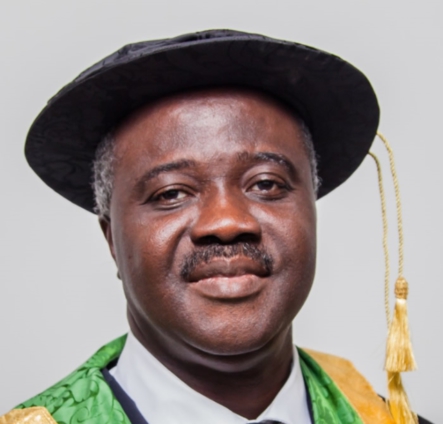
The Vice Chancellor of the University of Health and Allied Sciences (UHAS), Dr. John Owusu Gyapong, has noted that government’s policy to wean public tertiary institutions off the state coffers would inevitably lead to fee hikes.
The fee hikes, he explains, would aid the universities fill the gap that would be created from the lack of government support.
Speaking on JoyNews’ PM Express, he explained that the current system where fees are capped by Parliament has left public universities handicapped and unable to run efficiently and effectively.
This he says has not only affected the quality of education being offered at the universities but consequently the quality of students these universities churn out year-after-year.
“I think my colleague, Samuel, has indicated clearly that this would lead to a hike in fees and charges. Because as we speak now our current approved fees and charges…I mean to get our fees approved we have to present it to Parliament. The last approval that I recall was in 2016. And every time we send it, we have challenges; it never gets passed to say the least.
“So we are still applying 2016/2017 academic year fees in 2022. And of course if you talk about the value of the cedi and all that it means that the value of the resource coming to the universities has basically dwindled, and it’s a big struggle to run public universities on this day and era.
“So if weaning means taking away the breast milk, then a ‘weanimix’ must be introduced which will invariably be in the form of the fees not being capped as is currently being done,” he said.
Meanwhile, the Vice Chancellor has advocated for a good student loan system to enable the underprivileged access funds to support their education.
Drawing inspiration from the British school funding system, he noted that students who get into universities on student loans could then have a long period of time after school to pay back the loan.
“The concept is that if you get a good tertiary education, you’re likely to find a good job and should be able to pay over a period of time. So we are not talking about a loan that you pay over 3 or 4 years, these loans are paid almost over a lifetime.
“So in that instance, it doesn’t become a very heavy burden on the student who is receiving the loan, but it also gives the space to government and the universities to be able to do what it is that they have to do,” he stated.
Latest Stories
-
‘We’re days away from parts of the world experiencing actual shortages:’ Eric Nuttall on energy
2 minutes -
‘I’m Obroni in every country’ – Coco Blasian on music, survival and making Accra home
3 minutes -
IMANI wants NIC to probe possible conflicts of interest in reinsurance arrangements
15 minutes -
First Atlantic Bank strengthens balance sheet as net interest income surges 67%
19 minutes -
Choplife Gaming donates to Korle Bu Radiotherapy unit for Women’s Week 2026
21 minutes -
Would President Mahama have reduced cocoa prices if this were an election year ? – Annoh Dompreh asks
24 minutes -
Climate change, pollution and overfishing push White Volta fishermen to the brink
24 minutes -
IMANI demands review of SIGA directive steering SOEs toward SIC placements
30 minutes -
Climate change and pollution threaten livelihoods of White Volta fishermen
37 minutes -
First Atlantic Bank targets regional growth and digital expansion in 2026
41 minutes -
Bond market: Turnover surges 559.42% to GH¢2.49bn
44 minutes -
Dagomba line residents begin rebuilding after Easter Monday inferno
45 minutes -
ECG substation upgrade exercise: parts of Accra to experience power outages
49 minutes -
IMANI petitions Mahama over alleged procurement breaches in state insurance placements
54 minutes -
First Atlantic Bank posts strong 2025 results as profit surges 30.5%
57 minutes