

Audio By Carbonatix
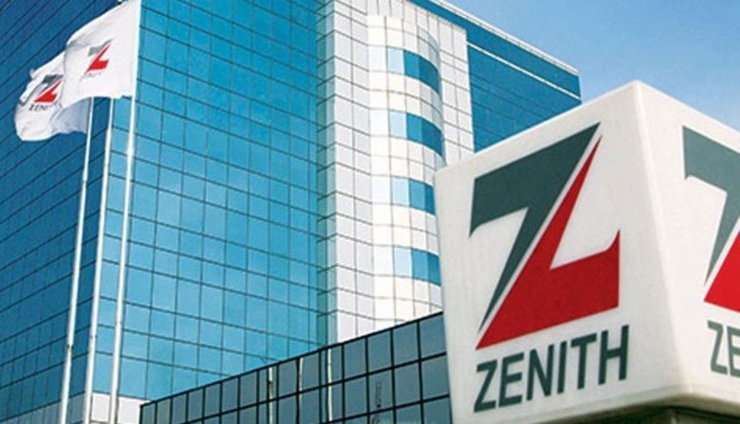
Fitch Ratings has affirmed Zenith Bank Plc's Long-Term Issuer Default Rating (IDR) at 'B-' with a Stable Outlook.
It also affirmed the bank's National Long-Term Rating at 'AA-' and assigned a Stable Outlook.
According to Fitch, Zenith Bank's National Long-Term Rating is one of the highest among Nigerian banks, reflecting its strong franchise and financial profile.
It said the IDRs are driven by its standalone creditworthiness, as expressed by its 'b-' Viability Rating (VR). The VR is constrained by Nigeria's Long-Term IDRs of 'B-' due to the bank's high sovereign exposure relative to capital and the concentration of its operations in Nigeria.
Strong franchise
Furthermore, Fitch, said Zenith Bank is Nigeria's second-largest banking group, representing 13.5% of domestic banking-system assets at end-2022.
The bank, it explained, had a strong corporate-banking franchise and a retail-focused strategy that leverages its digital channel, adding, revenue diversification is strong, with non-interest income representing 50% of operating income in 2022.
High sovereign exposure
Again, it said the single-borrower credit concentration of the bank is moderate, with the 20-largest customer loans representing 26% of gross loans and 79% of Fitch Core Capital (FCC) at end-2022.
Oil and gas exposure (23% of gross loans at end-2022) is material but lower than other domestic systemically important banks'.
It however mentioned that strong loan growth (on average 20% annually during 2019-2022) may lead to asset-quality weakening as the loan book seasons.
Strong Profitability
It stated that Zenith Bank delivered strong profitability, as indicated by operating returns on risk-weighted assets (RWAs) averaging 5.1% over the past four years.
Strong profitability was supported by a wide net interest margin (NIM), strong non-interest income and moderate loan impairment charges.
But profitability declined in 2022 due to a weaker NIM and losses stemming from Ghana's default.
Strong capitalization
Fitch said Zenith Bank's regulatory capital ratios have comfortable buffers above impending Basel III requirements.
It added that the bank’s capitalization would be resilient to a material naira devaluation.
Challenging operating environment
It noted that bankscontinue to contend with US dollar shortages and the Central Bank of Nigeria's (CBN) highly burdensome cash reserve requirement.
It therefore expects reform progress under the new administration, including elimination of fuel subsidies and gradual liberalization of the naira.
However, there is a risk of a sharp depreciation due to the large disparity between the official and parallel exchange rates.
Latest Stories
-
Finance Ministry defends Publican AI rollout amid stakeholder concerns
2 minutes -
Police arrest 5 in Asankrangwa robbery; cash and guns retrieved
3 minutes -
Why I joined NPP – Jeneral Ntatia
4 minutes -
Three UDS students remanded over alleged armed robbery
8 minutes -
Kudus Mohammed at risk of missing World Cup 2026 after fresh injury blow
11 minutes -
Minority urges cocoa farmers to resist pressure from galamseyers
11 minutes -
President Mahama applauds astronaut Christina Koch’s Ghana ties in Artemis II mission
13 minutes -
Ex-wife of Richard Nii Armah Quaye moves to Court of Appeal
14 minutes -
Insecurity: US orders non-emergency staff to leave embassy in Nigeria
15 minutes -
ASFC 2026: Ghana U15 girls set up Burkina Faso final after win over Zambia
19 minutes -
The passport question: Why Ghana must let its best abroad come home to serve
30 minutes -
We will be losing twice if these commodities expire at the port – CSOs Coordinator warns
38 minutes -
Setting up national champions to fail: the case of Ibrahim Mahama and E&P
39 minutes -
Rwanda’s capital embraces urban farming as development squeezes rare land
41 minutes -
Argentina passes bill loosening protection of its glaciers
41 minutes