

Audio By Carbonatix
The World Bank has urged Ghana to urgently address structural challenges in its energy and cocoa sectors as part of a broader push to safeguard the country’s economic stability and growth prospects.
In its 9th Economic Update for Ghana titled Addressing Labour Market Challenges and Opportunities in Ghana’s Economic Landscape, the Bank warned that fiscal risks from poorly managed state-owned enterprises and revenue shortfalls in key export sectors could undermine the country’s recent gains.
“Energy sector reform, including through private sector participation, is urgent to improve management effectiveness and the collection of energy revenues,” said Robert Taliercio, World Bank Division Director for Ghana, Liberia and Sierra Leone.
“These reforms are needed to restore macro-financial stability to support economic transformation and sustainable growth for jobs.”
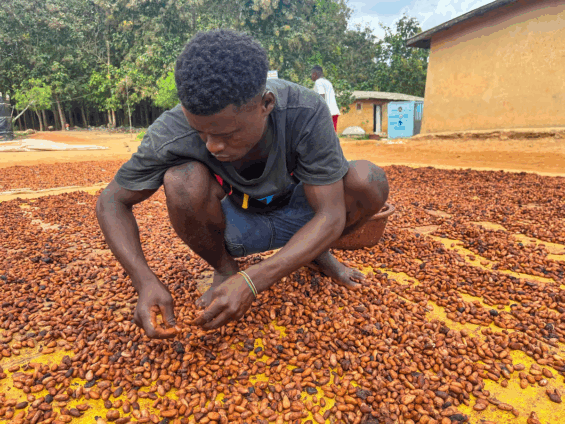
The report also pointed to the cocoa sector as a critical pillar for economic stability. Fluctuations in global prices, productivity gaps, and climate-related threats, it noted, could expose the economy to shocks unless urgent steps are taken to improve efficiency and resilience in the value chain.
Ghana’s economy grew by 5.7% in 2024, with a further 5.3% recorded in the first quarter of 2025, backed by strong trade performance, declining inflation, and robust reserve accumulation.
However, fiscal pressures in 2024 eroded earlier stabilisation gains, while high interest rates, persistent inflation, and external uncertainties are expected to slow growth to 3.9% in 2025 before rebounding to 5% in the medium term.
The Bank stressed that long-term stability will depend on “entrenching fiscal discipline, strengthening public financial management, and carefully managing inflation and exchange rate volatility.”
It added that improving the business environment, closing infrastructure gaps, and accelerating digital and climate adaptation measures are key to positioning Ghana for sustained, private-led growth.
The report further underscored the need for comprehensive strategies to create jobs, particularly for the country’s growing youth population, while improving productivity in sectors such as agriculture, manufacturing, and services.
“Ghana’s success will depend on maintaining reform momentum and steadfast implementation,” Taliercio said.
“Addressing the challenges in energy and cocoa will not only protect the economy but also unlock new opportunities for growth and job creation.”
Latest Stories
-
A source of excellence across generations – Vice President Opoku-Agyemang lauds Mfantsipim
1 hour -
(Photos) Mfantsipim School launches historic 150th anniversary
2 hours -
Knights and Ladies of Marshall group backs Catholic Bishops’ stance on anti-LGBTQ+
3 hours -
Bright Simons writes: All the Filla in the Ibrahim Mahama/E&P – Gold Fields Saga
3 hours -
Monetise Idiocy In Ghana
3 hours -
ECG kicks off Phase Two of transformer upgrades at Lashibi; brief outages expected
4 hours -
The Ghanaian prophet and the mysterious death of his scottish wife Charmain Speirs
4 hours -
Nearly 400 sentenced in Nigeria for links to militant Islamists
4 hours -
Ghana’s recovery supported by gold strength despite global oil price pressures – Standard Bank Research
4 hours -
Methodist Church hails Mfantsipim@150; calls for “fresh consecration” to excellence
5 hours -
‘Excellence is our inheritance’ – Nana Sam Brew-Butler hails Mfantsipim’s 150-year reign in leadership
5 hours -
Kwaku Azar writes: A-G vs OSP
5 hours -
Mfantsipim–Adisadel rivalry built excellence, not division – Sam Jonah
5 hours -
Vice President launches Mfantsipim’s 150 years of shaping Ghana’s greatest mind
6 hours -
I assure Otumfuo, Mahama will join him to commission KNUST Teaching Hospital by end of this year – Haruna Iddrisu
6 hours