

Audio By Carbonatix
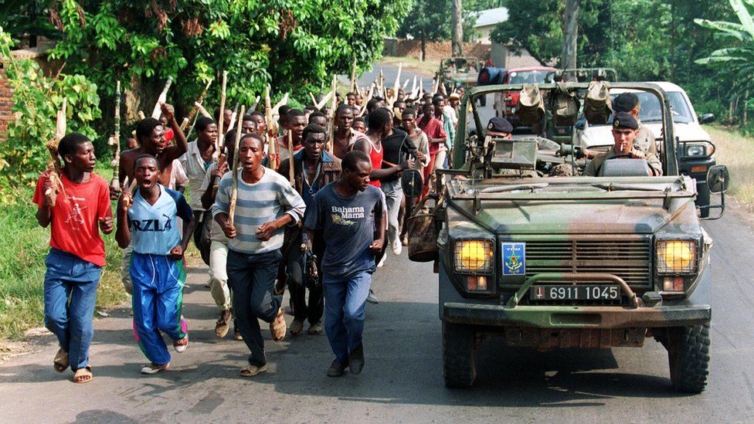
France bears "heavy and overwhelming responsibilities" over the 1994 Rwanda genocide, a report by French historians says, but they found no evidence of French complicity.
The expert commission presented the report to French President Emmanuel Macron. The report said France had been "blind" to genocide preparations.
At least 800,000 people died when ethnic Hutu extremists massacred minority Tutsis and moderate Hutus.
The team studied French official files.
Rwanda, which has long accused France of complicity, said it welcomed the report.
The government said it "represents an important step toward a common understanding of France's role in the genocide against the Tutsi".
A Hutu elite ruled Rwanda when the genocide took place, in April-June 1994, but they were later ousted by the Tutsi-led Rwandan Patriotic Front (RPF) under Paul Kagame, who is now president.
The report blames the then French President, François Mitterrand, for a "failure" of policy towards Rwanda in 1994. The findings are being made public after years of French official secrecy over links to the Hutus who ruled Rwanda.
President Macron appointed the 15-member commission two years ago, giving them access to presidential, diplomatic, military and intelligence archives.
Among the archives are those of Mitterrand, who had close ties to former Rwandan President Juvénal Habyarimana, a Hutu.
The genocide was sparked by the downing on 6 April 1994 of a plane carrying Habyarimana and his Burundian counterpart Cyprien Ntaryamira, a fellow Hutu.
The commission members are not Rwanda specialists - that was a deliberate choice to ensure their neutrality, AFP news agency reports. They include experts on the Holocaust, on the massacres of Armenians in World War I and on international criminal law. They are led by historian Vincent Duclert.
On 22 June 1994 the United Nations authorised the deployment of French forces in south-west Rwanda, in what was called Operation Turquoise.
That mission was controversial: the French humanitarian zone saved some potential victims from the genocidal killers, but later there were accusations that the French help had come too late and that some killers had managed to hide in the zone.
In 2015, then-President François Hollande announced that the Rwanda archives would be declassified but two years later, after a researcher sought permission to study them, France's Constitutional Council ruled that they should remain secret.
The Rwandan government said it would soon release its own report, "the conclusions of which will complement and enrich those of the Duclert Commission".
Latest Stories
-
Ablakwa receives Presidential Special Envoy on Reparations to advance global agenda
9 minutes -
Christina Koch becomes first woman to travel around the moon on Artemis II
19 minutes -
Epstein survivors’ calls to meet King Charles and Queen harder to ignore as US visit approaches
25 minutes -
UN Secretary-General names Ghana’s Anita Kiki Gbeho as South Sudan envoy
27 minutes -
Mali withdraws recognition of Sahrawi Republic, backs Morocco’s autonomy plan
31 minutes -
Gov’t distributes over 8,500 laptops to One Million Coders project
32 minutes -
Julius Debrah, ‘man to beat’ as NDC’s James Agbey dismisses Musah Dankwah’s polls
38 minutes -
GPRTU in Savannah Region to protest alleged eviction in Damongo
1 hour -
Re: Reinsurance does not replace process — A response to the SIGA–SIC defence
1 hour -
Gender Ministry supports Harriet Amuzu in ongoing abuse case
2 hours -
AG joins plaintiff to scrap OSP ?: We should be mindful of the mischief in this – Bobby Banson
2 hours -
Samson Lardy Anyenini questions willingness of Attorneys-General to prosecute political colleagues
2 hours -
It is only fair the OSP is heard in Supreme Court case – Bobby Banson
2 hours -
Asiedu Nketia resumes Ashanti tour, second leg kicks off on Sunday
2 hours -
NLA denies salary cut claims, threatens legal action over reports
2 hours