

Audio By Carbonatix
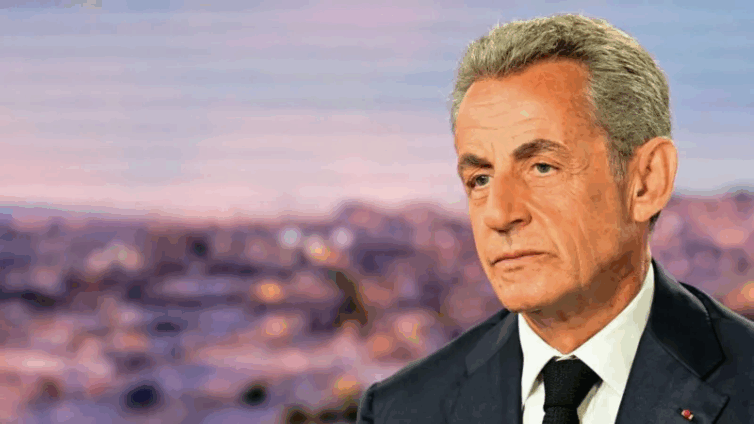
Nicolas Sarkozy is back where he used to be – dominating the news and dividing the nation.
Thirteen years after he left office, he is about to become the first former French president to be sent to prison after getting a five-year term for criminal conspiracy.
And the circumstances are full of the same sulphurous contention that used once to mark his every move.
Fresh from his sentencing in the "Libyan money" trial on Thursday, he spoke with incandescent rage about the "limitless hatred" of which he said he was still a victim.
From the moment he emerged as a champion of the right, Sarkozy was convinced he had been the target of a left-wing cabal within the French judiciary and media.
And with this sentence - he thinks – has come more incontrovertible proof.
Why, his supporters are asking, did the court clear him of three of the four charges weighing against him: illegal party funding, embezzlement of Libyan funds, and corruption?
Why did the court only convict him of the last charge – the "catch-all" one of "criminal association" (often thrown at drugs gang members when investigators have nothing else to go on)?
And why – having convicted him on this lesser charge – did the court then give him such a humiliating and draconian punishment? Not only did they send a 70 year-old man to five years in jail, it was a shocking 20 years after the offence.
They also stipulated that the sentence was not "suspensive" – in other words they said he would go to jail even if he lodged an appeal, even though in French law pending an appeal he is in theory still innocent.
Just when you thought the old passions for and against the man were beginning to fade, suddenly they are back with a vengeance.
Many will feel some sympathy with Sarkozy – not necessarily that he is entirely guiltless in this matter of seeking Libyan campaign money.
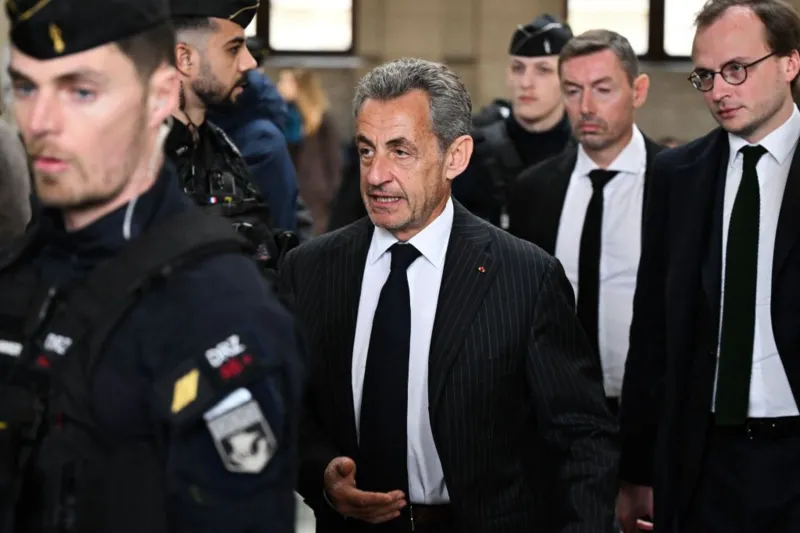
But they will see some truth in his claims of victimisation: that there are indeed some in the Paris "politico-mediatic-judicial" establishment who loathe the former president and rejoice in bringing him down.
Look through another lens, though, and Sarkozy is not some hard-done-by ex-head of state, but an egotistical and highly influential political operator who has consistently pushed the law to its limits in order to get his way.
Why else would there be such a litany of lawsuits against him? Why else would Sarkozy already have been convicted on two other charges of corruption – once for trying to suborn a judge, and another time for illegal campaign funding?
And if the court has now decided to throw the book at him in the Libya affair, maybe it is because the charge of trying to elicit election funds from a foreign dictator is actually a rather serious one.
It is all relevant today because even though Sarkozy is no longer the influential figure that some make him out to be, the arguments about this case echo through the hall of ruins that are French politics.
The right and far-right take up his cause, crying foul about left-wing judicial over-reach. Marine Le Pen – herself banned from running for the presidency because of a "no-suspension" clause in her own conviction early this year – was first to denounce the "injustice".
And the left sees it all as more evidence of rich men's privilege – the powerful getting more powerful by blithely ignoring the law.
Nicolas Sarkozy has long since left office, and there is no prospect of his returning. He is a figure of the past. But his case lays bare the divisions in a very divided country.
Latest Stories
-
Christina Koch becomes first woman to travel around the moon on Artemis II
56 seconds -
Epstein survivors’ calls to meet King Charles and Queen harder to ignore as US visit approaches
7 minutes -
UN Secretary-General names Ghana’s Anita Kiki Gbeho as South Sudan envoy
8 minutes -
Mali withdraws recognition of Sahrawi Republic, backs Morocco’s autonomy plan
13 minutes -
Gov’t distributes over 8,500 laptops to One Million Coders project
14 minutes -
Julius Debrah, ‘man to beat’ as NDC’s James Agbey dismisses Musah Dankwah’s polls
20 minutes -
GPRTU in Savannah Region to protest alleged eviction in Damongo
49 minutes -
Re: Reinsurance does not replace process — A response to the SIGA–SIC defence
1 hour -
Gender Ministry supports Harriet Amuzu in ongoing abuse case
1 hour -
AG joins plaintiff to scrap OSP ?: We should be mindful of the mischief in this – Bobby Banson
1 hour -
Samson Lardy Anyenini questions willingness of Attorneys-General to prosecute political colleagues
1 hour -
It is only fair the OSP is heard in Supreme Court case – Bobby Banson
2 hours -
Asiedu Nketia resumes Ashanti tour, second leg kicks off on Sunday
2 hours -
NLA denies salary cut claims, threatens legal action over reports
2 hours -
BoG Governor honoured for stabilising cedi, improve inflation
2 hours