

Audio By Carbonatix
Every morning, smoke rises across homes and markets in Ghana’s Ahafo Region. It comes from charcoal stoves and firewood fires, the main source of cooking energy for millions of families.
The smoke stings the eyes, fills the lungs, and quietly damages health. But researchers say that in the Bono and Ahafo Regional towns like Sunyani and Duayaw Nkwanta, the communities are choking on smoke and are also surrounded by an ignored solution, waste.
Crop residue, sawdust, and organic waste that are burnt or dumped every day could instead be turned into clean energy, protecting forests and saving lives.
Cooking with Smoke: A Daily Struggle
For many women in the Ahafo Region, cooking with firewood is not only a tradition but also a means of survival.
According to the World Health Organisation (WHO), smoke from firewood and charcoal — known as household air pollution- is one of the leading causes of respiratory diseases globally, killing millions of people every year. Women and children are the most exposed.
In Duayaw Nkwanta and surrounding communities, that danger is part of daily life. For nearly three decades, a food vendor in the centre of Duayaw Nkwanta, Gloria Obeng, has understood the risk, but she has no choice.
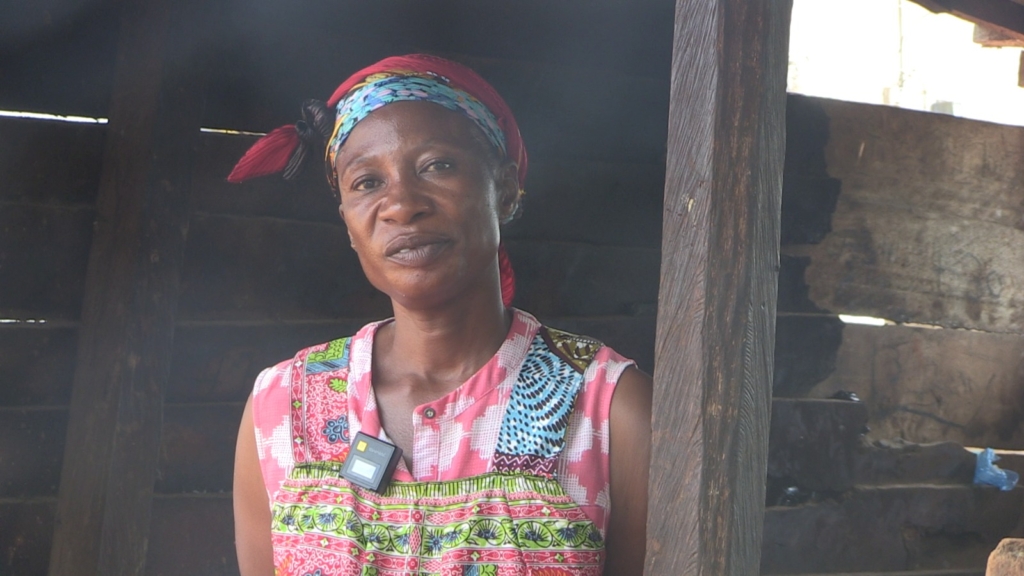
She has sold food in Duayaw Nkwanta since 1998. For 27 years, firewood has been her only source of energy.
“I have been told many times that the smoke is not good for my health,” Gloria says. “But if I stop cooking, I stop eating. This work is what keeps me alive.”
Doctors have warned her about breathing in smoke every day. Yet clean and affordable alternatives are out of reach. So she returns to the firewood each morning.
Gloria’s story is not unique. Halima Yussif has also been advised by doctors to stop cooking with firewood.
“The doctors said I should stop because of my health,” she says. “But I have been stubborn. I don’t have any other option.”
Like many women, Halima is aware of the danger. But survival comes first.
Gloria, Halima, and many others say they wish there were clean and affordable options — options that would protect their health without destroying their livelihoods.
While Kitchens Choke, Waste Piles Up
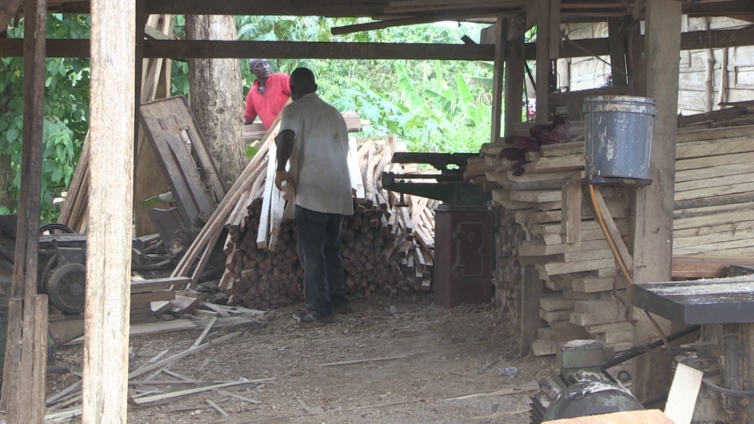
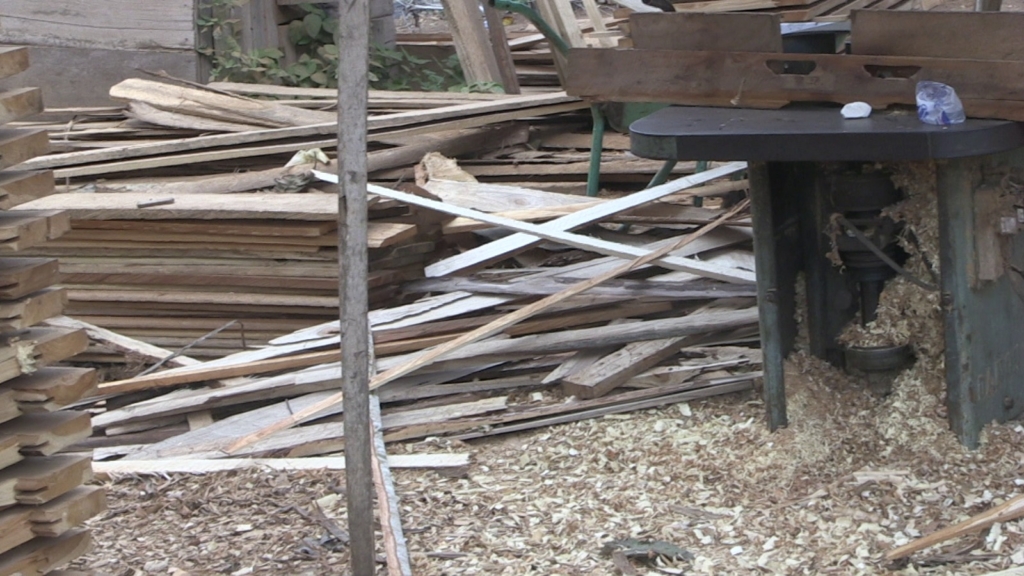
Just a few kilometres away from these smoky kitchens, another problem is growing. At sawmills across Ahafo Region, and many parts of the Bono area, piles of sawdust rise higher every day.
Nicholas Afriyie owns Nicho Enterprise, a local sawmill. His business produces large amounts of sawdust daily.
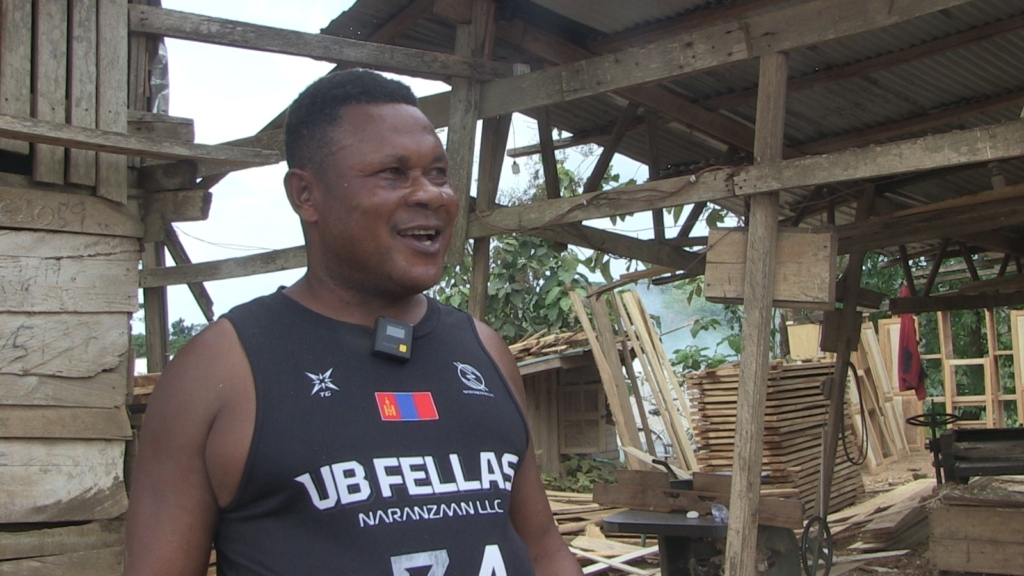
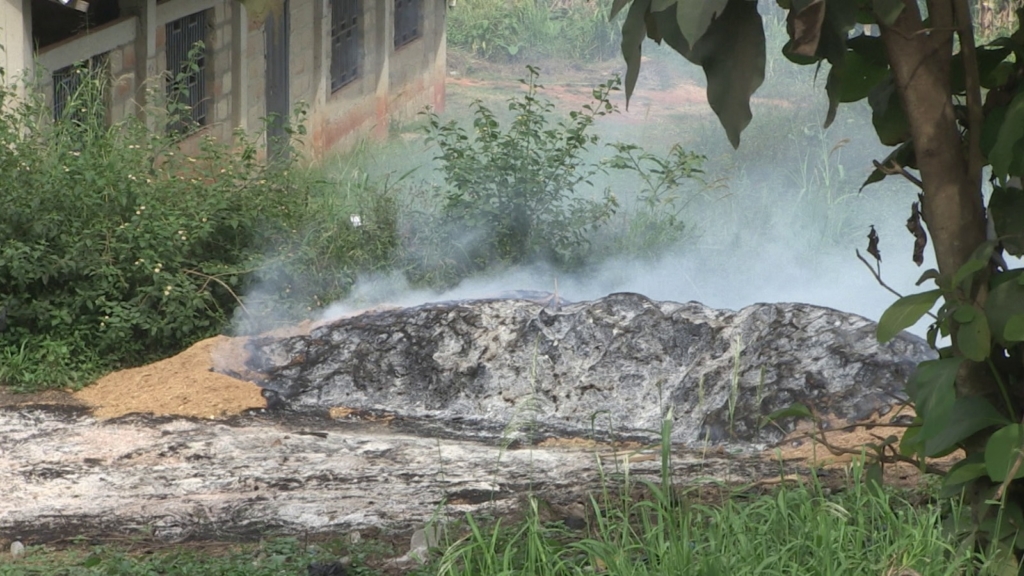
“We burn the sawdust most of the time,” he explains. “Sometimes it becomes a burden to us. We didn’t know it could be used to produce energy.”
For years, the waste has been a problem, not a resource. “If someone wants the sawdust to convert it into energy, I am ready to give it out,” Nicholas adds. “It will even help us.”
The situation is a bit different in Sunyani, according to the Municipal Environmental Health Officer, Daniel Owusu Korkor.
"The burning of waste is prohibited in Sunyani, he insisted and added that they assist the businesses to convey the accumulated sawdust to the final disposal site to be reprocessed into organic manure.
The Assembly, he said, encourages residents to report anybody burning waste to the right city authorities and "an officer will be dispatched to the place.
What the Science Says
Nicholas’s waste is exactly what researchers say places like Duaywa Nkwanta and Sunyani need.
A 2019 scientific study by researchers from Ghana and Germany — Fabian Präger, Sebastian Paczkowski, Gregor Sailer, Nana Sarfo Agyemang Derkyi, and Stefan Pelz — examined energy use in Sunyani.
The study found that the area has large amounts of unused biomass, including crop waste, sawdust, animal manure, and organic waste.
Biomass is energy produced from natural waste. When properly processed, it can generate electricity, biogas, or clean cooking fuel.
“Our study shows that Sunyani has enough unused biomass to meet a significant part of its energy demand if the right technology and training are provided,” the researchers said.
Importantly, biomass energy is cheaper in the long run and reduces the need to cut down trees for firewood.
A lecturer at the Department of Renewable Energy Engineering at the University of Energy and Natural Resources in Sunyani, Dr Gifty Serwah Mensah, explains the bigger picture.

“When organic waste is left to rot, it produces methane,” she says. “Methane is about 20 times more potent than carbon dioxide in warming the climate.”
She explains that waste-to-energy technologies, such as anaerobic digestion and fermentation, capture this waste and convert it into energy, preventing harmful methane emissions.
Dr Mensah adds that garden waste and forest residues can be turned into pellets for clean cookstoves, reducing the need for women to enter forests to collect firewood.
“Every tree that is cut down reduces the forest’s ability to absorb carbon dioxide,” she says. “By producing energy from waste, we reduce deforestation and carbon emissions at the same time.”
A WIN FOR WOMEN, WORKERS, AND FORESTS
If biomass energy is adopted in Sunyani, Duayaw Nkwanta and surrounding communities, the benefits could be life-changing. Families would breathe cleaner air and face fewer health problems.
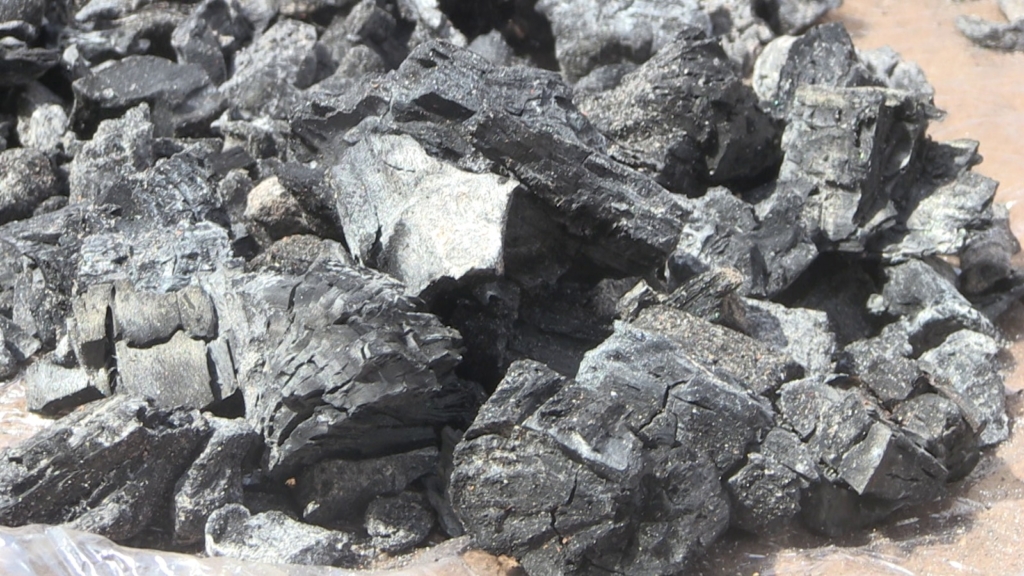
Women like Gloria and Halima would cook without smoke. Farmers would sell crop waste instead of burning it.
Sawmill operators like Nicholas would no longer struggle with sawdust. At the same time, forests would be protected, and greenhouse gas emissions would be reduced.
Researchers say action is now needed. They call on the government, traditional authorities, and development partners to work together to promote biomass energy. This includes community education, investment in technology, and incentives such as subsidies and technical support.
“If we get support, we will adopt biomass quickly,” a community leader says. “We want clean air for our children and protection for our forests.”
From smoky kitchens to sawdust piles, the solution is already here. What is needed now is action.
This article is part of a collaborative project between JoyNews, CDKN Ghana, and the Centre for Climate Change and Sustainability at the University of Ghana, with funding from the CLARE R41 Opportunities Fund.
Latest Stories
-
Landfilling waste management creates no value, it’s an economic waste
3 minutes -
Photos: Speaker Bagbin Commissions MPs constituency office under parliamentary decentralisation programme
18 minutes -
Black Stars technical advisor Winfried Schäfer sacked as GFA shakes up backroom staff
23 minutes -
Wenchi water project almost complete, critical to gov’t agenda – GWL MD
39 minutes -
Anti-LGBTQ+ bill not part of government’s legislative agenda – Inusah Fuseini
41 minutes -
Anti-LGBTQ Bill: Forget the rumour mongers, I’m a man of action, and will pass the bill – Speaker
1 hour -
Women and children among those killed in Sudanese army shelling of wedding celebration
2 hours -
President Mahama is not sincere with Ghanaians on LGBTQ bill matter – Hassan Tampuli
2 hours -
Gov’t to establish Prison Industrial Hub to equip inmates with income-generating skills – Prison Service boss
2 hours -
Alhassan Tampuli donates cement, roofing sheets to support storm victims in Gushegu
2 hours -
Alhassan Tampuli appeals for urgent support for storm victims in Gushegu
2 hours -
The hypocrisy must stop; pass Anti-LGBTQ+ Bill now – Alhassan Tampuli to Mahama
2 hours -
Imprisonment should be rehabilitative, not punitive – Ghana Prisons boss at UNGA
3 hours -
Ga Adangbe traditional priests petition Mahama over McDan aviation licence revocation
3 hours -
Anti-LGBTQ Bill: NDC’s arrogance is worrying – Hassan Tampuli
3 hours