

Audio By Carbonatix
Energy Minister-designate, John Jinapor, has identified fuel supply and financial stability as the most pressing challenges confronting Ghana’s energy sector.
Speaking during his vetting before Parliament’s Appointments Committee on Monday, January 13, Mr Jinapor outlined strategic measures to address these issues and ensure the resilience of the country’s power infrastructure.
According to him, a significant fuel supply gap of 40 to 60 million standard cubic feet per day (mmcf/d), even with contributions from ENI, Jubilee, TEN fields, and Nigeria Gas (N-Gas). This deficit has forced reliance on alternative fuel sources, including light crude oil, heavy fuel oil, and distillate fuel oil, to keep power plants running.
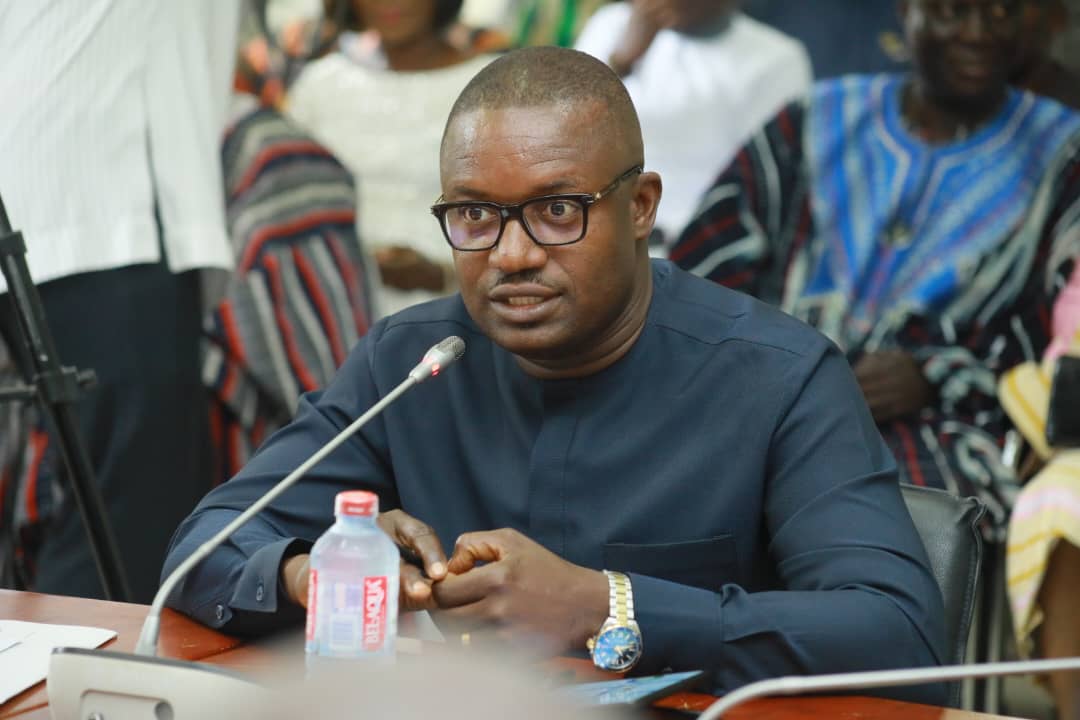
“Our immediate objective will be to bridge the fuel gap. We’ve engaged Jubilee partners, Tullow Oil, and Ghana Gas, and are confident that with reconditioning efforts, we can increase gas supply by an additional 35 mmcf/d, creating a much-needed buffer,” Mr Jinapor said.
He noted that resolving the fuel supply issue, along with maintaining adequate liquid fuel reserves, would significantly stabilise power generation and reduce vulnerabilities in the energy sector.
The Minister-designate also revealed a mounting financial crisis, with key power sector stakeholders threatening to cut supplies due to unpaid debts.
"Ghana owes Karpowership $377 million, and the company has warned of a potential shutdown, Tullow Oil - Outstanding payments exceed $100 million, with threats of reduced operations. ENI has also raised concerns over unpaid debts.
“These financial challenges require urgent attention. Without addressing these debts, we risk disruptions in power supply, which could severely impact the economy,” he warned.
He assured Ghanaians that once these issues are resolved, the energy sector will be on a stronger footing to deliver reliable and affordable power.
“These two challenges—fuel supply and financial stability—are critical. If we can get them right, we’ll be on the path to a more stable and efficient energy sector."
Despite these challenges, Jinapor expressed confidence in Ghana’s robust power grid, citing upgrades to transmission lines and primary substations.
“Our grid system is very resilient. We’ve upgraded many of our lines from 161 to 330 kV, and we’ve injected significant resources into primary substations. With a current stock capacity of 5,260 megawatts and a dependable capacity of 4,800 megawatts, we’re positioned to meet the new peak demand of 4,100 megawatts,” he noted.
Latest Stories
-
Friends of Bridget Bonnie Marks her 35th birthday with donation to Kasseh Model Health Centre
22 minutes -
Landfilling waste management creates no value, it’s an economic waste
49 minutes -
Photos: Speaker Bagbin Commissions MPs constituency office under parliamentary decentralisation programme
1 hour -
Black Stars technical advisor Winfried Schäfer sacked as GFA shakes up backroom staff
1 hour -
Wenchi water project almost complete, critical to gov’t agenda – GWL MD
1 hour -
Anti-LGBTQ+ bill not part of government’s legislative agenda – Inusah Fuseini
1 hour -
Anti-LGBTQ Bill: Forget the rumour mongers, I’m a man of action, and will pass the bill – Speaker
2 hours -
Women and children among those killed in Sudanese army shelling of wedding celebration
2 hours -
President Mahama is not sincere with Ghanaians on LGBTQ bill matter – Hassan Tampuli
3 hours -
Gov’t to establish Prison Industrial Hub to equip inmates with income-generating skills – Prison Service boss
3 hours -
Alhassan Tampuli donates cement, roofing sheets to support storm victims in Gushegu
3 hours -
Alhassan Tampuli appeals for urgent support for storm victims in Gushegu
3 hours -
The hypocrisy must stop; pass Anti-LGBTQ+ Bill now – Alhassan Tampuli to Mahama
3 hours -
Imprisonment should be rehabilitative, not punitive – Ghana Prisons boss at UNGA
3 hours -
Ga Adangbe traditional priests petition Mahama over McDan aviation licence revocation
4 hours