

Audio By Carbonatix
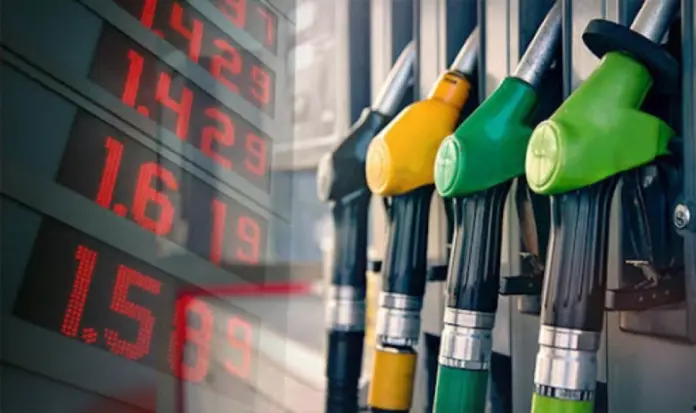
Duncan Amoah, Executive Secretary of the Chamber of Petroleum Consumers (COPEC), has criticised the National Petroleum Authority’s (NPA) price floor policy, arguing that it stifles competition and ultimately hurts consumers.
Speaking on the AM Show, Mr Amoah said the introduction of a price barrier in a supposedly deregulated market only inconveniences the public and prevents natural market forces from working in favour of consumers.
“If you introduce a price barrier, you are simply inconveniencing the consuming public,” he said, using a market analogy to explain his point.
“In a free market, these things are negative. It does not allow the market to evolve naturally, organically. It does not allow the market to compete favourably.”
His comments come amid growing debate over the NPA’s price floor policy, which sets a minimum price below which Oil Marketing Companies (OMCs) are not allowed to sell fuel.
The controversy was reignited after the Chief Executive Officer of Star Oil Ghana, Philip Tieku, disclosed that his company had planned to sell petrol at GH¢9.50 per litre during off-peak hours between 10 p.m. and 4 a.m. to support night-time economic activities. However, he said the policy makes such an initiative impossible.
In a Facebook post, Mr Tieku questioned the logic behind the regulation, stating: “Imagine Star Oil pricing petrol at GH¢9.50 per litre after 10 p.m. till 4 a.m. to support the night-time economy when demand is lower… but that will be below the NPA floor price.”
Mr Amoah said such restrictions defeat the purpose of deregulation and deny consumers the benefits of competitive pricing.
“We are now targeting people who would want to go down in prices for the benefit of the Ghanaian consumer. Is this fair?” he asked.
He added that OMCs are not obligated to match lower prices if they believe such pricing is unsustainable, insisting that competition should be allowed to play out naturally.
“As an OMC, you are not obliged to go down to somebody’s price level if you think it is predatory,” he said.
“Some of the bigger OMCs have stayed way above some of the smaller OMCs by way of pricing, and nobody has collapsed because of that.”
Ghana’s petroleum sector operates under a deregulated pricing regime, which was introduced to encourage competition, improve efficiency, and ensure fair pricing.
However, the NPA maintains that the price floor is necessary to prevent market distortions and protect smaller OMCs from being pushed out by dominant players.
Latest Stories
-
Ghana explores centre of excellence for hearing, communication and cochlear implant care
10 minutes -
Schizophrenia-related disorders lead mental health cases recorded in Ghana
31 minutes -
Dutch authorities enlist Ghana in hunt for fugitive drug lord Bolle Jos
55 minutes -
Ghana housing finance conference adopts communiqué to improve affordable housing access
5 hours -
Special Initiatives Minister urges Wa Technical Institute to enrol more girls as EU-backed solar training lab opens
6 hours -
In the matter of my first year at the Bar
6 hours -
ActionAid Ghana calls for an end to child marriage, greater investment in girls’ rights
6 hours -
Newsfile to tackle World Cup visa scandal, beach demolitions, education strikes, BRICS bid
6 hours -
UK-Ghana Trade & Investment Summit: Trade Resource Centre to help businesses maximise UK-Ghana trade opportunities
7 hours -
Embassy of Denmark celebrates World Maritime Day
7 hours -
Linking LEAP to productive inclusion could cut extreme poverty by 2030 – UNICEF
8 hours -
Trade Ministry backs use of creative arts to rehabilitate prison inmates
8 hours -
Negotiations with government to continue despite strike suspension – GNAT
8 hours -
‘Ghana cannot afford to waste public resources; every cedi has a job’ – Ato Forson
8 hours -
Ghana expects economic boost as World Assemblies of God Congress brings 10,000 delegates to Accra
8 hours