

Audio By Carbonatix
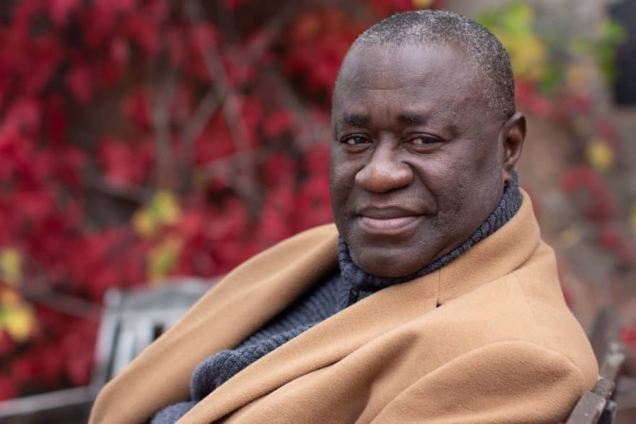
Security expert, Prof Kwesi Aning, says Ghana’s fight against illegal mining, known locally as galamsey, is failing to make real progress because authorities continue to focus on those employed as miners rather than the powerful financiers behind the operations.
Speaking on JoyNews’ Newsfile on Saturday, October 11, Prof Aning said the country’s current approach to tackling illegal mining was too superficial and has failed to address the deeper, more organised networks that fund and sustain the menace.
“We need a better grasp and understanding of the networks, the financial kingpins behind this, where the money goes, how the money comes in, who purchases what,” he said.
He said that security agencies were largely targeting low-level actors instead of the real beneficiaries of illegal mining activities.
“We are only playing with the small boys and the small girls, so until we really come to grips with the powers that be behind this process, I think yes, we will have superficial successes, but really making a dent into this is still a joke,” Prof Aning stated.
He warned that while recent operations may produce some short-term gains, they do not offer lasting solutions to the environmental and economic destruction caused by galamsey.
“We are only looking at short-term successes and gains, but overlooking the long-term interventions that will cure this,” he said.
Prof Aning questioned why special task forces such as the National Anti-Illegal Mining Operations Squad (NAIMOS) seemed to be achieving more visible results than the country’s legally mandated security institutions.
“How can NAIMOS do what it is doing, and the statutory security agencies under Act 1030 of 2020, the Signals Act 1040 of 2020, and the National Security Strategy document, which classifies illicit mining as one of four key threats, cannot get this job done?” he asked.
He said that the failure pointed to a deeper problem of inadequate political will to empower institutions to act effectively.
“Then it is a matter of the nature of the political will that must back the institutional processes and give them the tools to deliver,” Prof Aning said.
Latest Stories
-
MIIF records GH¢5.43bn mineral royalty inflows, highest since inception
24 minutes -
We’re under more pressure – KATH overwhelmed as ‘no bed syndrome’ persists
35 minutes -
Asiedu Nketia assures Ashanti: NDC won’t let you down
51 minutes -
Talk show host Stephen Colbert to write new Lord of the Rings film
54 minutes -
Ashanti Region no longer exclusive stronghold of NPP as NDC gains ground – Asiedu Nketia
1 hour -
Carney says Air Canada’s English-only message after LaGuardia crash ‘lacks compassion’
1 hour -
Oil prices climb as investors reassess Middle East ceasefire prospects
1 hour -
Woman charged with shooting at Rihanna’s home pleads not guilty to attempted murder
1 hour -
South Africa’s police chief to appear in court over controversial health contract
2 hours -
Dozens of bodies, mostly infants, discovered in Kenya mass grave
2 hours -
Michael Johnson to give back alleged ‘secret’ payment of $500,000
2 hours -
Northern Ireland deserve Italy’s respect – Buffon
2 hours -
Haaland donates £100,000 Viking book to home town
2 hours -
AFCON 2025: Senegal appeal to be heard ‘as swiftly as possible’
2 hours -
Barcelona hit Real Madrid for six in last-eight tie
3 hours