

Audio By Carbonatix
Indigenous cocoa cooperative Kuapa Kooko has raised alarm over the growing threat illegal mining, popularly known as galamsey, poses to Ghana’s cocoa sector, warning that polluted water bodies and degraded farmlands are undermining farmers’ ability to sustain production.
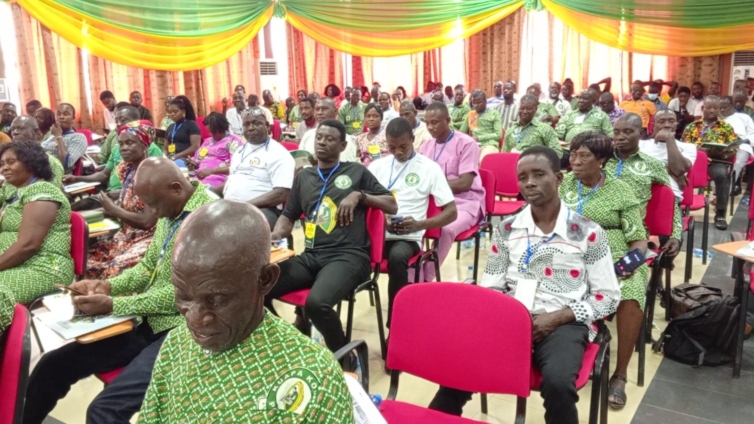
Speaking at a stakeholders’ engagement, James Agyekum Kwarteng, National President of Kuapa Kooko, said galamsey remains one of the most serious challenges facing cocoa farming communities, particularly those within the cooperative’s catchment areas.
According to him, illegal mining activities have contaminated rivers and streams that farmers depend on for irrigation, increasing production costs and threatening livelihoods.
“The galamsey is really worrying us. Even the water we use to farm has been polluted almost everywhere,” Mr. Kwarteng said.
“Our farmers are now spending a large part of their profits just to get good water for their crops. Government must check our water bodies so they can farm healthily and better.”
He noted that, beyond environmental damage, the long-term sustainability of cocoa farming is at risk if decisive action is not taken to protect farmlands from destruction.
Kwarteng explained that Kuapa Kooko has intensified education among its members to discourage them from leasing their lands to illegal miners, stressing that cocoa farming remains more beneficial in the long run.
“We tell them about the impact of galamsey and what it can do to their lands, and how cocoa remains more profitable in the long term,” he added.
The Managing Director of Kuapa Kooko, Emmanuel Arthur, also highlighted broader challenges confronting the cooperative, including declining output and limited access to financing.
He revealed that although the cooperative has the capacity to produce about 80,000 metric tonnes of cocoa annually, it managed to sell only 12,000 metric tonnes during the year under review, a figure he described as far below expectations.
Arthur attributed part of the challenge to financial constraints, particularly following the discontinuation of the syndicated loan system by COCOBOD, which previously supported Licensed Buying Companies (LBCs).
“Cocoa buying cannot thrive without funding. The banks help us, but they can do better than what they’re doing now,” he said, calling for stronger support from local banks, with backing from the Bank of Ghana.
The leadership of Kuapa Kooko is therefore urging the government to provide targeted support for indigenous cocoa companies to enable them to compete fairly with foreign-owned firms in the sector.
“Since we are a cooperative, we can handle everything from farming to retailing. Government should trust us and support us to grow,” Mr. Kwarteng said.
Despite the challenges, Kuapa Kooko is pressing ahead with expansion plans, including proposals to establish its own cocoa processing factory within the next two years. Potential locations under consideration include Kumasi, Takoradi and other strategic areas, with feasibility studies currently underway.
However, the cooperative insists that addressing galamsey remains critical to protecting Ghana’s cocoa industry, which supports millions of livelihoods and remains a key pillar of the national economy.
Latest Stories
-
Ghana to begin camping with 12 athletes after Accra Open Championships – Bawa Fuseni
20 minutes -
Anthony Joshua declines showdown with Tyson Fury but admits they ‘probably’ clash next
33 minutes -
Tyson Fury dominates Makhmudov, calls out Joshua next
52 minutes -
I have supported highway authority financially to fix roads in my constituency – A Plus
2 hours -
US, Iran fail to reach peace agreement after marathon talks in Pakistan
2 hours -
ECG kicks off Phase Two of transformer upgrades at Lashibi; brief outages expected
3 hours -
Port crises loom as 11,000 drivers threaten four-day strike
4 hours -
A source of excellence across generations – Vice President Opoku-Agyemang lauds Mfantsipim
5 hours -
(Photos) Mfantsipim School launches historic 150th anniversary
5 hours -
Knights and Ladies of Marshall group backs Catholic Bishops’ stance on anti-LGBTQ+
6 hours -
Bright Simons writes: All the Filla in the Ibrahim Mahama/E&P – Gold Fields Saga
6 hours -
Monetise Idiocy In Ghana
6 hours -
The Ghanaian prophet and the mysterious death of his scottish wife Charmain Speirs
7 hours -
Nearly 400 sentenced in Nigeria for links to militant Islamists
8 hours -
Ghana’s recovery supported by gold strength despite global oil price pressures – Standard Bank Research
8 hours