

Audio By Carbonatix
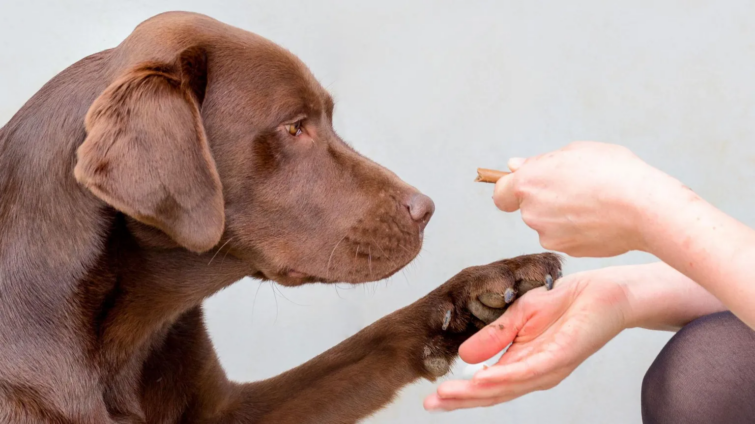
Dogs that are constantly hungry and prone to being overweight share a common bit of biology with some obesity-prone humans.
This is what UK scientists have discovered - identifying a genetic source of many labradors' - and some people's - tendency to overeat.
Researchers found that changes in a particular gene, one of the building blocks of biological code that produces the blueprint for how our bodies work, alters the chemical signals that tell our brains we've had enough to eat.
The scientists say their findings, published in the journal Science, reveal something "powerful" about the biology of obesity risk.
"By studying dogs, we've honed in on some interesting new biology here," explained lead researcher Dr Eleanor Raffan from the University of Cambridge's department of physiology, development and neuroscience.
She added that the discovery showed that "owners of slim dogs are not morally superior - and the same is true of slim people".
"If you have a high genetic risk of obesity, you're prone to gaining weight unless you put a huge effort into not doing so. And those with low genetic risk just don't have to work so hard."
This canine-human biological link came from the researchers' examination of the genetics of 250 labradors. The team looked for pieces of genetic code that were common in overweight dogs.
They picked out one gene in particular - called DENND1B - that was associated with a higher body mass in the labradors. And when they searched through a library of genetic information from thousands of humans, they discovered that the same gene was associated with a higher body mass in people, too.
Before this study of labrador genetics, Dr Raffan said, "no one suspected that gene had anything to do with obesity".

The gene interferes with a brain signalling pathway that helps regulate our appetite.
Dr Raffan explained: "It alters the predisposition to weight gain because it's tweaking a system that is involved in regulating how hungry we feel and how much energy we burn off."
The findings could help in the future development of new drugs to tackle obesity. But the scientists say they reveal how much harder people - and owners of dogs - with this genetic predisposition have to work to offset its effects.
Another member of the research team, Alyce McClellan, from Cambridge University added that the results emphasised "the importance of fundamental brain pathways in controlling appetite and body weight".
The discovery adds to a developing picture of those pathways and the biological driving forces behind overeating.
A group of weight loss drugs, that includes Ozempic, target some of this biology, and have exploded in popularity in recent years.
What we've identified here is a different pathway [from the one targeted by those drugs]," explained Dr Raffan.
"But it all speaks to the same important bit of biology, which is that obesity is not about having low willpower.
"It's about the fact that some people are prone to weight gain because they have a genetic risk which increases their responsiveness to food and their appetite.
"This goes for dogs and humans alike - they have a genetic drive to overeat."
Latest Stories
-
Trump says progress made in Ukraine talks but ‘thorny issues’ remain
10 minutes -
Fear and confusion in Nigerian village hit in US strike, as locals say no history of ISIS in area
19 minutes -
Health Minister calls for collective action to fast-track Western North’s development
31 minutes -
Mahama Ayariga leads NDC delegation to Bawku ahead of Samanpiid Festival
5 hours -
Edem warns youth against drug abuse at 9th Eledzi Health Walk
8 hours -
Suspension of new DVLA Plate: Abuakwa South MP warns of insurance and public safety risks
9 hours -
Ghana’s Evans Kyere-Mensah nominated to World Agriculture Forum Council
10 hours -
Creative Canvas 2025: King Promise — The systems player
10 hours -
Wherever we go, our polling station executives are yearning for Bawumia – NPP coordinators
10 hours -
Agricultural cooperatives emerging as climate champions in rural Ghana
10 hours -
Fire Service rescues two in truck accident at Asukawkaw
10 hours -
Ashland Foundation donates food items to Krachi Local Prison
10 hours -
Akatsi North DCE warns PWD beneficiaries against selling livelihood support items
11 hours -
Salaga South MP calls for unity and peace at Kulaw 2025 Youth Homecoming
12 hours -
GPL 2025/2026: Gold Stars triumph over Dreams in five-goal thriller
13 hours