

Audio By Carbonatix
The teenager whose film of George Floyd's death sparked global protests said she "stays up apologising" to him for "not doing more".
Darnella, now 18, was one of four young witnesses who to take the stand on the second day of Derek Chauvin's trial.
She told the court of seeing Mr Floyd "begging for his life," comparing him to her dad, brother, cousins and uncles "because they are all black".
Issues of racial equality and policing lay at the centre of the case.
On Monday, the opening session of the trial heard Mr Chauvin, an ex-police officer, knelt on Mr Floyd's neck for over nine minutes while arresting him in Minneapolis in May 2020. Prosecutors say this was a "major cause" in his death.
Defence lawyers have indicated they will argue that 46-year-old Mr Floyd died of an overdose. Mr Chauvin, 45, denies charges of murder and manslaughter.
Three other officers who were present - Tou Thao, J Alexander Keung and Thomas Lane - will go on trial later in the year.
What did the trial hear on the second day?
Four children who were all under 18 at the time of the incident gave evidence to the court, but the cameras were switched off so the jurors could not see them and they were identified only by their first names.
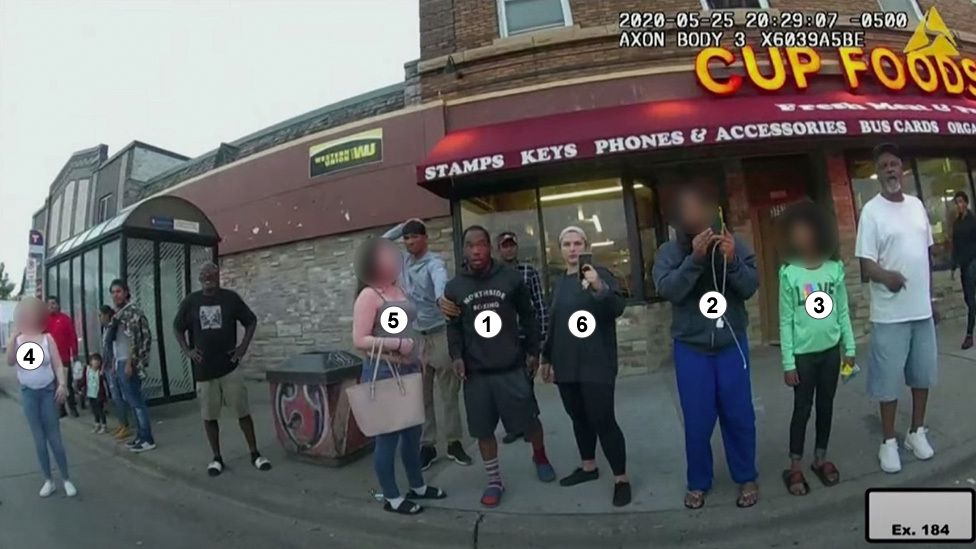
Darnella, then 17 years old, was walking to the Cup Foods shop with her nine-year-old cousin when they came across the arrest on the street outside.
She told the court she started filming on her phone because "I saw a man terrified, begging for his life. It wasn't right - he was in pain."
She described hearing Mr Floyd "saying 'I can't breathe'. He was terrified, he was calling for his mom."
Darnella said witnessing his death had changed her life.
"When I look at George Floyd I look at my dad, I look at my brother, my cousins, my uncles - because they are all black," she said, audibly crying. "And I look at how that could have been one of them."
"I stay up apologising to George Floyd for not doing more."
Her young cousin also gave evidence and said she felt "sad and kind of mad" by what she saw. "It sounded like he was hurting".
Two friends, Alissa, 18, and Kalen, 17, had driven up to the store when they came across the arrest. Both described feeling helpless as they watched Mr Floyd's last moments before "he was just laying there, no longer fighting or resisting".
The last witness of the day was Genevieve Hanson, an off-duty firefighter, who said the officers prevented her from administering medical help that would have saved Mr Floyd's life. She was rebuked by the judge for her testy responses to defence questioning.
What else has the trial heard so far?
One witness, Donald Williams II, who is trained in mixed martial arts, was questioned for over an hour by the prosecution and defence on Monday and again on Tuesday.
He told the court Mr Chauvin had used a dangerous technique called a "blood choke" and was moving his knee back and forth to increase the pressure on Mr Floyd's back and neck.
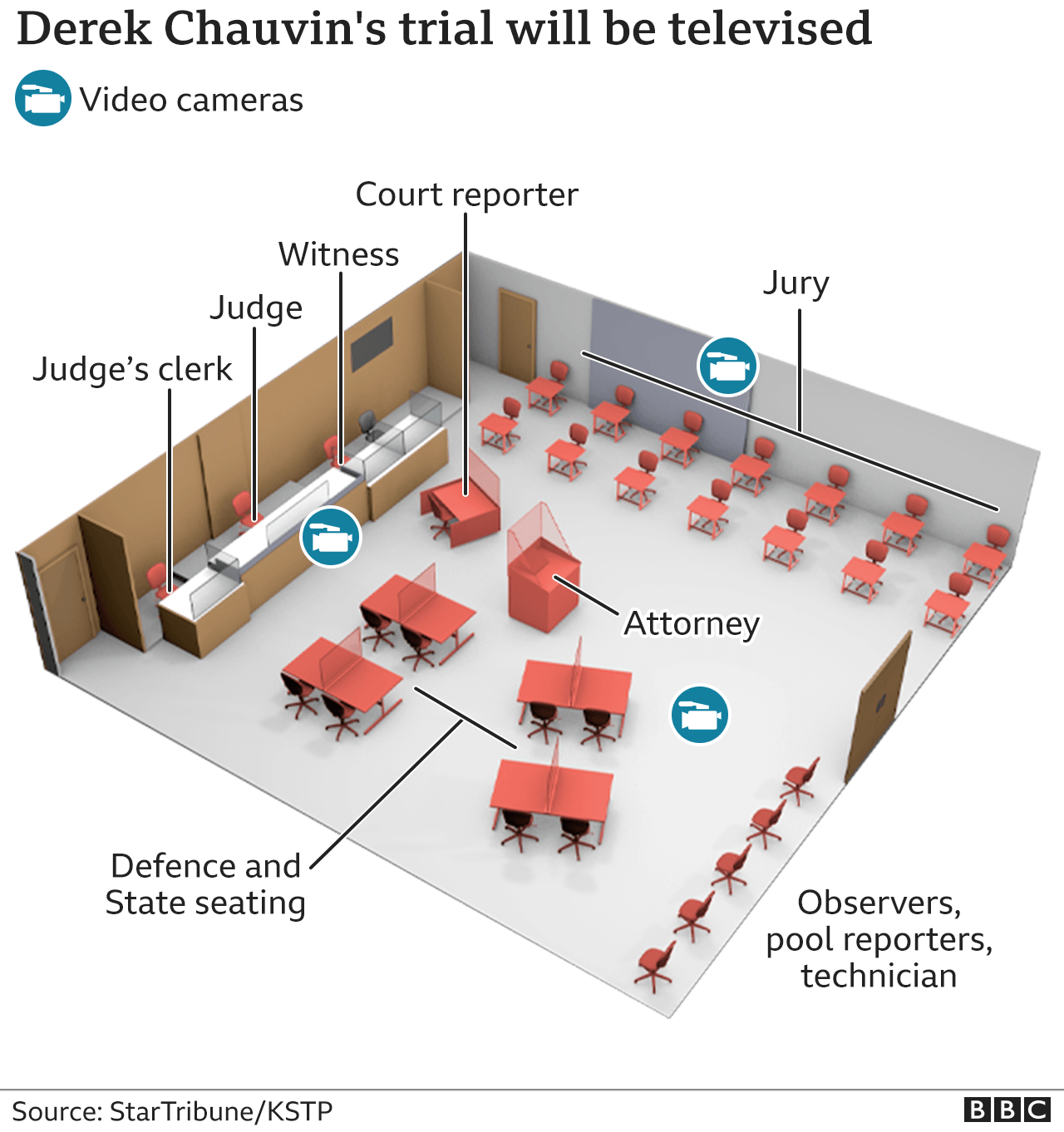
He rejected defence suggestions that he and other bystanders' interactions with police had been threatening to the officers there.
In opening statements on Monday, Prosecutor Jerry Blackwell told the jury that Mr Chauvin had "betrayed his badge" by kneeling on Mr Floyd's neck, and using "excessive and unreasonable force" to detain him.
Meanwhile, Mr Chauvin's lawyer Eric Nelson said the case was about the evidence, not about a "political or social cause". He said Mr Floyd had ingested drugs at the time of his arrest "in an effort to conceal them to police", and suggested this contributed to his death.
Mr Chauvin has been silent but remained engaged during the proceedings, taking almost constant notes on a yellow legal pad while listening to the evidence.
Why is this such a high-profile case?
Darnella's video footage of Derek Chauvin kneeling on George Floyd's neck was replayed the world over and sparked mass protests and a racial reckoning in the US.
To many, Floyd's death while in police custody became a vivid symbol of police brutality - particularly against people of colour - and it sparked worldwide demonstrations for racial justice.
But despite the global outcry this is not an open and shut case. In the US, police are rarely convicted for deaths that occur while they are on duty, if they are charged at all.
The verdict in this case will be widely seen as an indication of how the US legal system treats deaths that occur while in police custody.
Latest Stories
-
Ghanaian farmer can’t grow tomatoes because of lack of irrigation – Tomato Importers Association president
52 minutes -
Social media firms must better enforce Australia under-16 ban, watchdog says
1 hour -
King Charles should meet Epstein victims, US lawmaker says
1 hour -
Belgian ex-diplomat appeals order to stand trial in Congo’s Lumumba murder
2 hours -
Cholera aid for African countries stalled by Iran conflict
2 hours -
The Oscars are leaving Hollywood
2 hours -
Too watery, too risky – Why Ghanaian traders prefer Burkina tomatoes
2 hours -
We buy from Burkina because ours rot fast – Tomato traders defend import dependence
2 hours -
Nigeria’s giant oil refinery fails to prevent record gasoline prices
3 hours -
CAF to make changes to regulations after Afcon final fiasco
3 hours -
Council of State member demands EOCO boss apologise or face lawsuit, petitions Mahama for his dismissal
3 hours -
Otto Addo sacked!
4 hours -
‘We are tomato sufficient – Agribusiness chief pushes back on Burkina Faso export shock
5 hours -
AfDB says Africa’s growth risks were tilted to downside even before Iran conflict
5 hours -
Egypt’s Sisi says only Trump can stop war, warns oil could top $200
5 hours