

Audio By Carbonatix
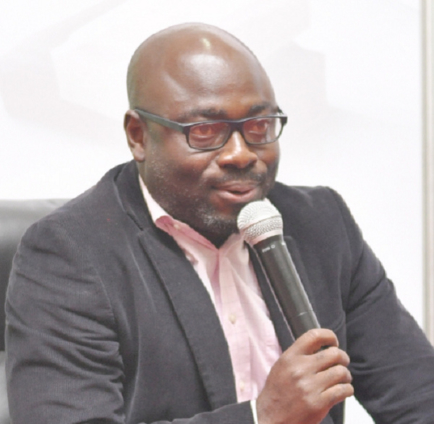
Economist Professor Lord Mensah has advised government to be measured in its expectations of signing a deal with the International Monetary Fund (IMF) before the 2023 budget presentation.
According to him, the IMF would rather look at the 2023 budget, which will be presented in November 2022 to finalise a programme with Ghana.
He urged government to rather focus on using the budget to rebuild investor confidence on toning down on borrowing, while sending signals of debt restructuring to the IMF.
This, Professor Mensah argued will give government some space to negotiate with the IMF from a strong position.
“I don’t think it is possible to get a deal with the IMF before the middle of November when we get ready to present the 2023 budget. My advice will be that we should rather use the budget to position the government for an IMF programme”, he stated.
He explained that the government and the IMF have a lot of processes and fine-tuning to do before signing an economic bailout deal.
He cautioned that the IMF will not just enter into a deal because a country is economically desperate for assistance.
“If you study the IMF carefully, they always want your debt stock to be at sustainable levels before they give you assistance. If your debt levels are bad, the IMF will ask you to do something about it before assisting the country”.
Citing Ghana’s debt levels as worrying, he stated that it is not surprising that the IMF is urging the government to restructure its debt as first requirement as part of the negotiations.
Providing some recommendations, Prof. Mensah advised that it will be prudent for government to come out and engage relevant stakeholders in the domestic financial sector to calm the market.
Such a move, he stressed will not only stabilise the domestic bonds market, but will bring some level of certainty among investors who are currently in the dark on the next move of government.
He warned that keeping investors in the unknown only sparks speculations which aggravate the economic challenges of the country.
He partly blamed the situation on the high inflation and the cedi depreciation, which he warns may get worse.
Latest Stories
-
Today’s Front pages: Tuesday, March 24, 2026
4 minutes -
Ghanaian citizen drags Attorney-General to Supreme Court over Kotoka Airport renaming
10 minutes -
GACC unveils 25th anniversary logo to mark silver jubilee
17 minutes -
Cutting rates while draining liquidity: Is the BoG contradicting itself, or getting it right?
56 minutes -
Pepsodent “Smile Ride” brings oral health education to the streets of Ghana
58 minutes -
Burkina Faso tomato ban exposes Ghana’s dangerous food dependency
1 hour -
Produce tomatoes in 90 days or step aside – FABAG fires warning at Agric Ministry
1 hour -
Mahama tours Nobi Agriculture Project in Afram Plains
1 hour -
Helicopter crash: Bawumia sends delegation to commiserate with founder of Hebron Prayer Camp
2 hours -
DVLA to establish office in Ketu North to boost service delivery – CEO
2 hours -
US bans new foreign-made consumer internet routers
2 hours -
Ho Central MP Richmond Kpotosu cautions drivers against overspeeding, drink driving
2 hours -
Ghana, Colombia seal maritime deal linking Tema and Cartagena ports
2 hours -
US weight-loss drugmakers slash prices in fight to win customers
2 hours -
CEANA donates medical laboratory to Akpokofe community
2 hours