

Audio By Carbonatix
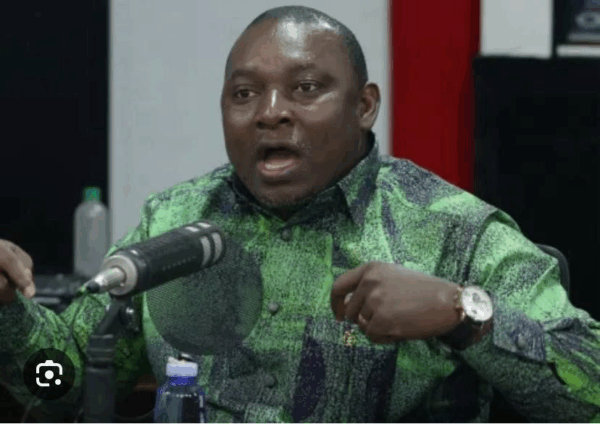
The Communications Director of the United Party, Solomon Owusu, has argued that the International Monetary Fund (IMF) does not build or develop nations, urging Ghana to stop celebrating IMF endorsement and instead focus on long-term economic transformation.
Speaking on JoyPrime on January 26, Mr Owusu said the IMF typically intervenes only when countries are in economic distress and require strict fiscal controls.
“The IMF is not an institution that builds a nation or develops an economy,” he said. “It is there to make sure we remain a developing economy, not a transformed one.”
He explained that Ghana usually turns to the IMF when it is unable to manage its balance of payments or when the economy is under severe strain.
“We invite the IMF when we are unable to deal with our problems,” he said. “That is when they come in. What they bring is discipline and rules, like the agreement we signed in 2022.”
Mr Owusu cautioned the government against prioritising IMF approval over structural economic reforms.
“The President should not be worried about being seen as an IMF poster boy,” he noted. “The real issue is what policies we are putting in place to move from stability to transformation.”
He further claimed that the IMF does not act in the best interests of developing countries.
“The IMF does not encourage investment in strategic sectors,” he said. “It serves the interests of the West, not countries like Ghana.”
To reduce Ghana’s dependence on IMF support, Mr Owusu called for sustained investment in manufacturing and other key sectors of the economy.
“We must think differently,” he stressed. “We need serious investment in manufacturing, pharmaceuticals, oil, and gas. That is how we can free ourselves from the IMF.”
He questioned why fiscal discipline appears achievable only under IMF supervision.
“Why can we be disciplined with the IMF but fail to be disciplined on our own?” he asked. “That shows we lack self-control.”
Mr Owusu concluded by describing Ghana’s economic structure as outdated, arguing that fundamental reforms are long overdue.
“We are still living in a medieval economy,” he said. “That is why Ghana has gone to the IMF about 17 times. Until we change our mindset, the cycle will continue.”
Latest Stories
-
Ghana explores centre of excellence for hearing, communication and cochlear implant care
41 minutes -
Schizophrenia-related disorders lead mental health cases recorded in Ghana
1 hour -
Dutch authorities enlist Ghana in hunt for fugitive drug lord Bolle Jos
1 hour -
Ghana housing finance conference adopts communiqué to improve affordable housing access
6 hours -
Special Initiatives Minister urges Wa Technical Institute to enrol more girls as EU-backed solar training lab opens
6 hours -
In the matter of my first year at the Bar
6 hours -
ActionAid Ghana calls for an end to child marriage, greater investment in girls’ rights
7 hours -
Newsfile to tackle World Cup visa scandal, beach demolitions, education strikes, BRICS bid
7 hours -
UK-Ghana Trade & Investment Summit: Trade Resource Centre to help businesses maximise UK-Ghana trade opportunities
7 hours -
Embassy of Denmark celebrates World Maritime Day
7 hours -
Linking LEAP to productive inclusion could cut extreme poverty by 2030 – UNICEF
8 hours -
Trade Ministry backs use of creative arts to rehabilitate prison inmates
9 hours -
Negotiations with government to continue despite strike suspension – GNAT
9 hours -
‘Ghana cannot afford to waste public resources; every cedi has a job’ – Ato Forson
9 hours -
Ghana expects economic boost as World Assemblies of God Congress brings 10,000 delegates to Accra
9 hours