

Audio By Carbonatix
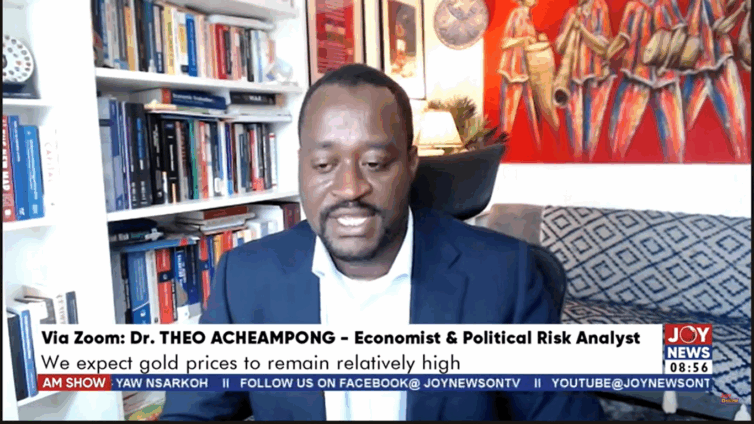
Economist and political risk analyst, Dr Theophilus Acheampong, has hinted at the possible reintroduction of the controversial GH₵1 energy levy, citing mounting financial pressure on Ghana’s energy sector and the growing impact of global geopolitical tensions.
Speaking on JoyNews’ AM Show on Tuesday, 24 June, Dr Acheampong suggested that senior government officials, including the Ministers for Finance and Energy, are likely assessing the fiscal situation and the implications of escalating global conflicts, particularly in the Middle East.
“I think the Finance Minister, the Energy Minister, and the rest of the team would be analysing and assessing the impact. I won’t be surprised if the GH₵1 levy comes back in the coming weeks,” he stated.
He acknowledged that although the previous implementation of the levy faced public opposition, certain segments of the population were relatively accommodating, giving the government possible grounds to revive it—especially if oil prices continue to rise.
The levy, initially introduced earlier this year to support the ailing energy sector, was suspended following widespread backlash from civil society groups and the Minority in Parliament. Nonetheless, Ghana’s energy sector remains in deep financial distress.
“We have serious challenges within Ghana’s energy sector and we need to do something about it,” Dr Acheampong warned.
He also raised concerns over the lack of transparency and accountability in the use of previous energy-related levies, particularly those collected under the Energy Sector Levies Act (ESLA).
“There are concerns as to how monies that have been collected in the past have been utilised, particularly with ESLA,” he observed.
Dr Acheampong urged that any reintroduction of the levy should be accompanied by clear mechanisms for parliamentary oversight and transparent reporting.
“Once we have further assurance and safeguards around the one cedi levy and what it will be used for, and the Minister accounts to Ghanaians through Parliament, perhaps we’ll be looking at some possible solutions to addressing the crisis in the energy sector,” he suggested.
He noted that Ghana continues to grapple with persistent energy problems, including generation shortfalls, rising utility debts, and high dependence on imported fuel.
Ongoing conflicts in regions like Iran, and their potential impact on global oil prices, have further exposed the country’s energy vulnerabilities.
Latest Stories
-
Imprisonment should be rehabilitative, not punitive – Ghana Prisons boss at UNGA
19 minutes -
Ga Adangbe traditional priests petition Mahama over McDan aviation licence revocation
31 minutes -
Anti-LGBTQ Bill: NDC’s arrogance is worrying – Hassan Tampuli
41 minutes -
Let’s give OSP time to mature, not to scrap it – Hassan Tampuli
45 minutes -
Nigeria convicts 386 Islamist militants in mass trials
50 minutes -
Djibouti president wins election with 97.8% of vote, state media says
55 minutes -
We don’t have mandate to deduct tax from rent allowance of security services personnel – Interior Ministry clarifies
1 hour -
Ablakwa receives Presidential Special Envoy on Reparations to advance global agenda
1 hour -
Christina Koch becomes first woman to travel around the moon on Artemis II
2 hours -
Epstein survivors’ calls to meet King Charles and Queen harder to ignore as US visit approaches
2 hours -
UN Secretary-General names Ghana’s Anita Kiki Gbeho as South Sudan envoy
2 hours -
Mali withdraws recognition of Sahrawi Republic, backs Morocco’s autonomy plan
2 hours -
Gov’t distributes over 8,500 laptops to One Million Coders project
2 hours -
Julius Debrah, ‘man to beat’ as NDC’s James Agbey dismisses Musah Dankwah’s polls
2 hours -
GPRTU in Savannah Region to protest alleged eviction in Damongo
2 hours