

Audio By Carbonatix
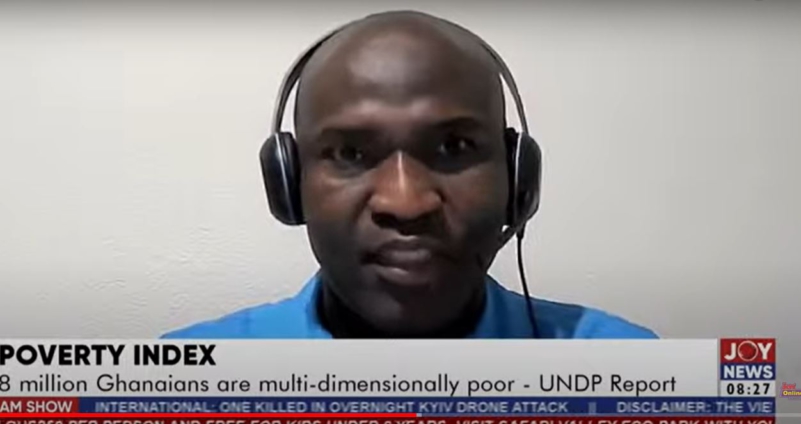
An Economist, Dr Sa-ad Iddrisu, says although Ghana is one of the few countries in Africa to have poverty alleviation programmes, its implementation strategies have always been inefficient.
The expert says implementation strategies have become politicized. As a result, those who are to benefit from it have rather been sidelined.
His comments follow a recent report by the United Nations Development Programme (UNDP) which revealed the high rate of poverty in Ghana.
According to the report, 8 million Ghanaians, are multi-dimensionally poor.
Touching on this, the economist said policies put together can alleviate poverty if there is transparency.
“As a country, we are one of the luckiest in Africa to have poverty alleviation programmes but come to think of it, the implementation has always been a problem in Ghana. It’s not like we don’t have good policies to address the challenges of poverty, but the way we implement it, coupled with our political atmosphere, it turns everything into politics and shifts the benefits away from the people that actually need it,” he said on JoyNews’ AM show on Thursday.
Citing the Livelihood Empowerment Against Poverty (LEAP) policy, the expert said although it is a viable policy, his research on the policy reveals that there is no online portal where one could apply to be enrolled.
This he explained would make it difficult for people of old age and others who evidently need such a programme to survive to be denied the opportunity.
“How can we assist them to get LEAP? There is no online application,” he lamented.
He observed that the policy could be hijacked by politicians who are authorities at the district or constituency level and are responsible for determining who qualifies to be enrolled.
Making a comparison, Dr Iddrisu said the US system is such that anyone who qualifies to be admitted onto a poverty alleviation programme does not have to go around begging authorities but they only apply online after which the government makes provision for such people based on their income qualification.
Speaking also on the country’s National Health Insurance Scheme (NHIS), the economist said politics has rendered the programme quite irrelevant although it could have helped people in the wake of the multi-dimensional poverty case.
According to him, most health institutions nowadays do not regard the scheme anymore; they rely on “cash and carry.”
He concluded that the current resurgence in the poverty rate stems from poor leadership.
Latest Stories
-
Gender Ministry supports Harriet Amuzu in ongoing abuse case
6 minutes -
AG joins plaintiff to scrap OSP ?: We should be mindful of the mischief in this – Bobby Banson
12 minutes -
Samson Lardy Anyenini questions willingness of Attorneys-General to prosecute political colleagues
15 minutes -
It is only fair the OSP is heard in Supreme Court case – Bobby Banson
20 minutes -
Asiedu Nketia resumes Ashanti tour, second leg kicks off on Sunday
29 minutes -
NLA denies salary cut claims, threatens legal action over reports
33 minutes -
BoG Governor honoured for stabilising cedi, improve inflation
35 minutes -
Kyebi Easter Homecoming 2026: A resounding success!
1 hour -
Trade Minister applauds GUTA as a pillar of economic growth; Prez Mahama honoured
2 hours -
President’s brother’s takeover of Damang Mines is ‘untidy’ – Alhassan Tampuli
2 hours -
It’s not true that gov’t decided not to renew the lease for Gold Fields – Bobby Banson
2 hours -
Ghana to boost tomato production with 60-hectare irrigated farms and processing initiatives
2 hours -
E&P’s takeover process of Damang Mines was very clean – Inusah Fuseini
2 hours -
Damang takeover: There is not going to be any job loss; it is a lease change – Bobby Banson
3 hours -
Gold Fields didn’t stop mining at Damang mines; such claims are untrue – Bobby Banson
3 hours