

Audio By Carbonatix
Ghana has introduced an ambitious, citizen-focused programme designed to ensure the nation’s natural resources play a central role in policymaking by 2034.
Under the National Plan for Natural Capital Accounting, environmental factors will be woven into economic planning, aligning the country’s development agenda with the state of its ecological systems.
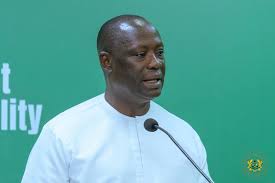
Addressing the Seventh Session of the United Nations Environment Assembly (UNEA-7) in Nairobi, Kenya, on Wednesday, 10 December, Emmanuel Armah-Kofi Buah — Minister of Lands and Natural Resources and Acting Minister of Environment, Science and Technology — underscored the pressing need for the initiative.
He revealed that environmental degradation drains as much as 2.8 percent of Ghana’s GDP each year, at a time when over half of the population depends directly on natural resources for their daily livelihoods.
The initiative will focus on several key areas, including strengthening coastal resilience along Ghana’s 550-kilometer coastline through the West Africa Coastal Areas Resilience Investment Project (WACA-RESIP-2), mangrove restoration, lagoon rehabilitation, and the development of protective infrastructure to safeguard biodiversity and generate green jobs.
In addition, the plan emphasises a just energy transition, with investments in renewable energy and decentralised mini-grids to provide electricity to rural communities, while reducing carbon emissions and supporting sustainable development.
The Minister emphasised that the initiative offers a realistic, nature-driven pathway for national development, ensuring that Ghana’s natural resources are properly valued and preserved for both present and future generations.
“Our progress as a nation is intrinsically linked to nature. This plan guarantees that every policy decision accounts for the true worth of our natural capital,” he stated.
By adopting the National Plan for Natural Capital Accounting, Ghana positions itself as a regional frontrunner in sustainable development, reinforcing the vital connection between environmental protection, economic advancement and social welfare.
Latest Stories
-
Angola appoint Aliou Cissé as new head coach
6 minutes -
Virtual Security Africa showcases digital security vision at Kwahu Business Forum
11 minutes -
EBID strengthens regional integration role amid global economic uncertainty
36 minutes -
Two assault rifles, ammunition retrieved in Police probe of Tamale gang attack
43 minutes -
EBID records strong financial growth with $722m disbursements in 2025 – President, Dr George Donkor
45 minutes -
EBID to mobilise $2.69bn under new 2026–2030 growth strategy – Dr George Donkor
49 minutes -
An open letter to telcos, regulators and security agencies on mobile money fraud in Ghana
49 minutes -
Mobile Money Merchants are driving fraud
1 hour -
Alban Bagbin declines minority’s motion to investigate sale of gold reserves at BoG
1 hour -
NACOC leadership tours drug testing centres in Accra
1 hour -
OSP’s power to prosecute without AG’s authorisation unconstitutional – AG files at Supreme Court
1 hour -
Seven African referees selected for World Cup 2026 as Ndala, Issa Sy miss out
1 hour -
Why diaspora investors are using Accra real estate to hedge against global uncertainty in 2026
2 hours -
GWL urges public support to stem water thefts
2 hours -
Fire guts 2-storey apartment at Ashaley Botwe
2 hours