

Audio By Carbonatix
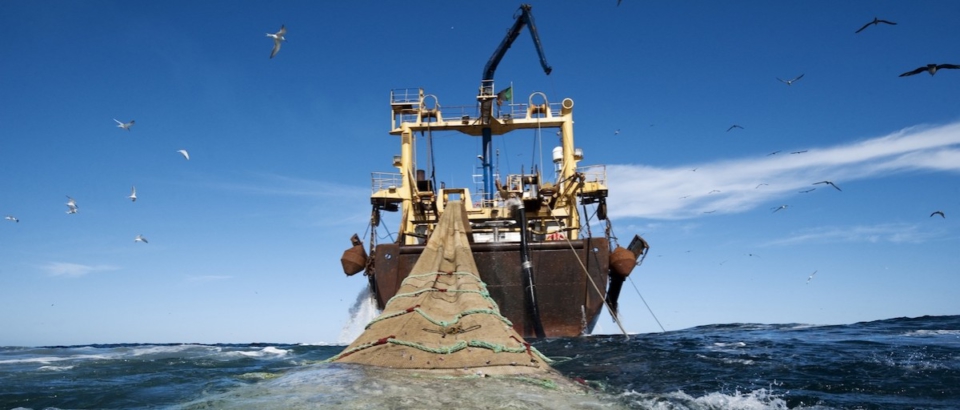
The Environmental Justice Foundation has revealed that an estimated 90 per cent of trawlers operating in the country are owned by Chinese corporations.
The Foundation in a new report stated that Ghana is substantially undervaluing its fisheries resources in arrangements with Chinese fishing companies to license vessels under the Ghanaian flag.
This, according to the report, is apparently causing a loss of an estimated ¢82.5 million annually in potential fishing revenue to the state.
“Overall, it is estimated conservatively that Ghana could be generating an additional $14.4 to 23.7 million annually from its trawl sector by way of fishing licence fees and enforcement revenue for fisheries-related infringements.
“The concealment of beneficial ownership behind local front companies may serve to justify the application of low licence fees and the imposition of financial penalties at well below the statutory minimum,” the report read.
The study identified eight Chinese companies that are currently or in the recent past, have beneficially owned industrial trawlers operating under the Ghanaian flag.
These companies, the Foundation report said it accounted for 75 per cent of trawlers that were licensed to fish in Ghana at the end of 2019.
“Two companies were found to be particularly dominant in the sector: Dalian Mengxin Ocean Fishery Co. Ltd and Rongcheng Marine Fishery Co. Ltd. Together these companies accounted for 44% of licensed vessels at the end of 2019, each with a fleet of 15-20 bottom trawlers operating,” the statement read.
To solve the distant but worrying menace, the report recommended an urgent reforms in Ghana’s trawl sector that first and foremost improve transparency.
It stated that this will clarify who is benefiting from fishing access, what and how much they are fishing, how much they are paying and what these funds are used for.
“There is a need to enhance accountability through parliamentary oversight of industrial fishing licences, as required by the 1992 Constitution13, and to effectively enforce the law governing the nationality of vessel ownership in the 2002 Fisheries Act.”
Other solutions included, the collaboration between the governments of Ghana and to ensure the perpetrators and beneficiaries of illegal fishing are identified and held to account for their acts, through implementation of an enforcement regime.
Latest Stories
-
MTN Ghana gears up to lead Africa’s AI revolution
15 seconds -
Philanthropist Alhaji FuZak donates Da’wah bus to Ambariya Sunni community
8 minutes -
GUTA calls for suspension of Publican AI system over trade disruptions, demands temporary halt in import activities
11 minutes -
TTAG raises alarm over proposed recruitment of 7,000 teachers, demands national posting roadmap
44 minutes -
Civilians feared killed after reports of air strike on Nigerian market
53 minutes -
Bishop Simon Kofi Appiah installed as new Jasikan Diocese Bishop
54 minutes -
Trump’s Strait of Hormuz blockade threat raises risks and leaves predicaments unchanged
57 minutes -
US Court backs extradiction of former MASLOC CEO Sedina Tamakloe-Attionu’s to Ghana
1 hour -
Seven arrested as NAIMOS dismantles illegal mining camp, seizes firearms at Boin River
1 hour -
Fire erupts at Madina Ritz Junction, destroys multiple wooden structures and containers
2 hours -
Daniel-Kofi Kyereh returns from long-term injury, registers assist for Freiburg U23
2 hours -
Knifeman calling himself ‘Lucifer’ slashes three at NYC’s Grand Central
2 hours -
Brands are built from within to without
2 hours -
Matriculants urged to pursue excellence as gov’t reaffirms support for Maritime education
2 hours -
See the areas that will be affected by ECG’s planned maintenance on Monday, April 13, 2026
2 hours