

Audio By Carbonatix
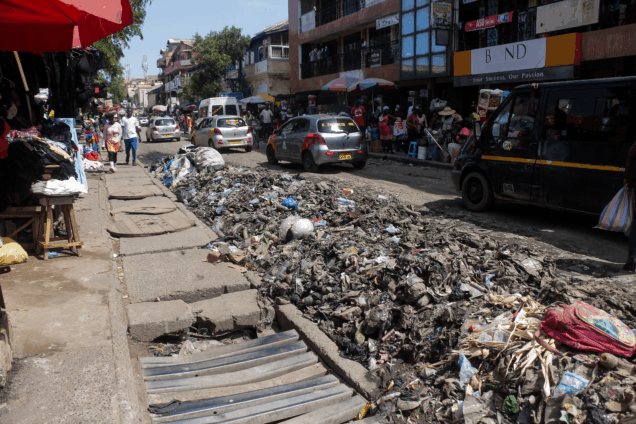
A new study by the Institute of Statistical, Social and Economic Research (ISSER) has revealed that Ghana’s economy is bleeding billions of cedis annually due to the high cost of poor waste management and sanitation practices.
According to the research, authored by Professors Peter Quartey, Ebo Turkson, Yaa Adobea Owusu, and Drs. Kwame Adjei-Mantey and Ralph Armah, inadequate investment in proper waste collection, recycling, and disposal has far-reaching economic, environmental, and public health consequences.
The study highlights how unsanitary conditions contribute to recurring disease outbreaks, such as cholera, resulting in productivity losses, premature deaths, and diversion of scarce national resources into emergency health responses.
The researchers argue that Ghana’s sanitation-related expenditure remains insufficient to tackle the scale of the problem.
Although government realised GH¢551.5 million from the Sanitation and Pollution Levy in 2024, only GH¢ 18.3 million — just 3.2% of projected revenues — was budgeted for sanitation in 2025. This, they said, was “woefully inadequate” to meet the needs of all 261 metropolitan, municipal, and district assemblies across the country.
The study also warns that contamination of soil and water sources due to indiscriminate waste dumping poses long-term risks to agriculture, food security, and livelihoods. Globally, poor waste management costs are estimated to have exceeded US$109 billion in 2020 alone, while indirect impacts on developing economies like Ghana remain under-assessed.
The authors emphasise that “the cost of doing nothing is far greater than the cost of taking action.” They therefore call for a firm political commitment to reinvest more of the sanitation levy directly into waste infrastructure and recycling programmes.
They argue that Ghana’s growing waste management challenge could be transformed into an opportunity for economic innovation, job creation, and improved health outcomes.
“A one percent investment of Ghana’s GDP — roughly US$883 million — into sanitation could generate over US$4.8 billion in benefits,” the study notes, citing WHO estimates that every dollar invested in sanitation yields a return of at least US$5.50 through improved health and productivity.
The ISSER researchers further recommend integrating circular economy principles into Ghana’s waste management system, encouraging recycling, composting, and recovery technologies to create employment, attract foreign investment, and improve environmental quality.
According to them, addressing sanitation is not just a social necessity but an economic imperative, for “Without immediate and sustained investment, Ghana risks perpetuating a costly cycle of environmental degradation, disease outbreaks, and economic loss.”
[Credit: Prof. Peter Quartey, Prof. Ebo Turkson, Prof. Yaa Adobea Owusu, Dr. Kwame Adjei-Mantey & Dr. Ralph Armah, Institute of Statistical, Social and Economic Research (ISSER), University of Ghana]
Read the full paper below:
Latest Stories
-
Stakeholders urged to strengthen cashew industry in Savannah Region
3 minutes -
Minority Caucus meets IMF officials to discuss economic developments
8 minutes -
Monetary Policy Committee reviews policy rate amid global uncertainty
10 minutes -
World Bank commits to sustained investment in Ghana’s education sector
11 minutes -
Kidney disease is an emerging major public health challenge — Health Minister
14 minutes -
ADR remains vital to strengthening nation’s justice delivery system — Chief Justice
24 minutes -
Mbappe back for Man City but Bellingham to sit out
36 minutes -
Ugandan opposition leader tells BBC he fled abroad fearing for his life
47 minutes -
Meta and TikTok let harmful content rise after evidence outrage drove engagement, say whistleblowers
57 minutes -
Parliament expresses condolences to bereaved families of Tema helicopter crash
1 hour -
Iran hits key UAE oil port and Dubai airport
1 hour -
US airline CEOs urge Congress to end shutdown and pay airport workers
1 hour -
Abu Jinapor raises alarm over Ghana’s drop in global mining investment ranking
1 hour -
Ghana’s slip in the Global Mining Investment Attractiveness ranking is troubling
1 hour -
Bank of America settles over Epstein claims
1 hour