

Audio By Carbonatix
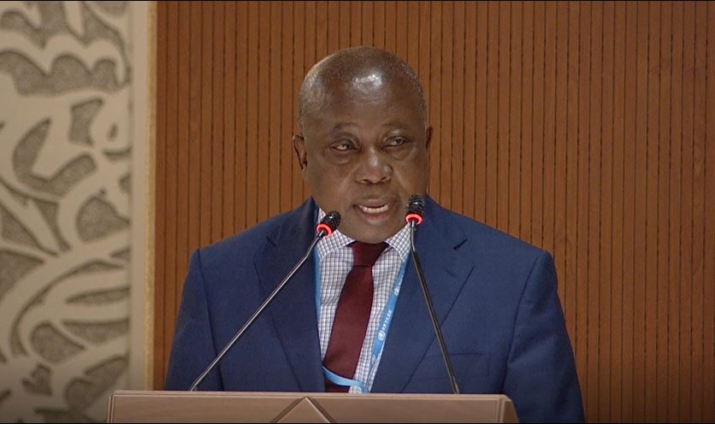
The Minister for Health, Kwaku Agyeman Manu, has pledged Ghana’s commitment to the World Health Organization’s Global Health for Peace Initiative at the just ended 75th World Health Assembly held in Geneva, Switzerland.
In his statement for the plenary debate, Mr. Agyeman Manu expressed Ghana’s support for the theme for this year’s Assembly "Peace for Health, Health for Peace."
He aslo welcomed the WHO’s Global Health Initiative (GHPI), which envisions a theory of change based on equitable access to health services, health interventions that promote trust and dialogue, strive for universal health coverage, generate trust, and promote peace and reconciliation.
Mr. Agyeman Manu indicated that the Sustainable Development Goals (SDGs), a global development policy framework and a universal call to action to end poverty, protect the planet, and ensure that all people enjoy peace and prosperity, and Universal Health Coverage (UHC), cannot be attained if there is no peace.
"The endorsement by global leaders in September, 2019 of the Political Declaration of the United Nations High-level Meeting on Universal Health Coverage shows that there is enough political ambition and commitment by governments to increase health spending, reduce out-of-pocket payments, and inequalities by strengthening health systems based on strong primary health care (PHC).
The youth's enormous potential can be realised by providing them with education and employable skills, as well as leveraging technology and public-private partnerships for job creation.
This would help to reduce the burden of unemployment among the youth, which is a security threat," he said.
According to Mr Agyeman Manu, health for peace starts with providing fair and accountable governance and social support systems to the people, creating equal opportunities for decent livelihoods for all, and ensuring adequate security of lives and property.
Recognizing that conflicts are a major impediment to health and that a lack of access to health and basic social services can lead to feelings of exclusion, which are major drivers of conflict and violence, Mr Agyeman Manu concluded that, "promoting global peace for health requires a concerted effort at the highest levels of government."
Latest Stories
-
David Selassie Anthony declares bid for NDC Deputy National Organiser
1 minute -
Amin Adam proposes 13 measures to strengthen Ghana’s debt transparency and market confidence
23 minutes -
Mahama announces $2bn annual investment to accelerate industrialisation
28 minutes -
Amin Adam urges monthly disclosure of Sinking Fund as Ghana prepares for DDEP repayments
38 minutes -
Stronger banks will fuel business growth and jobs – ADB MD
39 minutes -
Galamsey: ‘Rivers that fed our grandparents now run the colour of chocolate milk’ – Sam Jonah
41 minutes -
We have been scammed by NDC, government is only doing PR – Abanga Fuseini
42 minutes -
Republic Bank–JoyNews Habitat Fair opens in Ho today
43 minutes -
BoG pledges stability to attract investment, urges stronger Africa–Asia partnerships
47 minutes -
Amin Adam warns treasury bill dependence could expose Ghana to refinancing risks
47 minutes -
Ghana better placed to withstand commodity price shocks – IMF
50 minutes -
GAPTE intensifies efforts to increase bus availability for Aayalolo contra-flow
52 minutes -
Amin Adam warns cedi depreciation could reverse Ghana’s debt relief gains
56 minutes -
Fiscal discipline crucial for pension fund investments – Finance Minister
56 minutes -
BoG Governor rallies IMF to back Africa’s digital sovereignty
1 hour