

Audio By Carbonatix
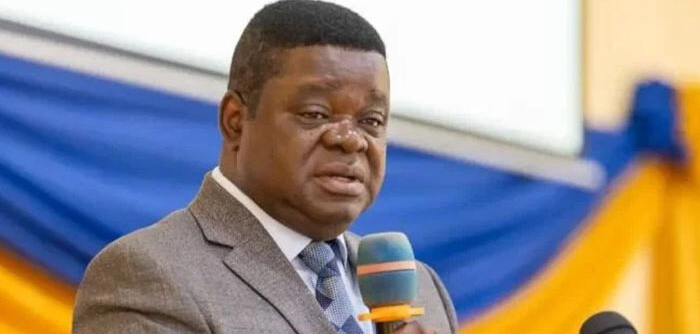
Economist Professor Peter Quartey says Ghana’s economy could outperform the growth projections set by the International Monetary Fund (IMF) and the World Bank for 2025.
The IMF, in its latest World Economic Outlook, forecasts Ghana’s GDP to grow by 4 per cent next year — slightly below the World Bank’s 4.3 per cent estimate. Both institutions remain cautiously optimistic as the country implements reforms under its economic recovery programme.
But Professor Quartey, a former Director of the Institute of Statistical, Social and Economic Research (ISSER), believes Ghana’s resilience and improving fundamentals could deliver stronger results than the Bretton Woods institutions expect.
“Certainly, the IMF and the World Bank are often cautiously optimistic; they don’t want to project so high numbers that only you cannot achieve,” he said.
“But as a country, oftentimes we have gone beyond their projections, all things being equal, and I believe we will go beyond the 4% they are projecting.”
He argued that sustained fiscal discipline and structural reforms could unlock higher growth, noting that international institutions tend to understate the potential to avoid overly ambitious outlooks.
However, Prof. Quartey warned that economic expansion must not come at the expense of environmental preservation. He cautioned against the devastating impact of illegal mining on Ghana’s natural resources.
“Our environmental growth accounting has to be taken seriously,” he stressed. “You can grow by 10 per cent, but if you destroy your environment, water bodies, and poison your food sources, it is not something to celebrate.”
Prof. Quartey made these remarks in an interview with Citi Business News on the sidelines of a symposium in honour of Emeritus Professor Ernest Aryeetey at the University of Ghana.
The symposium, themed “Placing Research at the Centre of Higher Education in Africa,” celebrated the legacy of Professor Aryeetey, a distinguished economist and former Vice-Chancellor of the university.
Appointed in 2010, Professor Aryeetey led sweeping reforms that strengthened research capacity, governance systems, and international partnerships. His tenure saw the expansion of graduate programmes, faculty development, and collaborations with leading global universities.
Central to his vision was transforming the University of Ghana into a research-intensive institution capable of driving national and continental development.
He championed the idea that higher education should fuel innovation, policy development, and sustainable growth.
Professor Aryeetey’s legacy of excellence, inclusivity, and institutional reform continues to inspire scholars and policymakers across Africa.
Latest Stories
-
YEA clears majority of beneficiary arrears, assures completion of outstanding payments
8 minutes -
AfCFTA key to building globally competitive African businesses – Zambia envoy urges Ghanaian CEOs
20 minutes -
Albert Kobina Mensah, soil pollution and remediation: Risk assessment, phytoremediation, revegetation
26 minutes -
GIFEC supports national rollout of One Million Coders Programme with laptop presentation
34 minutes -
Old Tafo MP rolls out street lights project to boost security and night-time economy
41 minutes -
Telecel Ghana CEO urges urgent education reform and stronger industry-academia partnership at UEW Public Lecture
51 minutes -
Nigerian army general and several soldiers killed in assault on military base in northeast
52 minutes -
Dagbamete chief urges completion of road project, expansion of vocational training
60 minutes -
Urgently cancel Truedare AI Customs deal over cost concerns – Joseph Cudjoe to Mahama
1 hour -
Poor safety habits to blame for recurring boat fatalities — GMA boss, Kamal-Deen Ali
1 hour -
Owabi 75% blocked, Barekese loses 40% capacity as siltation, plastics threaten water supply crisis
1 hour -
Ashanti RCC seeks to clear unauthorised garages under new car mall initiative
1 hour -
DPS International steals spotlight at Ghana Interschool Festival Part 2
1 hour -
Republic Bank Ghana PLC leverages Kwahu Business Forum deliberations
1 hour -
Ghana and Artemis II: Hospitality, Love, and Conquest
1 hour