

Audio By Carbonatix
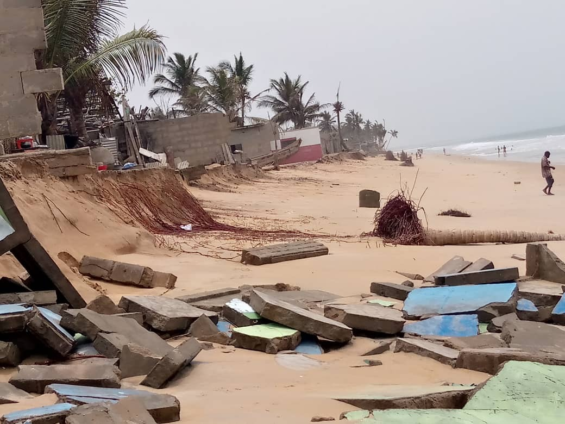
Ghana has placed coastal protection and ecological restoration at the centre of its environmental agenda, announcing a series of large-scale programmes aimed at restoring damaged ecosystems and shielding vulnerable communities from climate impacts.
Speaking during the seventh session of the United Nations Environment Assembly (UNEA-7) in Nairobi, the Minister for Lands and Natural Resources, Emmanuel Armah Kofi Buah, said coastal communities were already feeling the effects of environmental degradation and climate change.
“For us in Ghana, this reality is not distant. Fishermen watch the sea clean their shores. Farmers face failing rains. Families breathe polluted air.”
He explained that restoration efforts have become a key part of Ghana’s response. “Across our landscapes, reclamation programmes are restoring degraded soils, rebuilding river banks and bringing life back to damaged lands,” he said.
The Minister added that the government is also “strengthening coastal resilience through mangrove and lagoon restoration. We are shaping a fair and responsible model for critical minerals," he said.
On clean energy, the Minister highlighted a major new investment plan. “Ghana launched a $3.4 billion clean energy investment plan,” he said. The programme will expand solar and wind power, develop new mini-grids, and introduce solar irrigation systems for farmers.
He described it as “a defining step in West Africa’s clean energy future” and said it reflected President Mahama’s vision for “a resilient, innovative and inclusive transition”.
The Minister appealed to the international community, urging countries to match Ghana’s efforts with stronger global cooperation. “We call on this assembly to match national ambition with global responsibility. We call for climate finance that is accessible, predictable and fair. We call for a strong technological partnership that allows developing nations to act at the speed demanded by science.”
He added a further appeal for tighter environmental governance.“We call for strong global rules on pollution, especially plastics, chemicals, e-waste and hazardous waste.”
Addressing the growing importance of critical minerals, the Minister said, “We call for fairness in the critical minerals economy. Countries like Ghana must be supported to add value at home while protecting ecosystems and communities.”
He also mentioned the need for greater investment in measures that help countries withstand climate impacts. As he put it, “We call for serious investment in resilience from coastal protection to forest conservation.”
Latest Stories
-
GPRTU in Savannah Region to protest alleged eviction in Damongo
18 minutes -
Re: Reinsurance does not replace process — A response to the SIGA–SIC defence
33 minutes -
Gender Ministry supports Harriet Amuzu in ongoing abuse case
46 minutes -
AG joins plaintiff to scrap OSP ?: We should be mindful of the mischief in this – Bobby Banson
52 minutes -
Samson Lardy Anyenini questions willingness of Attorneys-General to prosecute political colleagues
54 minutes -
It is only fair the OSP is heard in Supreme Court case – Bobby Banson
1 hour -
Asiedu Nketia resumes Ashanti tour, second leg kicks off on Sunday
1 hour -
NLA denies salary cut claims, threatens legal action over reports
1 hour -
BoG Governor honoured for stabilising cedi, improve inflation
1 hour -
Kyebi Easter Homecoming 2026: A resounding success!
2 hours -
Trade Minister applauds GUTA as a pillar of economic growth; Prez Mahama honoured
2 hours -
President’s brother’s takeover of Damang Mines is ‘untidy’ – Alhassan Tampuli
2 hours -
It’s not true that gov’t decided not to renew the lease for Gold Fields – Bobby Banson
2 hours -
Ghana to boost tomato production with 60-hectare irrigated farms and processing initiatives
3 hours -
E&P’s takeover process of Damang Mines was very clean – Inusah Fuseini
3 hours