

Audio By Carbonatix
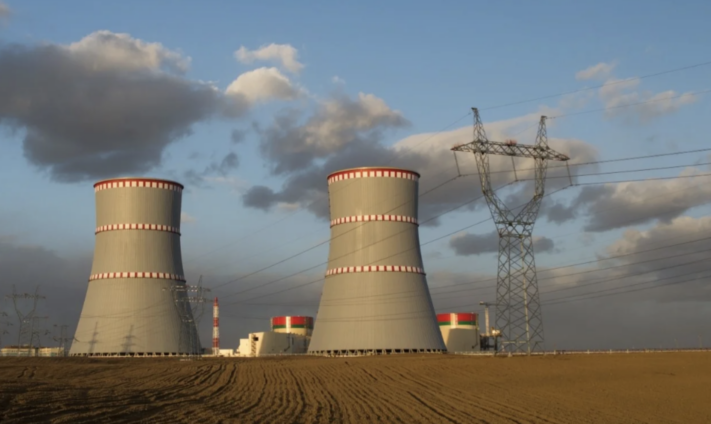
Ghana has selected the United States and China as vendors for its first nuclear power plants, though no formal contract has been signed.
The U.S.-based NuScale Power and Regnum Technology Group, in partnership with Japanese firms, will construct Small Modular Reactors (SMRs), while China National Nuclear Corporation will build a Large Reactor (LR).
This was disclosed by Dr. Stephen Yamoah, Executive Director of Nuclear Power Ghana, to the Ghana News Agency on the sidelines of a media engagement in Accra Wednesday.
He said LR will have a capacity of 1,200 megawatts, while the SMRs will comprise 12 modules, each generating 77 megawatts, totaling 924 megawatts.
Dr. Yamoah said the LR would follow a Build, Operate, and Transfer (BOT) financial model with local equity participation, and the SMRs would be financed through Public-Private Partnerships (PPP).
Ghana has signed a framework agreement with the vendors, and experts are gathering environmental and oceanic data to determine the plant’s location.
Mr. Archibold Buah-Kwofi, Acting Director of the Nuclear Power Institute, underscored the need for stable and affordable electricity for national development, noting that Ghana’s energy mix relied heavily on fossil fuels and hydro, with renewables contributing just one per cent.
“We need to fast-track the adoption of nuclear power to secure our energy future,” he said, highlighting the importance of robust regulatory frameworks and skilled manpower.
Nuclear power is expected to reduce reliance on fossil fuels, mitigate climate change, and enhance energy security.
The government plans to integrate one gigawatt of nuclear power into the grid by 2034.
The plant will support industrialisation, compensate for declining hydro sources, lower tariffs for industries, enable desalination, and create jobs.
The vendor selection followed a thorough process, starting with 16 responses to the government’s call.
A technical team, guided by the Energy Ministry, shortlisted five before choosing the final two.
Ghana’s nuclear ambition, disrupted by a coup in the 1960s, was revived in 2006 with International Atomic Energy Agency (IAEA) support.
It is among several African nations pursuing nuclear energy to tackle power challenges and drive economic growth.
Latest Stories
-
OpenAI changes deal with US military after backlash
33 minutes -
Mexican drug lord ‘El Mencho’ buried in golden coffin
43 minutes -
Building gold reserves, losing hospitals? – Finance professor flags 1% GDP cost
58 minutes -
Trump ‘does not care’ if Iran play at World Cup
4 hours -
Burna Boy’s associate, Rahman Jago confirms singer converted to Islam
4 hours -
Amazon says drones damaged three facilities in UAE and Bahrain
5 hours -
NDC’s Baba Jamal wins Ayawaso East by-election
5 hours -
Integrity over individuals: Economic Fighters League maintains vote-buying stance in Ayawaso East
5 hours -
How to follow European football
5 hours -
A new dawn: Formula One charges into an unpredictable 2026
5 hours -
Trump threatens to halt trade with Spain over military base access
5 hours -
Trump says US Navy will protect ships in Middle East ‘if necessary’
6 hours -
Ghana shines in GSMA DNSI and DPRI 2025 report due to E-Levy repeal and tech neutrality
7 hours -
NJA College of Education inducts 379 students amidst infrastructure gains and calls for professional discipline
7 hours -
GJA President, executives join Sammy Gyamfi to observe One-Week memorial of father-in-law
7 hours