

Audio By Carbonatix
A Ghanaian researcher is calling for broader changes in how mental illness is represented in the media, arguing that legal reforms alone are insufficient to reduce stigma without corresponding changes in public narratives and social attitudes.
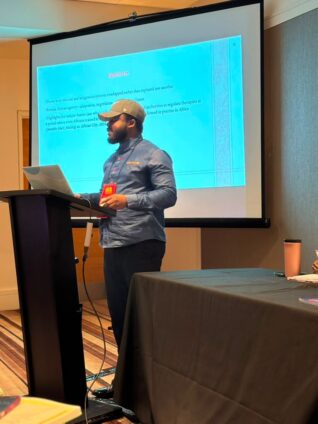
Jonathan Okoe, a doctoral student at the University of Texas at Austin, makes the argument in a recent study titled “Constructing Madness: Media Narratives and Public Understandings of Mental Illness in Contemporary Ghana, c. 2000–2025,” co-authored with Yahaya Halidu and published in the Academic Journal of History and Idea.
The study examines how Ghanaian media coverage, documentaries, and public discussions between 2000 and 2025 have shaped public understandings of mental illness through recurring narratives linked to spirituality, morality, danger, vulnerability, and social disorder.
According to the researchers, the media do not simply report on mental illness but also serve as important spaces where social meanings surrounding psychological distress are constructed, reproduced, and negotiated. As a result, media narratives can influence public attitudes toward people living with mental health conditions.
The article argues that although Ghana’s Mental Health Act of 2012 helped increase awareness of mental healthcare and patient rights, public perceptions of mental illness have evolved more slowly. Many media representations continue to combine biomedical and rights-based language with longstanding cultural narratives associated with spirituality, witchcraft, curses, and shame.
The researchers contend that these representations can contribute to the persistence of stigma, social exclusion, and fear of public judgment, even as efforts are made to improve mental healthcare delivery and protect the rights of patients.
The study also highlights broader challenges facing Ghana’s mental health system, including overcrowded psychiatric facilities, shortages of medication, inadequate funding, and a limited number of trained professionals. According to the authors, these institutional challenges interact with cultural beliefs and media representations in ways that complicate meaningful reform.
Rather than suggesting that the media alone create stigma, the researchers argue that journalism functions as both a reflective and generative space where existing social attitudes are circulated, reinforced, challenged, and sometimes transformed.
They therefore call for more responsible and empathetic reporting on mental health issues, emphasising the need for media narratives that promote dignity, understanding, and informed public discussion.
The researchers conclude that improving mental healthcare outcomes in Ghana will require not only legal and institutional reforms but also broader changes in how mental illness is discussed and understood within society.
Jonathan Okoe is a doctoral student in the Department of History at the University of Texas at Austin whose research focuses on health, medicine, science, technology, digital humanities, and medical anthropology in Africa.
Latest Stories
-
Ghana Enterprise Brands Awards 2026: Leading brands, business trailblazers to shine on November 30
13 minutes -
T-bills auction: Demand improves as government exceeds target by about 76%; interest rates soften
19 minutes -
Ziope undertakes initiative to build a technologically inclined community, commissions self-help ICT lab
43 minutes -
ECG announces power outage in parts of Tema, Central Region due to network fault, maintenance
1 hour -
When the Gospel Becomes a Weapon: The church, blackmail and the abuse of faith
2 hours -
JoyNews’ Jacqueline Ansomah Yeboah selected for UK Media Excellence for Emerging Technology Fellowship
2 hours -
Mental Health Alliance urges government to operationalise Mental Health Fund
2 hours -
Ghana–Holy See agreement heads to Parliament after Cabinet approval
2 hours -
Luv FM Corporate Games 2026: Kumasi Central Prisons, Amanfiman Bank win big amid fun
2 hours -
WAFU B U17: Ghana top Group A after win over Togo
3 hours -
Ho Central Mosque reopens amid unresolved leadership dispute that led to closure
4 hours -
Minority caucus questions GH¢16.4m in Ablakwa’s SA evacuation spending, demands independent audit
4 hours -
Gender Ministry meets Nana Akua Addo’s husband over domestic violence after hospital discharge
5 hours -
UG Vice-Chancellor urges swift operationalisation of National Research Fund
5 hours -
Pope Leo to have surgery after lump found in lung
6 hours