


Audio By Carbonatix
The International Monetary Fund (IMF) has projected Ghana’s Debt-to-Gross Domestic Product ratio for 2024 to 82.9%..
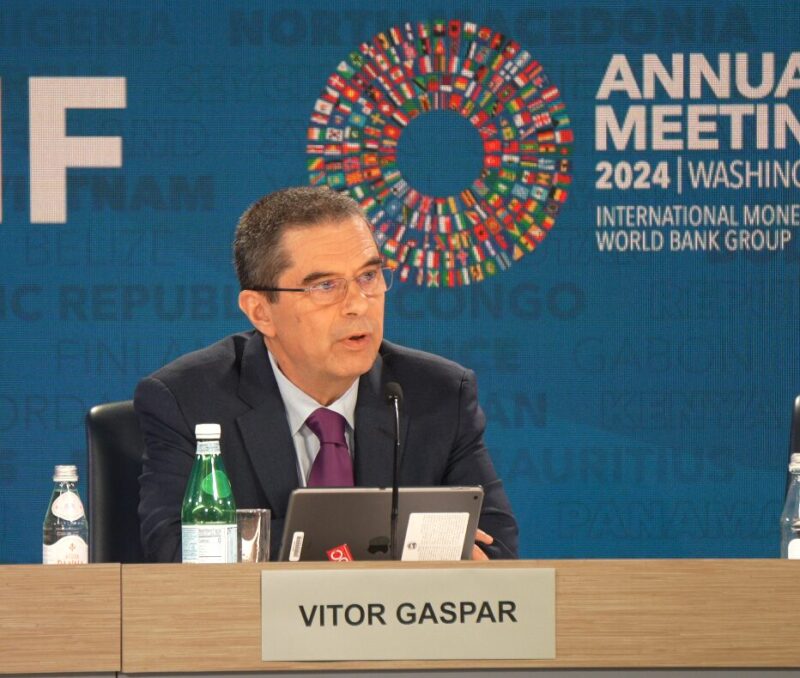
This was contained in the 2024 Fiscal Monitor Report released on the sidelines of the annual IMF/World Bank Meetings in Washington DC USA.
The Bank of Ghana’s Economic and Finance Data ending September 2024 puts Ghana’s Debt to GDP ratio in July 2024 at around 75.7%.
Ghana’s total revenue mobilised at the end of 2024 as a percentage of GDP will however reached 16. 9%.
This represents a marginal increase from what the IMF projected in 2023.
The revenue data also revealed that Ghana has not done much in improving revenue collections.
Debt Exchange Programme and impact on the GDP ratio
The report was based on government’s debt and projections before the Debt Restructuring Programme.
Some officials at the Ministry of Finance told JOYBUSINESS in USA that government expects the Debt-to-GDP Ratio to come down significantly once the Debt Restructuring Programme is included. .
Government has stated that the revised Debt-to -GDP ratio shows that the country is approaching debt sustainability levels by 2028 as projected by the IMF.
Outlook for Ghana’s Debt-to-GDP Ratio
The report further forecasts that Ghana’s Debt-to-GDP ratio will reduce to 79.5% in 2025.
This is the second time the Bretton Woods institution has projected that the debt stock as a percentage of GDP will reduce.
IMF on global debt outlook
The IMF has expressed concerns about the global public debt, describing it as very high.
It is expected to exceed $100 trillion (93% of global GDP) in 2024 and to keep rising through the end of the decade (approaching 100% of GDP by 2030).
Although debt is projected to stabilize or decline in about two thirds of the world’s countries, it will remain well above levels foreseen before the pandemic.
“Countries where debt is not projected to stabilize account for more than half of global debt and about two-thirds of global GDP”.
“The political discourse on fiscal issues has increasingly tilted toward higher government spending in recent decades”.
“Fiscal policy uncertainty has increased, and political redlines on taxation have become more entrenched” the report said.
“Spending pressures to address green transitions, population aging, security concerns, and long-standing development challenges are mounting”, it added.
Latest Stories
-
The Ghanaian prophet and the mysterious death of his scottish wife Charmain Speirs
3 minutes -
Nearly 400 sentenced in Nigeria for links to militant Islamists
25 minutes -
Ghana’s recovery supported by gold strength despite global oil price pressures – Standard Bank Research
32 minutes -
Kwaku Azar writes: A-G vs OSP
1 hour -
Mfantsipim–Adisadel rivalry built excellence, not division – Sam Jonah
1 hour -
Vice President launches Mfantsipim’s 150 years of shaping Ghana’s greatest mind
2 hours -
I assure Otumfuo, Mahama will join him to commission KNUST Teaching Hospital by end of this year – Haruna Iddrisu
2 hours -
Barcelona dominate derby to extend La Liga lead
3 hours -
Gov’t to roll out free special education for persons with disabilities from July 1 – Education Minister
3 hours -
Importers and Exporters Association declares full support for Publican AI port system
3 hours -
“We used it to test our officiating officials’ readiness” – Bawah Fuseini after CAA Athletics event
3 hours -
Volleyball emerges as Ghana’s fastest rising sport
3 hours -
National Sports Fund needs strong leadership from the top – Administrator David Wuaku
4 hours -
JoySports Exclusive: Steve McLaren in talks with GFA after expressing interest in Black Stars job
4 hours -
Fire guts auto parts warehouse at Bubuashie, one fire officer injured
4 hours