

Audio By Carbonatix
A capacity-building workshop has equipped Ghanaian journalists with deeper insight into how to accurately report on Environmental, Social and Governance (ESG) issues as the country prepares for mandatory sustainability reporting by 2027.
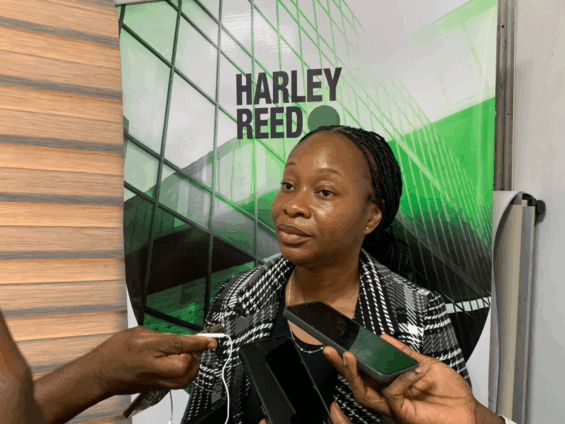
The training, led by Harley Reed, focused on sharpening journalists’ ability to ask the right questions, interpret sustainability data, and hold institutions accountable as global business standards continue to shift toward ESG-driven transparency.
What ESG really means
ESG refers to a company’s environmental impact, its social responsibilities, and the governance structures that ensure accountability. Globally, ESG compliance has become a key indicator of organisational resilience, ethical behaviour, and long-term financial stability. Investors increasingly rely on credible ESG data to assess risk and sustainability.

Speaking after her presentation, Harley Reed’s General Manager for Advisory Services, Cima Sholotan, said the world is moving firmly toward ESG-focused economies, where organisations that prioritise sustainability tend to be more competitive and trustworthy.
She emphasised that while Ghanaian organisations are gradually aligning with global standards, a significant communication gap remains.
“The media shape public understanding, but limited familiarity with ESG frameworks often leads to underreporting or misinterpretation,” she noted.
Sholotan encouraged organisations, especially SMEs to start building their capacity ahead of Ghana’s planned transition to mandatory ESG reporting under IFRS S1 and S2, which will require businesses to disclose sustainability and climate-related information.

According to her, early preparation is vital: “Being prepared now is far better than rushing when reporting becomes mandatory.”
She added that many organisations are unsure how to begin their ESG journey. The first step, she said, is building internal awareness and establishing the right systems to collect accurate sustainability data.
The workshop underscored the pivotal role of the media in ensuring that Ghana’s shift toward ESG transparency is understood, scrutinised, and effectively communicated, ultimately strengthening public trust, accountability, and investor confidence.
Latest Stories
-
Mahama nominates Pamela Graham as Auditor-General
26 minutes -
What everyone should know about C-sections
2 hours -
Health Ministry engages Ga Mantse ahead of Free Primary Healthcare launch
3 hours -
We can tackle multiple priorities – Sam George defends Anti-LGBTQ Bill push
3 hours -
Statement: Ghana Chamber of Mines’ Response to Claims in Joe Jackson’s “Ananse Stories about the Economy of Ghana”
3 hours -
GES opens 2026 teacher recruitment for licensed B.Ed graduates
3 hours -
Ghana must value skilled trades, build resilient learners — Ibn Chambas
3 hours -
Ghana must rethink education around relevance, resilience and responsibility — Ibn Chambas
3 hours -
Prince Harry faces defamation lawsuit from charity he co-founded
3 hours -
South Korea deploys thermal cameras to track escaped zoo wolf
4 hours -
Calls for royal meeting with Epstein survivors grow ahead of US visit
4 hours -
Ibn Chambas advocates blend of technology and human values in education
4 hours -
UMA improves healthcare access in Asutifi North with GH₵700k ‘Kim Taylor Legacy’ Walkway
4 hours -
Scholarships Authority and Fanaka University offer sponsorship for procurement and supply chain studies
4 hours -
Bisa Kdei drops new single ‘Go N Look’ featuring Medikal
4 hours