

Audio By Carbonatix
In the bustling streets of Accra, a regular day unfolds with cars snarled in traffic and motorcycles deftly navigating the labyrinthine maze. Motorbikes seem to be everywhere you look, serving a multitude of purposes from deliveries to daily commutes. Yet, amid this vehicular symphony, a stark contrast emerges.
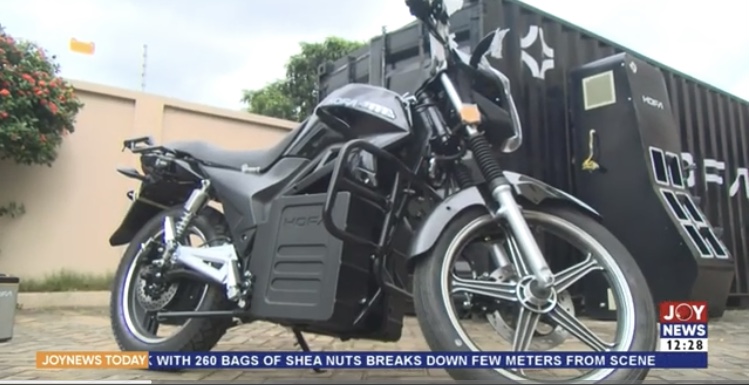
Many of these motorbikes are fossil fuel-consuming beasts, spewing out a noxious cocktail of pollutants into the air. However, quietly and efficiently, electric motorcycles are carving a path through this chaos, offering a clean alternative to their gas-guzzling counterparts.
The future is undoubtedly electric, but for those already entrenched in combustion engines, concerns range from the availability of charging infrastructure to efficient batteries, not to mention the specter of range anxiety.

Ida Mannoh, the VP of Marketing at KOFA Technologies, believes in bridging this gap. KOFA Technology's "Swap and Go" initiative is a game-changer for electric motorcycle enthusiasts. Here, riders can exchange their depleted batteries for fully charged ones in a matter of minutes, all while reducing harmful emissions.
“We wanted to move society from a fuel-dependent one to one that relies on efficient energy that is also safe for the environment. With our technology, we can build a solution that is more end-to-end, analogous to a petrol station," says Ida Mannoh.
For riders like Priscilla Afeli, the switch to an electric bike has brought significant improvements.
“The first time I saw an electric bike, I thought it was a toy until I sat on it. It was smooth, quiet. If I have to choose between this and the other fuel bikes, I’ll choose an EV bike 100 percent,” Priscilla enthuses.
Ghana has ambitious goals, aiming to achieve net-zero emissions by 2025. Studies reveal that, on average, a motorbike produces 119.6g of CO2 per kilometer, assuming a single rider. Adding more riders increases weight, making the engine work harder and emit even more CO2. Electric bikes are poised to be a real game-changer in this regard.
While electric motorbikes currently represent a small fraction of the two-wheeled vehicles on Accra's streets, they are paving the way for a cleaner, quieter, and more accessible urban future. The future of urban transportation is electric, and it's not just a dream. It's the silent revolution of electric motorcycles, changing the way we move through our cities, one ride at a time.
*****
"This story was a collaboration with New Narratives. Funding was provided by the Clean Air Fund."
Latest Stories
-
Monetise Idiocy In Ghana
5 minutes -
The Ghanaian prophet and the mysterious death of his scottish wife Charmain Speirs
50 minutes -
Nearly 400 sentenced in Nigeria for links to militant Islamists
1 hour -
Ghana’s recovery supported by gold strength despite global oil price pressures – Standard Bank Research
1 hour -
‘Excellence is our inheritance’ – Nana Sam Brew-Butler hails Mfantsipim’s 150-year reign in leadership
2 hours -
Kwaku Azar writes: A-G vs OSP
2 hours -
Mfantsipim–Adisadel rivalry built excellence, not division – Sam Jonah
2 hours -
Vice President launches Mfantsipim’s 150 years of shaping Ghana’s greatest mind
3 hours -
I assure Otumfuo, Mahama will join him to commission KNUST Teaching Hospital by end of this year – Haruna Iddrisu
3 hours -
Barcelona dominate derby to extend La Liga lead
3 hours -
Gov’t to roll out free special education for persons with disabilities from July 1 – Education Minister
4 hours -
Importers and Exporters Association declares full support for Publican AI port system
4 hours -
“We used it to test our officiating officials’ readiness” – Bawah Fuseini after CAA Athletics event
4 hours -
Volleyball emerges as Ghana’s fastest rising sport
4 hours -
National Sports Fund needs strong leadership from the top – Administrator David Wuaku
4 hours