

Audio By Carbonatix
The Ghana Statistical Service (GSS) has released the July 2025 edition of the Quarterly Labour Statistics, revealing a marginal decline in the national unemployment rate.
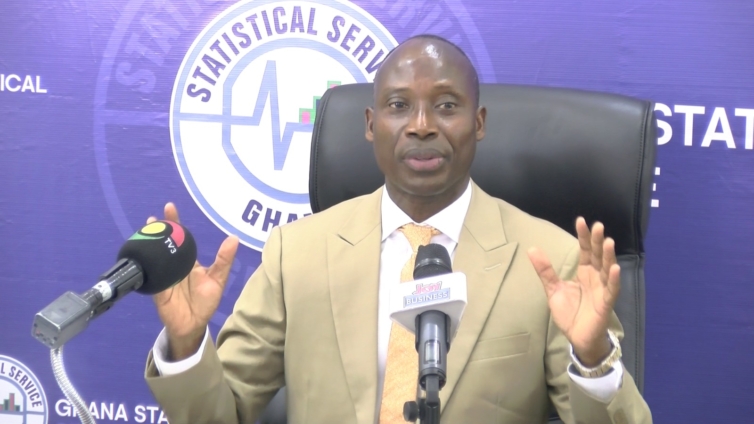
According to Government Statistician, Dr. Alhassan Iddrisu, data collected from over 9,000 households across the country showed that Ghana’s unemployment rate fell from 13.3% in the third quarter of 2024 to 13.1% in the fourth quarter of 2024.
"This modest decline we've seen signals progress but reveals persistent distress. In 2024, youth unemployment remains alarmingly high at 22.5% for ages 15 to 35 and 32% for ages 15 to 24. This evidence highlights the agency of expanded and more focused labor market practices and policies such as retraining and re-skilling programs to combat skills mismatch and boost employability," he stated.
Despite this improvement, he emphasized that youth unemployment remains a major concern. The figures show that in 2024, the average unemployment rate among persons aged 15 to 24 years stood at 32%, while those aged 15 to 35 years recorded 22.5%.
Dr. Iddrisu noted that the persistent youth joblessness signals an urgent need to expand employment opportunities. He highlighted initiatives such as the 24-hour economy policy as examples of measures that could help absorb the growing youthful labour force.
According to him, "this reflects persistent youth unemployment challenges and disengagement from both work and education, reinforcing the need to expand economic opportunities, employment opportunities and initiatives and promote economic expansion. We can do this through programs such as the 24-hour economy, which is currently under implementation, to create more flexible and accessible job opportunities."
The Ghana Statistical Service further provided recommendations for government to address labour underutilization and skills mismatch, stressing that aligning the skills of job seekers with the needs of industries will be critical in reversing unemployment trends.

We are proposing that there's a scale-up of apprenticeships, graduate employment schemes and also job placement services. There would also be the need for government to reform and expand the TVET to match training with demand, especially in digital, industrial and green economy sectors. We recommend also that government should provide affordable credit to small businesses to boost job creation, especially for women and youth," he stated.
While Ghana’s unemployment rate shows a slight decline, the persistently high youth joblessness underscores the urgent need for targeted policies, skills development, and expanded economic opportunities to address the challenge sustainably.
Latest Stories
-
Gov’t hopes to clear cocoa farmer arrears within 2–3 weeks – Otokunor
1 minute -
Ghanaian defender Oscar Naasei shines for Granada in victory over Deportivo
3 minutes -
Bitter times for cocoa farmers as chocolate market slumps
20 minutes -
Australians must prove they are over 18 to access porn under new laws
27 minutes -
Ghana not immediately threatened by fuel shortages – Energy Ministry
30 minutes -
Ghana records eight deaths, over 1,000 mpox cases since May 2025 – Health Minister
31 minutes -
X probes offensive Grok chatbot posts as AI safety concerns intensify
33 minutes -
Planet One announces TVET projects worth $327m in three West African countries
39 minutes -
UN Chief condemns attack on Ghanaian peacekeepers in Lebanon, demands accountability
46 minutes -
US-Israeli air campaign hits hundreds of military targets in new wave of Iran strikes
50 minutes -
Ghana must lead Africa in criminalising environmental destruction – Annoh-Dompreh
51 minutes -
US-Israeli war against Iran enters new phase with rise of hardline successor Mojtaba Khamenei
56 minutes -
Kofi Adu Domfeh honoured with Excellence in Climate Journalism and Advocacy Award
57 minutes -
WPL 2025/26: Hasaacas, Ampem Darkoa Ladies close in on another final
59 minutes -
Bole MP donates GHS200,000 to support teacher training college establishment
1 hour