

Audio By Carbonatix
An epidemiologist with the National Malaria Control Programme (NMCP) says more resources are needed to make the goal of eliminating malaria in the country feasible.
According to Dr Nana Yaw Peprah, several innovative decisions are to be implemented towards eradicating the spread of the disease.
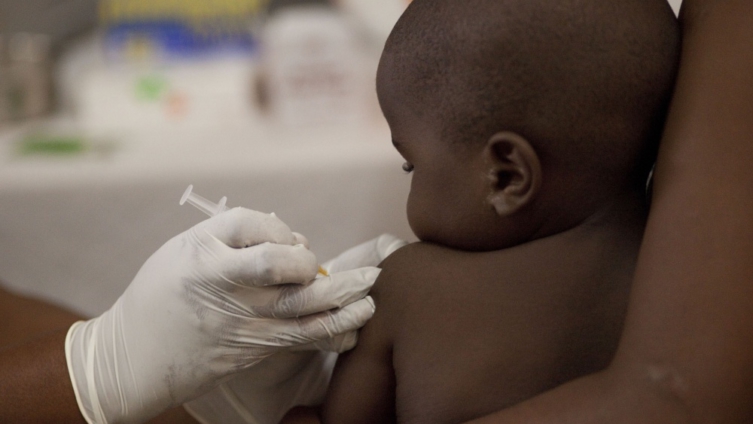
But the lack of adequate resources is impeding the swift delivery of such interventions, although the World Health Organisation (WHO) has given the country the green light to expand the malaria vaccination programme.
Speaking on Prime Morning on Monday, Dr Peprah noted that the NMCP is currently making do with the available resources to achieve some results.
“For instance, what we did in our current strategic plan was to stratify our disease burden and get our interventions more targeted. What that meant was that in some districts, we were doing some interventions we taught would be more efficient.
“So, we try as much as possible to get the best out of the resources available to us. Over the years, we have made this progress with just about half of the resources we need as a Programme. What this means is that if we get more resources, we are going to do more, and elimination is really feasible,” he said.
Dr Yaw Peprah revealed the Programme is liaising with relevant stakeholders to identify ways and means to be more innovative in this fight.
“We’re trying as much as possible to be innovative, to try and see what works well in which places, and if we have the needed resources, we can implement same and get the resource we need to get as a country.”
Reforms needed
A Senior Research Fellow at the Noguchi Memorial Institute for Medical Research (NMIMR) has called for more reforms and investments to be made in the fight against malaria in the country.
Dr Linda Eva Amoah said despite various interventions made to reduce malaria infections, pregnant women and children below five years remain highly susceptible to the disease.
She mentioned that cases of malaria among pregnant women usually affect unborn babies, saying it is one of the leading causes of stillbirths in the country.
“They [children and pregnant women] are the ones that do suffer the most because for children under five, their immune system isn’t that well-developed, and once you become pregnant, you also have become susceptible to a whole lot of different things.
“So, these two categories are very susceptible to malaria, and most of our interventions are targeted to help them,” she said.
Latest Stories
-
‘Neglect is killing our people’ – NALAG President sounds alarm after Accra New Town building collapse
3 minutes -
Prepare to be undeniable – Betty Krosbi Mensah challenges young women to position themselves for political leadership
9 minutes -
Evidence collection must follow rescue, not debris clearance — GhIE President on Accra New Town buiding collapse
9 minutes -
NALAG President writes: When neglect kills in Accra New Town; preventable tragedy
25 minutes -
Abandoned La Beach Towers under assessment as engineers probe unsafe structures
30 minutes -
Disaster averted in Kpong as fuel tanker and articulated truck collide at filling station
32 minutes -
Ga Asafoatsemei demand government intervention as McDan–GACL dispute deepens
38 minutes -
Universities from Ghana and Germany exchange experiences at DAAD forum
42 minutes -
2026 Ghana West Africa Healthcare Excellence Awards: Top companies and individuals honoured
45 minutes -
German Academic Exchange Service hosts Accra event to deepen Germany–Ghana academic partnerships
47 minutes -
Societe Generale launches its Mega Loans Promotion
47 minutes -
Govt to distribute improved tomato variety seeds
48 minutes -
Veep Jane Naana Opoku-Agyemang to attend Africa Energy Technology Conference in Accra
1 hour -
Women should lift one another – Former NDC MP calls for sisterhood in politics
1 hour -
Court moves NAM1 trial to virtual hearing over health concerns
1 hour