


Audio By Carbonatix
The seventh meeting of the Global Forum of Cities for Circular Economy (GFCCE) has officially begun in Johannesburg, South Africa, with delegates from 18 African nations in attendance. The gathering, taking place from January 28 to January 29, is designed to strengthen South-South cooperation to improve solid waste management across countries in the Global South.
Delegates from 18 African nations, including Botswana, Cameroon, Côte d'Ivoire, Ethiopia, Eswatini, Ghana, Kenya, Lesotho, Madagascar, Mozambique, Namibia, Rwanda, Senegal, South Africa, Tanzania, Uganda, Zambia, and Zimbabwe, are taking part in the event.
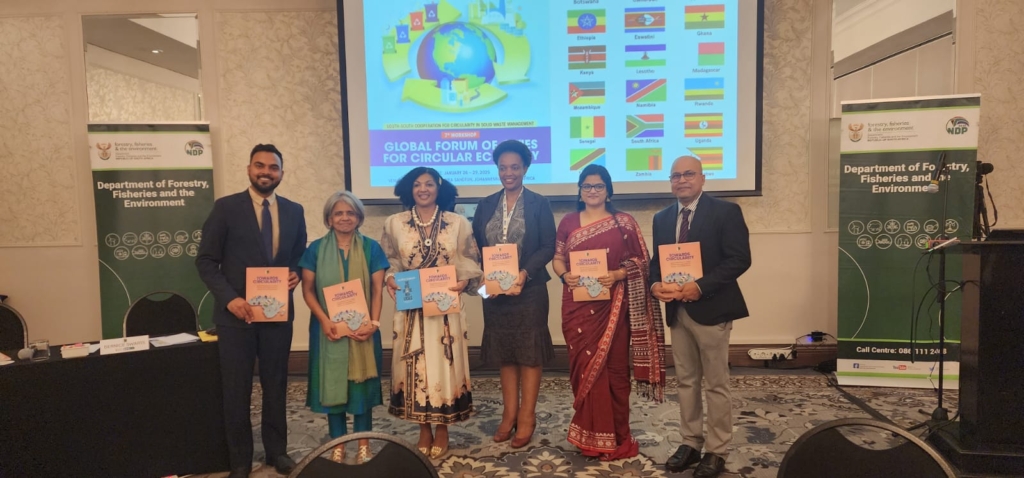
Hosted by the Department of Forestry, Fisheries, and the Environment (DFFE) and the Centre for Science and Environment (CSE), an India-based think tank, the meeting brings together policymakers, experts, and practitioners to exchange knowledge and strategies for implementing circular economy practices. The goal is to create sustainable solutions for managing waste, a critical issue for many cities in the Global South, and to foster collaboration between African nations and their counterparts globally.
With growing urbanisation and increased waste production, the GFCCE meeting emphasises the urgent need for innovation and partnerships to address the environmental challenges posed by waste and pollution.
The discussions are expected to focus on practical steps to transition to circular economy models, which prioritise waste reduction, reuse, and recycling, ultimately benefiting both the environment and local economies.
During the opening of the meeting, Bernice Swarts, Deputy Minister of the Department of Forestry, Fisheries, and the Environment (DFFE) of South Africa, stated that the GFCCE embodies the core principle of South-South cooperation, bringing together nations with a common goal to promote and incorporate the circular economy across the African continent.
“The GFCCE exemplifies the essence of South-South cooperation by uniting nations under a shared vision to mainstream and integrate circular economy throughout the African continent.”
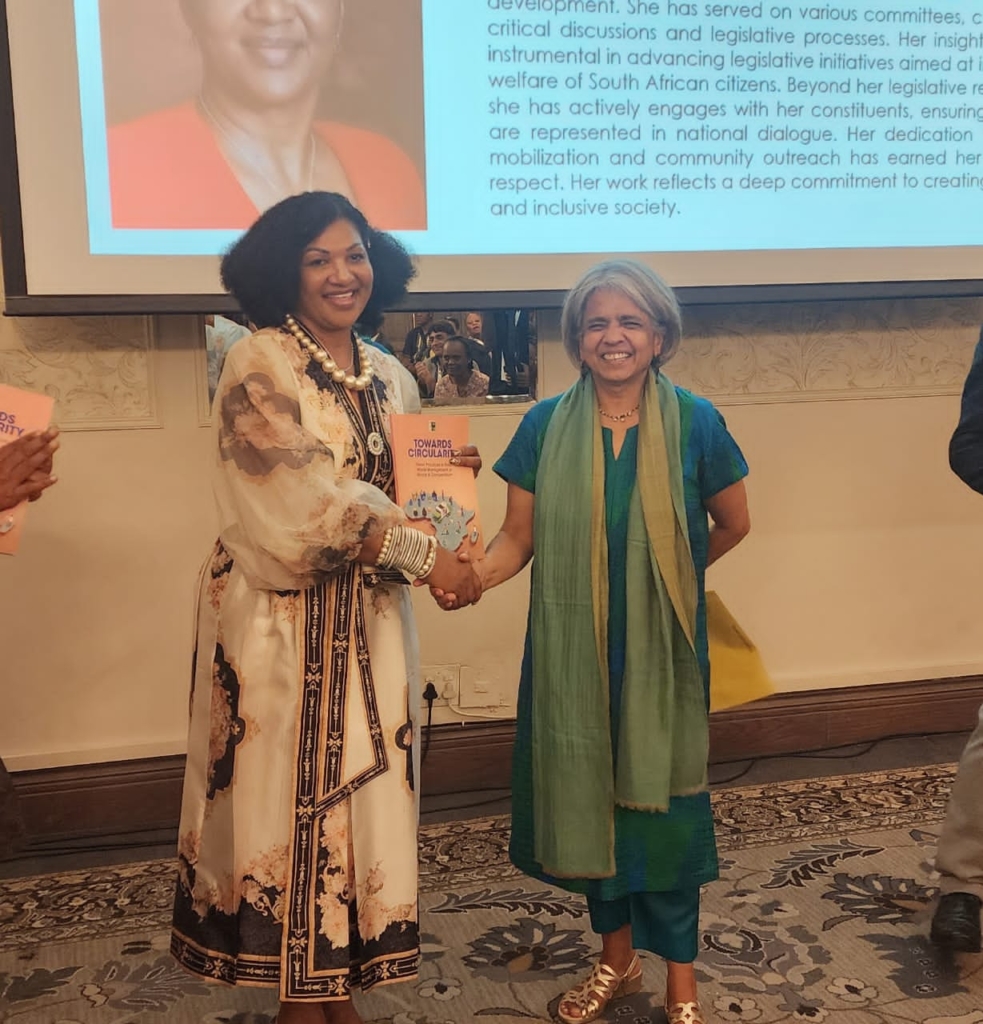
CSE Director General Sunita Narain emphasised that the circular economy is not merely a trending concept, but a practical approach that turns waste into valuable resources. She urged countries in the Global South to take ownership of the circular economy idea and actively embrace its transformative potential.
"It has traditionally been ours – we have always had the practice of reuse, reduce and recycle,” she said.
Atin Biswas, Programme Director of the Municipal Solid Waste and Circular Economy Unit at CSE said that Indian cities have made extraordinary progress in waste management over the past decade, thanks to the political will and data-driven approach of the Government of India.
He said the forum aims to share the Indian experience of Swachh Survekshan with other Global South countries.
"Through this forum, we aim to share the Indian experience of Swachh Survekshan with other Global South countries," she added.
The Forum will also serve as a platform for learning and knowledge sharing among countries, highlighting successful initiatives such as the carry bag bans implemented in East African nations like Tanzania, Kenya, Uganda, and Rwanda. These examples demonstrate the effectiveness of nationwide bans on single-use plastics. The experiences of these nations are being shared with other member states, including India, to help shape a strategy for identifying and phasing out avoidable and problematic single-use plastics.
Programme Manager of the Municipal Solid Waste and Circular Economy Unit at CSE, Siddharth G Singh, noted that Forum members are actively engaging in the Intergovernmental Negotiating Committee to help develop a legally binding treaty aimed at ending plastic pollution.
“While India can learn from East African nations about implementing bans, African countries can benefit from India’s methodology for developing criteria for single-use plastics,” he said.
The GFCCE has been instrumental in promoting knowledge exchange among member states. In 2023, delegates from 18 Global South countries visited Pune, Maharashtra, to gain insights into integrating the informal sector into waste management systems.
Programme Manager of the Municipal Solid Waste and Circular Economy Unit at CSE, Mou Sengupta, highlighted that through GFCCE, the goal is to shape policies that include informal waste pickers in formal systems, ensuring a fair and inclusive transition for all.
“This is particularly relevant for Africa, where the informal sector plays a significant role in waste management. South Africa alone has an estimated 60,000 to 90,000 informal waste pickers,” Mou said.
At the event, CSE unveiled a compendium of best case studies on solid waste management from across Africa. Since its founding in 2021, the Global Forum of Cities for Circular Economy (GFCCE) has grown into a community of 22 member states, comprising 18 African countries and four Southeast Asian nations.
Latest Stories
-
Asiedu Nketia blames Akufo-Addo administration for economic woes
9 minutes -
Eleven killed in Israeli strikes on Gaza, rescuers say
12 minutes -
OPAG warns members against sharing recent viral inappropriate videos
32 minutes -
What is wrong with us? Why Africans complain loudly, follow through weakly, and why a collective reset is now unavoidable
1 hour -
The Big Bang Theory: A Scientific Beginning, Not a Denial of God
2 hours -
The Accra Reset Initiative: Reaffirming Ghana’s Leadership and Africa’s Agency in a Changing World.
2 hours -
Photos of firefighters battling Saturday’s Nsawam–Accra highway tanker explosion
2 hours -
Automobile Dealers union slashes vehicle prices by 15%
3 hours -
Reparatory justice can only be achieved through determination and unity – Mahama
3 hours -
Tamale North MP launches 1Heart Women Empowerment Fund in Tamale
3 hours -
Russia killed opposition leader Alexei Navalny using dart frog toxin, UK says
6 hours -
Obama addresses racist video shared by Trump depicting him as an ape
6 hours -
Frank Davies slams Special Prosecutor as INTERPOL deletes Ofori-Atta Red Notice
7 hours -
Controller issues March 15 ultimatum for Ghana Card verification
9 hours -
Cocoa Crisis: Current challenges are self-inflicted — Oforikrom MP
10 hours