

Audio By Carbonatix
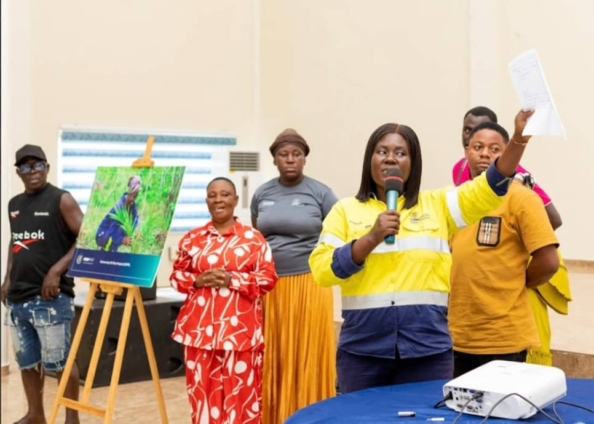
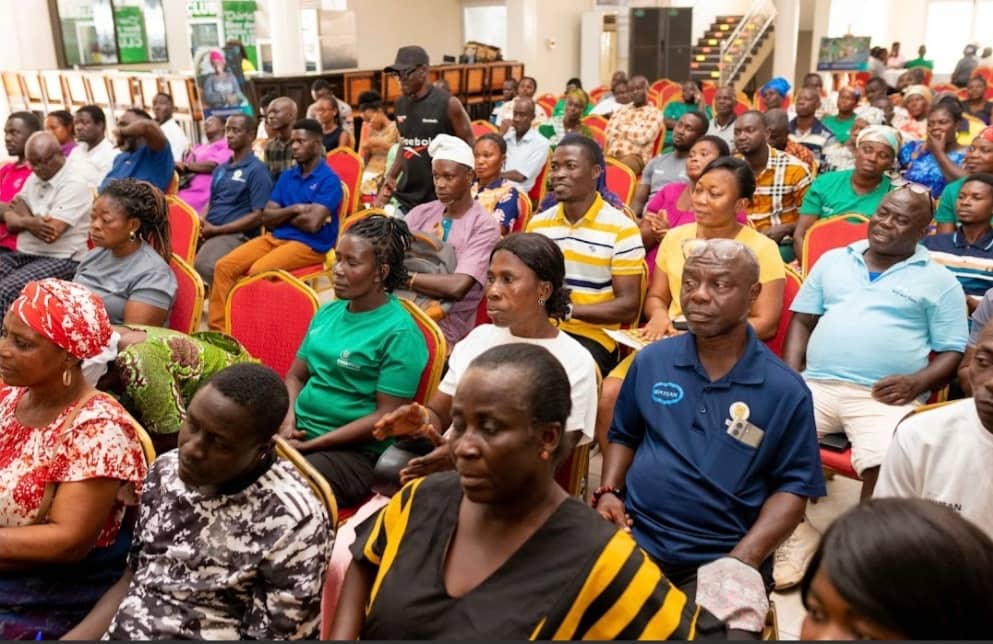
In line with Sustainable Development Goal 6, which underscores the importance of “clean water and sanitation for all,” the Gold Fields Ghana Foundation has held its Quarter Four (Q4) Water and Sanitation Review Meeting to assess activities across 2025. The meeting brought together WATSAN communities from the Tarkwa-Nsuaem and Prestea Huni-Valley municipalities.
According to the Project Coordinator for Water, Sanitation, and Health, the year saw several capacity-building initiatives, including the training of area mechanics, monitoring visits, and quarterly reviews, all aimed at strengthening community-led water and sanitation management for the Foundation’s 22 host communities.
“Together, we assess what has been done and plan how best to run WATSAN activities smoothly and efficiently in the coming year,” she remarked.
She highlighted notable success stories, noting that monitoring exercises revealed remarkable improvements in several communities.
“We know New Atuabo has a success story, with other communities like Amoanda and Koduakrom also doing well, as some have embarked on extensions to underserved areas and others drilling additional boreholes to complement the existing ones,” she emphasised.
She also praised the maintenance culture observed in some areas:
“We visited communities to assess their water and sanitation facilities. Their standpipes and pipelines are well maintained, and we have resourced them with sanitation materials to motivate them to sustain the cleanliness around their facilities,” she said.
However, she expressed concern over the lack of ownership in certain communities:
“A few community members still think that because Gold Fields provided the water systems, it must be for free. But there is a need to ensure maintenance to make it sustainable, hence the need for communities to take ownership and contribute their token when they use it,” she emphasised.
She underlined the critical importance of community commitment for the sustainability of the water systems:
“…The Foundation is preparing to refine its 2026 water and sanitation strategy, and we will stress ownership. Once you own the system, there is a greater commitment to protect and sustain it into the future,” she concluded.
Latest Stories
-
Eleven remanded over land guard case activities
2 hours -
Air Force One set for makeover paint job with new colours
2 hours -
Bodo/Glimt stun Inter Milan to continue fairytale
3 hours -
Ga Mantse stable after early morning accident
3 hours -
Pressure mounts as Arsenal blow 2-goal lead to draw at Wolves
3 hours -
Club Brugge fight back to leave Atletico tie delicately poised
3 hours -
Benfica claim ‘defamation campaign’ against Prestianni
3 hours -
Sinner and Alcaraz reach Qatar quarter-finals
3 hours -
Kenpong Travel and Tours to launch 2026 World Cup travel package on Friday
3 hours -
‘It hurts a lot’ – Coutinho announces Vasco exit
3 hours -
Provider – A new gospel anthem of faith, hope, and divine supply
3 hours -
MOBA heads to Accra Ridge for 11th National Conference on Feb 21
4 hours -
Ghana’s Doris Quainoo clocks new PB 8.23s to claim second place at Jarvis City Invite
4 hours -
Spain luxury hotel scammer booked rooms for one cent, police say
4 hours -
Zuckerberg defends Meta in landmark social media addiction trial
4 hours