

Audio By Carbonatix
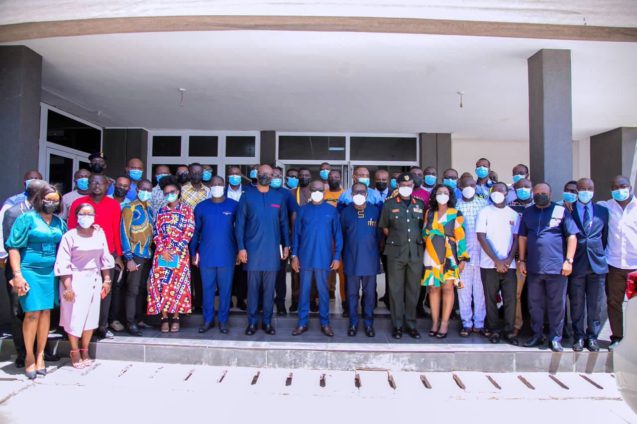
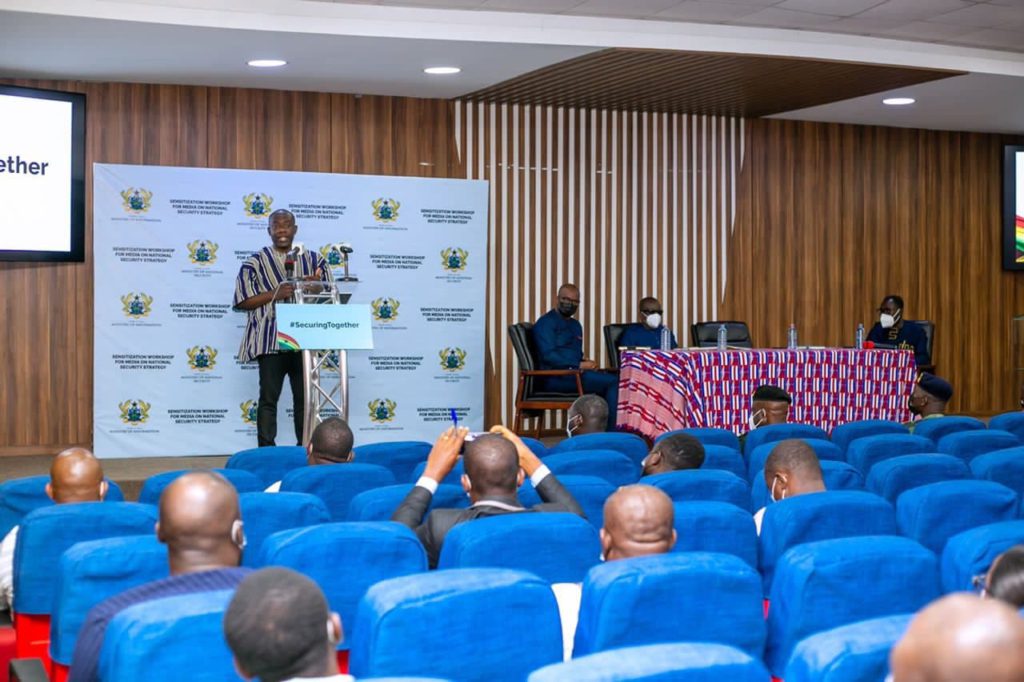
Government has held an engagement session with the media aimed at sensitizing Journalists on Ghana’s newly drafted National Security Strategy (NSS).
The engagement is the first of three sessions put together by the National Security Ministry and the Ministry of Information in taking broad-based inputs from relevant stakeholders, the media inclusive, on the implementation of the NSS.
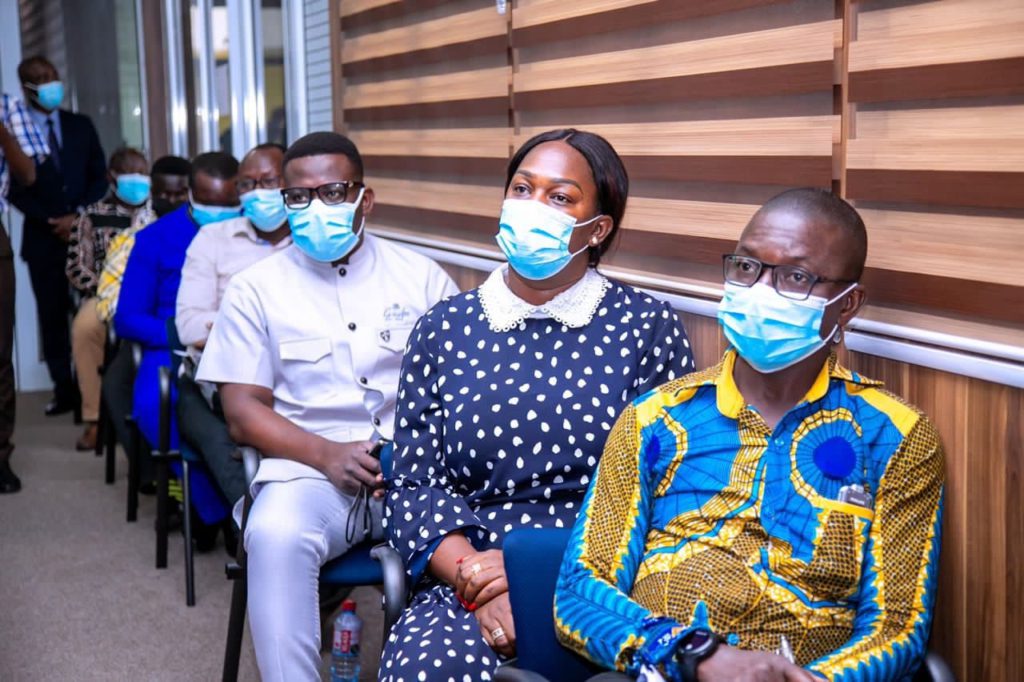
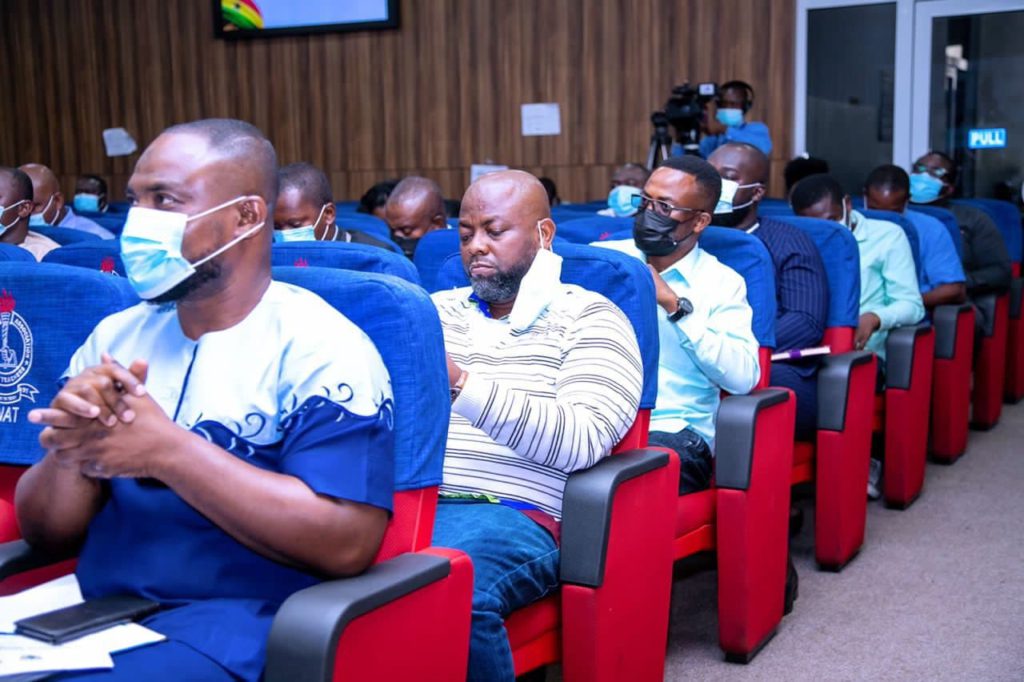
Participants included Journalists drawn from various television and radio networks in the Greater Accra, Central, Western, Volta, Western-North, and Oti Regions.
Addressing the participants, the National Security Minister, Albert Kan-Dapaah said government is using the engagements to primarily equip the media with the appropriate information on the document and how it will be implemented.
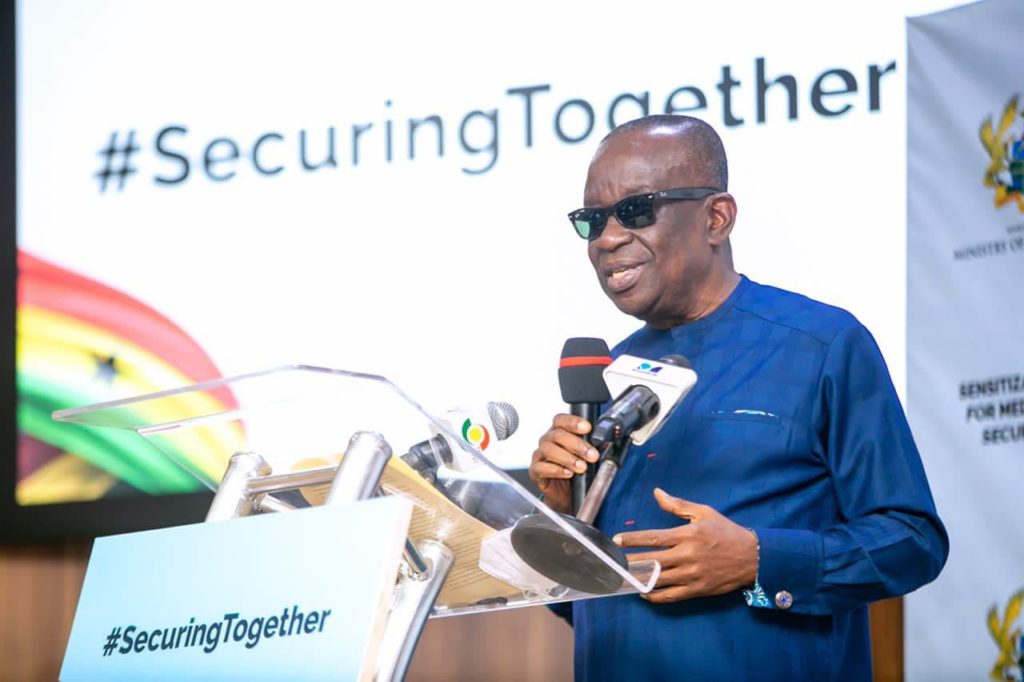
He emphasized the need for the media in the country to be circumspect in their daily reportage, especially on issues that have national security implications.
“The media by definition is an independent institution. There is a limit to the role of other accountability institutions but for the media, it possesses the independence that enables it to hold government to account. It is a very important duty the media play, which is why we get concerned
“That is why it is important that our media men and women don’t play with the security and stability of the country. Also, it is important that the media is able to do away with sensational stories that have very serious security implications, and not because it will help to sell newspapers and get viewership”, he said.
The NSS document was launched on 7th June, 2021 by President Akufo-Addo as part of measures to coordinate a national response effort to protect and safeguard the country from threats, risks, challenges to its security, and stability from both the domestic and international environments.
On his part, Minister for Information, Kojo Oppong Nkrumah whose Ministry facilitated the engagement, underscored the need for extensive education and sensitization on the content of the strategy.
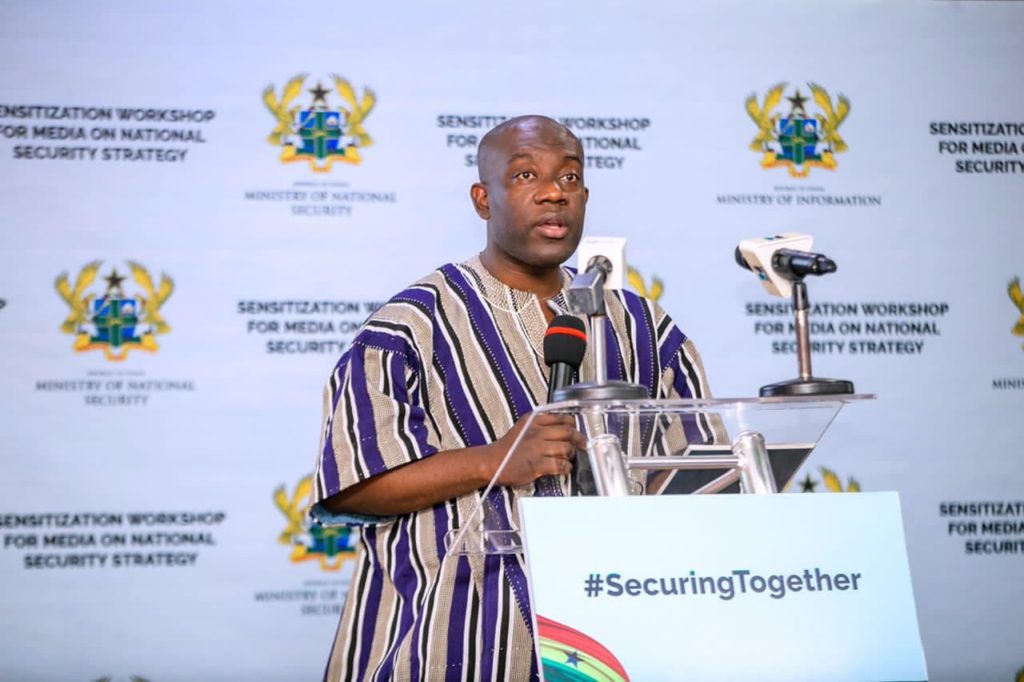
He said the engagement is important because it provides stakeholders the opportunity to deepen their understanding of their roles in the implementation of the strategy.
Latest Stories
-
The attack on Ghanaian traders in Burkina Faso and the blame game: Why Hybrid Security Governance holds the key (I)
13 minutes -
TaxForGalamey: Stop taxing galamsey immediately or face sanctions – Gov’t cautions MMDCEs
17 minutes -
FNB Ghana strengthens balance sheet with higher earnings and improved asset quality
28 minutes -
Stakeholders call for stronger action to advance women’s economic empowerment at UKGCC–British High Commission IWD Event
36 minutes -
Global Network of Export-Import Banks holds 6th exchange programme in Accra
40 minutes -
Prudential Bank Ladies celebrate IWD with candid talk on Love, Life, and Livelihood
41 minutes -
Kejetia Market now a ‘death trap’ – Federation of Kumasi Traders warns
43 minutes -
NDPC DG urges shift to resilient, shock-responsive social protection systems
44 minutes -
New Town building collapse: Enforce existing laws — Architecture Alliance
48 minutes -
Kudus to play under new coach as Tottenham appoint De Zerbi
48 minutes -
Gov’t may review fuel taxes amid rising oil prices – Kwakye Ofosu
57 minutes -
Iran–US conflict pushes fertilizer prices higher, raising food security risks in 2026
1 hour -
Iran using children in security roles in war, reports and witnesses say
1 hour -
Evalue-Ajomoro-Gwira MP pledges to safeguard peace in Lower Axim and Nsein
1 hour -
Global collaboration in focus as Malaysia courts Ghanaian top business executives
1 hour