

Audio By Carbonatix
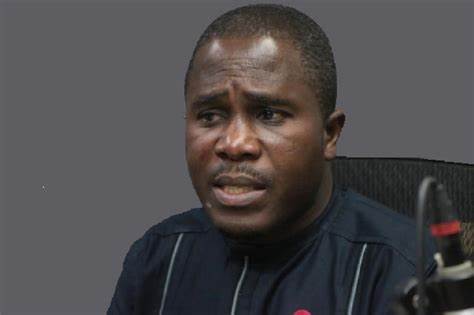
The Executive Director of the Institute for Energy Security (IES) Nana Amoasi VII, has accused the government of “suppressing information in the energy sector.”
He said this was in contrast to previous years when the public could easily access information on the power supply for proper analysis and suggestions to improve the sector.
There have been concerns about unstable power in recent times largely caused by the government's inability to pay millions of dollars owed to independent power producers. However, the government has not been fully open about the real challenges facing the sector.
Speaking on JoyNews' News File on Saturday, November 23, Nana Amoasi said, "We have so much to address, and it will require heavy investment and several years to return to where we were, at least back to the state we were in early 2017."
According to him, "data on power generation and transmission is now harder to find, unlike the Gridco system which was shut down and replaced by a command sector that provides data only to select key people and stakeholders in the industry.
He provided an example, noting that ordinary data sheets generated from Gridco are now classified as private and confidential.
Additionally, he pointed out that information on the amount of power being exported is now restricted.
Elaborating on his point, Nana Amoasi said "We are blinded in this sector" and rhetorically questioned, "What is there to hide?"
He concluded by saying, "We believe the government has not been efficient or effective in utilizing the opportunities and resources entrusted to it".
Ghana shouldn’t have experienced any ‘dumsor’ after 2017
Nana Amoasi VII said the country shouldn't have experienced frequent power outages, commonly known as 'dumsor', since 2017, considering all the necessary capacity to generate and supply power for consumption without any hindrances were in place.
“With the opportunities and resources entrusted to the current government in 2017, we shouldn’t have been experiencing 'dumsor' at all because we had a high installed capacity, a very dependable capacity of 4,300 megawatts,” he said.
He further explained that the country currently has a dependable capacity of 5,100 megawatts but “we are struggling to produce power to the extent of just 3,100 megawatts".
Read Also: Ghana shouldn’t have experienced any ‘dumsor’ after 2017 – IES Boss
Latest Stories
-
CUTS International calls for urgent competition law amid sachet water price hikes
11 minutes -
‘I never did this advert’, AI clones hijack Ghanaian identities for profit
29 minutes -
25-year-old woman battles trauma after surviving deadly Nkwanta attack
46 minutes -
Vice President honoured at Tortsogbeza as South Tongu leaders highlight development needs
54 minutes -
Kwahu Business Forum 2026: Corporate citizenship, sustaining African businesses take centre stage with KGL as the case study
2 hours -
Trump seeks $152m to reopen notorious Alcatraz prison
4 hours -
Ex-Chelsea player Oscar retires with heart issue
5 hours -
CA Foundation drives constitutional literacy in Kpone Katamanso municipality
5 hours -
GPRTU to hold talks with Transport Ministry over rising fuel costs
5 hours -
CUTS International urges gov’t to halt sachet water price hike pending cost review
5 hours -
Chief Justice: Efficient Judiciary essential to reducing business costs
5 hours -
Bayern grabs 99th-minute winner to cap superb fightback
5 hours -
Ahmed Ibrahim urges Ghanaians to reflect Easter values in nation-building
5 hours -
ECG inefficiencies undermining power supply -Mahama outlines reforms
5 hours -
Lewandowski scores as Barca fight back to defeat Atletico
5 hours