

Audio By Carbonatix
Chief Executive Officer of Ghana Athletics (GA), Bawa Fuseini, says Ghana has failed to complement the GA’s work by ensuring that athletes it sends abroad are able to transition from the collegiate system to the professional system.
In the past 10 years, Ghana has sent about 100 athletes to study and train in US colleges, however; only two athletes have since managed to secure contracts to become professional athletes.
According to Bawa Fusieni, the blame falls at the doorstep of the government for failing to provide a sustainable financial support system for student athletes to transition smoothly into professional athletics.
“In the Ghana situation, our athletes after the schooling, is the state willing to support them to transit from the student athlete to the professional athlete?” he quizzed on JoyNews’ PM Express.
Citing other countries’ programmes for athletes, he noted that it would be beneficial for the country to provide some form of financial support for athletes after they leave the collegiate system especially taking into consideration the cost of sustaining their fitness for competitions.
“When you go to Australia and UK and Canada, they have a financial [support] that they give to the athletes after each year’s performance. When you finish the world championship or when you finish an Olympic games those who had got to finals, or those who got medals they’ve got [an amount] of money that they’ll give them to the next Olympic games, those who got the finals they’ve got a certain amount that they’re going to give them to the next Olympic games, and those who have potential, they’re also being supported by the state,” he said.
Bawa Fuseini explained that the reason why athletes who perform extraordinarily well in the collegiate athletics programmes are unable to perform just as well in the non-collegiate athletics programmes is largely due to the fact that the state does not support them to train ahead of those competitions.
“The problem that we have in Ghana is that when they go to the school, the school prepares them to pick around May or first week in June and we can’t blame them for that because the schools are paying for them to come and run for them.
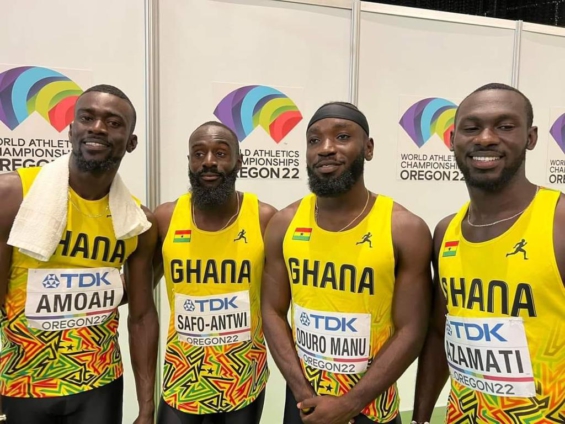
“The schools are not preparing them to pick in August or at the end of July. That’s why Azamati always has that time between April and May,” he said.
“It’s left within Ghana also to have resources to prepare them to also pick after July or even in August,” he suggested.
Latest Stories
-
Iran–US conflict pushes fertilizer prices higher, raising food security risks in 2026
5 minutes -
Iran using children in security roles in war, reports and witnesses say
8 minutes -
Evalue-Ajomoro-Gwira MP pledges to safeguard peace in Lower Axim and Nsein
11 minutes -
Global collaboration in focus as Malaysia courts Ghanaian top business executives
20 minutes -
Bondaye Residents accuse Heath Goldfields of unsafe mining and broken promises
24 minutes -
Evalue Ajomoro Gwira MP calls for calm amid Lower Axim and Nsein chieftaincy tensions
32 minutes -
I know the President listens and he will – Franklin Cudjoe
52 minutes -
Former AG Godfred Dame demands retraction from Kwakye Ofosu over galamsey claims
53 minutes -
All Big Push contractors paid, projects on track – Roads Minister
1 hour -
Photos: Mahama meets CSOs on accountability, anti-corruption and governance
1 hour -
Big Push prioritises precision, quality and value – Roads Minister Agbodza
1 hour -
Big Push agenda targets local contractor development – Agbodza
1 hour -
Between memory and partnership: Ghana’s moral test on reparatory justice
1 hour -
“OSP has always lacked the opportunity to speak” – Samuel Appiah-Darko
1 hour -
Local experts unlock pension capital as Ci Gaba Fund raises GH¢380m to finance SMEs
2 hours