

Audio By Carbonatix
Government to establish ‘sanitation courts’ at Metropolitan, Municipal and District Assemblies (MMDAs) to deal with poor sanitary conditions.
People found culpable of breaching sanitation rules could soon serve a jail term or be fined.
The move is to reinforce measures against indiscriminate disposal of waste, open defecation, and other sanitation challenges confronting the country.
Deputy Minister for Sanitation and Water Resources, Amidu Issahaku Chinnia says the Ministry is collaborating with the Ministry of Justice and the Attorney-General to set aside days to deal with sanitation cases.

Speaking at an event to mark the 2022 World Toilet Day, the sector minister indicated that the government is instituting measures to confront the sanitation crisis.
“We will pursue aggressively the one-house one toilet initiative to ensure households get decent toilets. In the next one year, a total of 200,000 toilets will be added to the toilet stock in the country. We hope to facilitate the construction of toilet facilities in selected schools and health facilities across the country. The Ministry is collaborating with the Ministry of Justice and Attorney-General to set aside special days to trial cases involving sanitation,” he said.
Despite no records of cholera since 2017, the country is still challenged with poor sanitation.
The Ghana Statistical Service in its 2021 Population and Housing Census data indicated that only 25% of the 31.7 million Ghanaian population have access to basic sanitation.
Accessibility to toilet facilities remains an expensive task as 56% of Ghanaians still share toilet facilities with nearly 18% of households in the country still engaged in open defecation.
The Ashanti Region over the last decade has seen a marginal increase in open defecation, from 6% (in 2010) to 7% (in 2021).
In 2021, government with support from the World Bank initiated the Greater Kumasi Metropolitan Assembly Sanitation and Water project to improve access to sanitation and water.
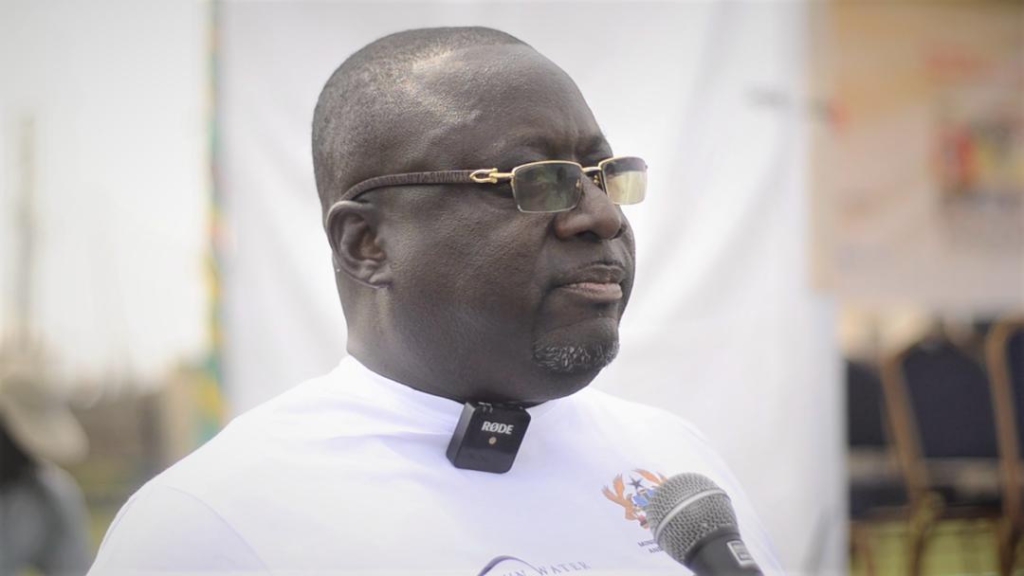
Project Coordinator, George Asiedu says 5,000 out of the estimated 30,000 toilet facilities have so far been built under the 4-year project.
“The reverse from Accra. We need to double our efforts and make sure that we enforce our bye-laws and support many people who do not have access to toilet,” he said.
Currently, the Ejisu Municipality leads in the One Household One Toilet facility initiative in the metropolis.
The municipal assembly is facilitating efforts to construct more toilet facilities in schools and other public locations.
The 2022 World Toilet Day held under the theme: “Sanitation and Ground water”, focused on the impact of sanitation crisis on groundwater.
Latest Stories
-
Government procures over 2,000 transformers as Ghana’s electricity access hits 89.13% – Energy Minister
25 minutes -
UTAG-UG threatens strike on October 19 over unpaid allowance
33 minutes -
Let The Constitution direct Chieftaincy to deliver “All Development Is Local”
2 hours -
John Jinapor outlines renewable energy, nuclear power priorities for 2027
2 hours -
Ghana explores centre of excellence for hearing, communication and cochlear implant care
3 hours -
Schizophrenia-related disorders lead mental health cases recorded in Ghana
3 hours -
Dutch authorities enlist Ghana in hunt for fugitive drug lord Bolle Jos
4 hours -
Ghana housing finance conference adopts communiqué to improve affordable housing access
8 hours -
Special Initiatives Minister urges Wa Technical Institute to enrol more girls as EU-backed solar training lab opens
9 hours -
In the matter of my first year at the Bar
9 hours -
ActionAid Ghana calls for an end to child marriage, greater investment in girls’ rights
9 hours -
Newsfile to tackle World Cup visa scandal, beach demolitions, education strikes, BRICS bid
9 hours -
UK-Ghana Trade & Investment Summit: Trade Resource Centre to help businesses maximise UK-Ghana trade opportunities
10 hours -
Embassy of Denmark celebrates World Maritime Day
10 hours -
Linking LEAP to productive inclusion could cut extreme poverty by 2030 – UNICEF
11 hours