

Audio By Carbonatix
Government has been urged to deepen its efforts of engaging, learning from and supporting local communities to adapt to climate change.
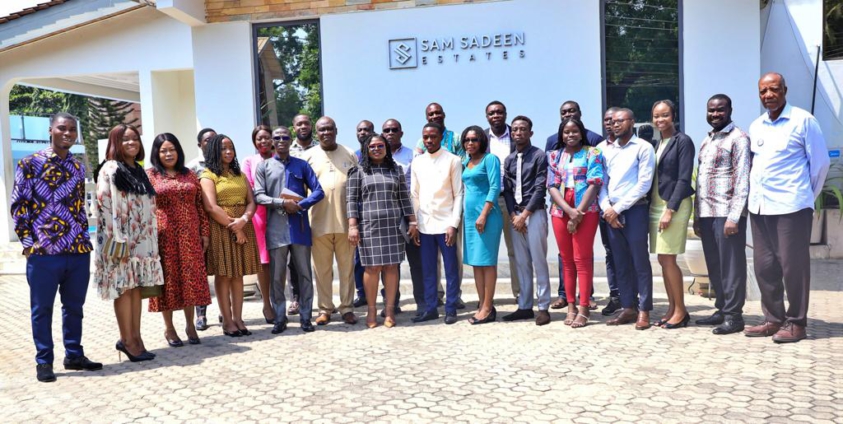
This recommendation came from participants of a one-day multi-stakeholder workshop organised by APRI -Africa Policy Research Institute (APRI), in collaboration with the Ghana Climate Innovation Centre (GCIC).
The workshop was part of activities aimed at sharing research lessons from the project, ‘Climate Change Adaptation in Ghana: Strategies, Initiatives, and Practices’.
the Head of the Climate Change Program at the Africa Policy Research Institute (APRI), Dr Grace Mbungu, stated in her opening remarks that the ‘Climate Change Adaptation in Ghana: Strategies, Initiatives, and Practices Project’ is aimed at understanding the progress, challenges and opportunities of climate change adaptation in Ghana with a particular emphasis on locally-led adaptation.
She stressed that locally-led adaptation empowers local stakeholders and gives communities a voice in decisions that directly affect their lives and livelihoods for greater impacts.
According to her, Ghana’s climate adaptation progress and actions risk being ineffective if it fails to adequately prioritise local-specific views, concerns, innovations and voices of local stakeholders.
She stated that “local communities that are at the frontline of climate change impacts are resourceful, capable, have deep understanding of their own complexities, and are always innovating to respond to climate change in unique ways. They often just need funding, decision-making spaces or other support to deliver their own effective adaptive solutions”.
A Research Fellow at APRI and Kwame Nkrumah University of Science and Technology, Dr Albert Arhin, presented preliminary results of ongoing research and engagement with national stakeholders and local communities across Northern, Middle belt, and coastal ecological zones.
He showed that communities are actively participating in different actions to adapt to the changing climate and its impact on their lives and livelihoods —but not without challenges.
He noted that climate-smart agriculture, community-based conservation actions, community-led irrigation systems, use of energy-efficient cooking stoves, recycling of waste, and local home elevation are a few of the strategies exhibited by communities to respond to different impacts of climate change on their livelihoods.
He stressed, however, that districts and communities do not receive enough support for the design and implementation of climate change adaptation interventions; and that communities have limited access to the resources (financial, human, knowledge etc) and agency needed to implement local innovative solutions effectively.
He concluded that the examples from the research provide important bedrock for Ghana, both central and local governments, to be deliberate in harnessing local knowledge, agency and power to support its adaptation efforts.
“An intentional approach to learning from local-specific vulnerabilities and adaptation responses would help the Ghanaian government capture innovative and indigenous practices that are led by communities, which are likely to be more effective and long-lasting to build the resilience of the communities,” he remarked.
The Acting Director of the Climate Change Unit of the Environmental Protection Agency, Dr Daniel Tutu Benefor, also made a presentation that highlighted key takeaways from the recently held climate change conference in Egypt (COP27) and their implications for Ghana’s progress towards advancing Locally Led Climate Change Adaptation in Ghana.
He noted that some of the national priorities for adaptation include reducing vulnerability, building resilience infrastructure, strengthening early warning systems, and promoting livelihood opportunities for the youth and women in climate-vulnerable agriculture landscapes and food systems.
Latest Stories
-
I assure Otumfuo, Mahama will join him to commission KNUST Teaching Hospital by end of this year – Haruna Iddrisu
19 minutes -
Gov’t to roll out free special education for persons with disabilities from July 1 – Education Minister
41 minutes -
“We used it to test our officiating officials’ readiness” – Bawah Fuseini after CAA Athletics event
1 hour -
Volleyball emerges as Ghana’s fastest rising sport
1 hour -
National Sports Fund needs strong leadership from the top – Administrator David Wuaku
2 hours -
JoySports Exclusive: Steve McLaren in talks with GFA after expressing interest in Black Stars job
2 hours -
Fire guts auto parts warehouse at Bubuashie, one fire officer injured
2 hours -
I owe my victory to coach Ofori Asare – Allotey after winning WBA Africa Gold Super Flyweight belt
2 hours -
Church of Pentecost supports over 2,000 BECE candidates in Obuasi with career guidance seminar
3 hours -
Brandon Asante and Coventry all but promoted to Premier League despite Sheffield Wednesday draw
4 hours -
GPL 2025/26: Late Kwartemaa strike downs Hearts in Tema
4 hours -
Ghana Faces Sierra Leone Moment as Prosecutorial Powers come under strain
4 hours -
Don’t consume fish or seafood from Tema Shipyard until further notice – FDA warns
4 hours -
Why volunteering might be Africa’s most underrated career accelerator
4 hours -
ActionAid Ghana raises concern over gender gaps in Feed Ghana Programme
4 hours