

Audio By Carbonatix
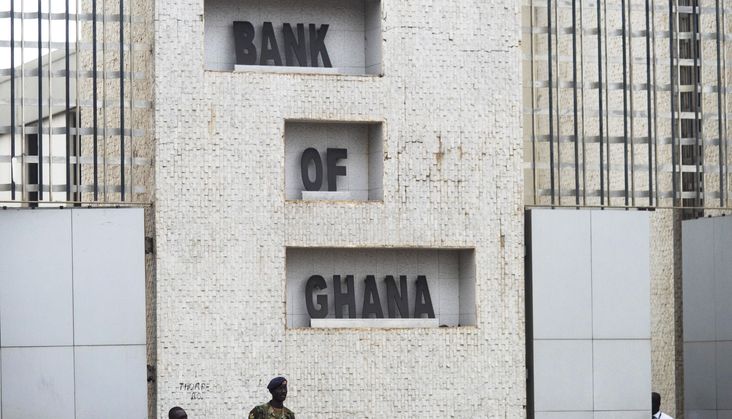
Government and the Bank of Ghana have been urged to immediately design and implement a framework to assist local banks with funding.
Banking consultants Dr Richmond Atuahene and K. B. Frimpong hold the view that the Domestic Debt Exchange Programme has affected the banks.
They explained in a report that the banks hold GH₵50.6 billion of the total GH₵137.3 billion debt that was the target of the restructuring. These government securities that the banks hold form a large part of their assets.
They noted that by merely participating in the programme, significant changes have occurred in the balance sheets of the banks.
“Due to a combination of coupon or interest rate reduction, and maturity extension with below-market coupon rates of 19.3%, the capacity of the banking sector to absorb losses had been lower, as the banking sector capitalisation only took place three years ago.
"When banks are able to absorb losses without having to resort to a recapitalisation from the government, the fiscal consolidation and/or burden-sharing by other creditors required to restore debt sustainability would be smaller,” portions of the report stated.
At least nine banks have been identified by banking experts as being on the verge of insolvency as the domestic debt restructuring programme is said to have wiped off the value of the bank’s assets leaving them quite fragile.
Local banks participated in the programme geared at making Ghana’s debts sustainable but it appears its success may have lasting negative effects on the financial sector.
The Banking consultants recommended for the Bank of Ghana to identify gaps in crisis management and that bank resolution frameworks should be identified prior to the domestic debt exchange programme.
“Gaps in early intervention, resolution, deposit insurance, and central bank liquidity assistance for which Bank of Ghana in the process of establishing Financial Stability Support Fund as well as the coordination arrangements among these elements should be addressed before the Domestic Debt Restructuring.”
They added that “standard financial safety net components need to be supported by adequate contingency planning for each stage.”
Latest Stories
-
“US Embassy introduced TRIBE Culture Fest to NSA, GTA” – Kofi Adams
31 minutes -
“NSA did not tell us of any embassy arrangement” – Kofi Adams
55 minutes -
Glasner suffers loss on Selhurst return as Palace beat Forest
3 hours -
WAFU B U17: ‘We won but I expected more from my boys’ – Kassim Ocansey
3 hours -
Man City cruise to statement win over 10-man Liverpool
3 hours -
Be careful with cross-border lending, foreign currency exposures – BoG to financial institutions
5 hours -
GPL 2026/27: Medeama go three clear as Hearts of Oak recover and Bechem stage stunning comeback
5 hours -
Ntiamoah Foundation launches “BEYOND 20” anniversary campaign
6 hours -
Credit Risk Management Directive: BoG to begin implementation for banks, others from July 1, 2027
6 hours -
Ghana Brands Awards 2026: Leading brands, business trailblazers to shine on November 20
6 hours -
T-bills auction: Demand improves as government exceeds target by about 76%; interest rates soften
6 hours -
Ziope undertakes initiative to build a technologically inclined community, commissions self-help ICT lab
7 hours -
ECG announces power outage in parts of Tema, Central Region due to network fault, maintenance
7 hours -
When the Gospel Becomes a Weapon: The church, blackmail and the abuse of faith
7 hours -
JoyNews’ Jacqueline Ansomah Yeboah selected for UK Media Excellence for Emerging Technologies Fellowship
8 hours