

Audio By Carbonatix
The government is set to introduce a new policy that will require state institutions to purchase selected goods—including rice and sugar—exclusively from local producers, unless they obtain special approval from the Office of the President.
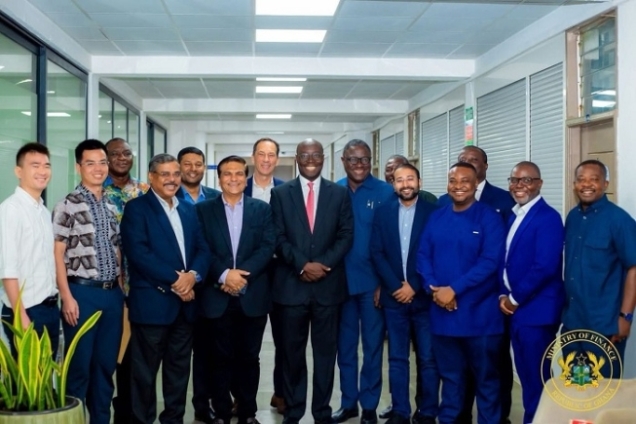
The Minister of Finance, Dr Cassiel Ato Forson, announced the measure during a meeting with the leadership of the Association of Ghana Industries (AGI), describing it as part of a broader effort to strengthen local industries, create jobs, and reduce Ghana’s reliance on imported goods.
“To support our local industries, the government will soon publish a list of items that all public sector agencies must procure locally,” Dr Forson said.
“Going forward, any government procurement from outside Ghana will require special approval from the Office of the President.”
Dr Forson questioned why Ghana continues to import basic commodities such as rice and sugar despite having the capacity to produce them locally.
According to him, no country can achieve meaningful development without a strong industrial foundation. He acknowledged the importance of trade but emphasised the need for deliberate policies to support domestic production.
He also raised concerns about the impact of smuggling on Ghanaian businesses, noting that illegal imports are undercutting local manufacturers.
“The government has identified smuggling routes,” he said, “and will soon introduce measures to prevent the influx of illegal goods that compete unfairly with locally manufactured products.”
As part of a wider industrialisation drive, Dr Forson proposed a working session with leaders in the private sector to discuss how local businesses can leverage the government’s 24-hour economy programme to increase production and stimulate economic growth.
President of the AGI, Dr Humphrey Ayim-Darke, welcomed the government’s move and described it as a positive step towards revitalising the country’s manufacturing sector.
He said ongoing dialogue between the state and industry stakeholders would help address the structural challenges facing local producers.
Latest Stories
-
EOCO declares Dr Gabriel Tanko Kwamigah-Atokple a fugitive over alleged gold fraud
6 minutes -
GSE records GH¢1.09bn trade in equity market; 10 stocks register gains
21 minutes -
Fuel prices: Ghana places 15th in Africa
27 minutes -
Africa must look inward: Reframing resilience in a shifting global economy
43 minutes -
7 dead, 2 missing after boat capsizes on Volta Lake
53 minutes -
Miss Diaspora Ghana 2026 launched to deepen diaspora ties and drive development
60 minutes -
US warns citizens to reconsider Nigeria travel on safety grounds
1 hour -
Ivan Toney questions refereeing in Saudi Pro League title race after Al-Ahli draw
1 hour -
Angola appoint Aliou Cissé as new head coach
2 hours -
Virtual Security Africa showcases digital security vision at Kwahu Business Forum
2 hours -
EBID strengthens regional integration role amid global economic uncertainty
2 hours -
Two assault rifles, ammunition retrieved in Police probe of Tamale gang attack
2 hours -
EBID records strong financial growth with $722m disbursements in 2025 – President, Dr George Donkor
2 hours -
EBID to mobilise $2.69bn under new 2026–2030 growth strategy – Dr George Donkor
2 hours -
An open letter to telcos, regulators and security agencies on mobile money fraud in Ghana
2 hours