

Audio By Carbonatix
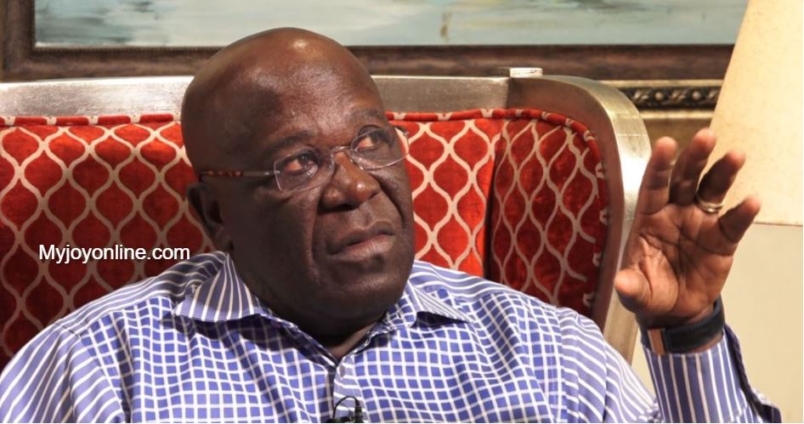
Eminent Ghanaian business magnate Sir Sam Jonah has delivered a sharp critique of Africa’s long-standing economic model, warning that the continent continues to "effectively export jobs and import unemployment" by prioritising the sale of raw materials over local industrialisation.
Speaking at the launch of the Africa Trade Summit 2026 in Accra on Tuesday, November 18, the Executive Chairman of Jonah Capital Limited challenged African leaders and the private sector to move beyond primary commodity exports and focus on producing finished goods that the world needs.
The Half-Century Failure of Raw Exports
Drawing on his decades of experience—including his transformative tenure leading Ashanti Goldfields Company Limited—Sir Sam Jonah highlighted the failure of resource-rich nations like Ghana to capture the full economic value of their endowments.
"For more than half a century, we have exported cocoa, gold, timber, oil, and bauxite. Yet the jobs, the technologies, the real value—those have been created elsewhere."
His comments resonate deeply with Ghana's trade data.
According to recent reports, Ghana's top exports remain dominated by primary goods such as Gold ($15.6 billion in 2023) and Crude Petroleum ($5.13 billion).
Even in cocoa, where Ghana is the world’s second-largest producer, the value of raw cocoa beans exported still significantly outweighs the earnings from processed goods like cocoa paste.
Sir Sam Jonah emphasised the clear consequence of this structure.
"Every time we ship out raw materials and import finished products, we effectively export jobs and import unemployment. And we cannot industrialise if we continue feeding other nations’ factories instead of building our own."
Private Sector Must Be the Engine of Transformation
In shifting focus to the solution, the former Executive President of AngloGold Ashanti stressed that the private sector—not government policy alone—must lead the economic revolution.
He dismissed the idea that transformation would come from bureaucratic processes.
"The transformation we seek will not happen in ministry conference rooms. It will not happen in communiqués, nor in reports that gather dust."
He stressed that true economic change is driven by activity in the market, providing a clear blueprint for industrial growth:
"It happens—in the real world—through business: through factories operating consistently, through entrepreneurs solving problems, through investors taking long-term bets, through regional supply chains linking producers to markets."
The Africa Trade Summit 2026, scheduled for July 7–9, 2026, in Accra, aims to drive this agenda, focusing on leveraging the African Continental Free Trade Area (AfCFTA) to foster deeper regional integration.
Sir Sam Jonah's statement sets the tone for the upcoming event, placing the responsibility squarely on businesses to implement change.
He concluded by defining the distinct roles of governance and enterprise:
"That is why the private sector must be at the very centre of Africa’s industrial and trade transformation. Governments set the stage, yes. But it is the private sector that performs the play."
Latest Stories
-
All set for 7th Ghana Credit Excellence Awards 2026 on October 10
47 seconds -
The job interview question you don’t have to answer
1 hour -
Trump unveils ‘Super Intelligence Force’ to oversee AI policy
1 hour -
Younger men now rushing older women – Damilola Adegbite claims
4 hours -
[Video] Legendary Nigerian actor Olu Jacobs buried in Lagos
4 hours -
Intelligent content no longer works in Nigeria – Tekno
4 hours -
Tiwa Savage accepts Teni’s fight challenge
4 hours -
Actress Chioma Chukwuka announces death of father in emotion-laden post
4 hours -
[Video]‘I have asked God to take me when it is time’ – Pete Edochie on health struggles
4 hours -
Manager remanded over $1m auto fraud
4 hours -
Mr President, Ghana was mentioned at the UN; why aren’t we talking about it?
5 hours -
US Marine arrested over murder of woman in Okinawa, Japan
5 hours -
Accra to convene Africa’s regulators and markets on tokenisation at AVAS 2026
5 hours -
Indian police accused of sexually harassing journalists at protest
5 hours -
Jeffrey Archer returns to his former school library
5 hours