

Audio By Carbonatix
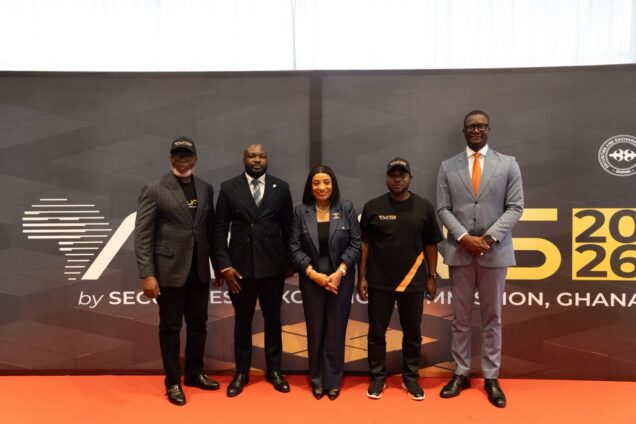
The Securities and Exchange Commission, Ghana (SEC) today launched the Africa Virtual Asset Summit (AVAS) 2026, a two-day gathering to be held on 2 and 3 November 2026 at the Kempinski Hotel Gold Coast City, Accra.
Under the theme “Tokenisation: Africa’s Pathway Towards Building a Trusted, Inclusive and Innovative Virtual Asset Ecosystem,” AVAS 2026 is designed to deliver practical outcomes. A central objective is the proposed Accra Declaration — a framework of shared principles and recommendations to advance responsible virtual asset and tokenisation ecosystems across the continent. The summit will also generate policy recommendations, structured dialogue between supervisors and market participants, industry collaboration and cross-border partnerships.
Why this summit, and why now
Africa’s participation in virtual assets is already significant. The question for regulators is whether the rules surrounding that activity will be clear, consistent and credible.
“Africa’s participation in virtual assets is already significant,” said Director-General Dr James Klutse Avedzi at the launch. “That growth must be matched by frameworks that promote innovation, protect investors and maintain confidence in the market.”
Ghana has put such a framework in place. The Virtual Asset Service Providers Act, 2025 (Act 1154) establishes the legal foundation for supervised growth of the sector. It assigns the Commission responsibility for tokenisation, virtual asset issuance, exchanges, investment advisory services and virtual asset funds. The Commission also operates a regulatory sandbox that allows firms to test products under supervision before full licensing, ensuring that rules are informed by practical experience.
Tokenisation: unlocking capital for African assets
Africa holds substantial real assets — land, gold, cocoa, trade receivables and infrastructure. The challenge is converting them into investable, tradable capital.
“Liquidity is value,” Dr Avedzi said. By enabling assets to be held in smaller digital interests, tokenisation can broaden the investor base, lower the cost of capital and make projects financeable that would otherwise remain inaccessible. For Ghana, this opens a pathway to connect domestic and diaspora investors with productive assets and gives businesses an additional route to raise finance. AVAS 2026 will examine how to achieve this with trust and investor protection built in from the outset.
One continent, one conversation
Virtual assets move freely across borders. Regulation must be able to do the same.
Deputy Director-General Emmanuel Mensah Thompson said the Commission will use AVAS 2026 to advance continental alignment on licensing, supervision and market rules. He illustrated the cost of fragmentation with a recent example: Ghanaian investors seeking to participate in a trans-African annuity product were required to route transactions through Canada because of regulatory constraints at home. “Ghana needs to lead the path,” he said.
Regulatory peers share this view. In a message to the launch, Emomotimi Agama, Director-General of Nigeria’s Securities and Exchange Commission, observed that no single regulator can supervise this market alone because virtual assets do not respect borders.
International partners are also engaging. Ghana’s High Commissioner to the United Kingdom and Ireland, Sabah Zita Benson, called for partnerships that move beyond policy discussion into investment and technology transfer, pairing the UK’s financial-services expertise with Ghana’s entrepreneurial capacity.
What to expect on 2 and 3 November
Day 1: Regulation, Governance and Investor Protection (09:00–15:30). Keynote addresses, regulatory panels and breakout sessions will address licensing, market conduct, AML/CFT, stablecoins, supervision and cross-border payments.
Day 2: Tokenisation, Digital Markets and Financial Inclusion (09:00–15:30). Sessions and technical workshops will explore real-world asset tokenisation across commodities, real estate, digital securities and capital markets, alongside CBDCs and digital payments. Networking and investment conversations will run throughout.
Six thematic pillars anchor the programme: licensing, digital securities, AML/CFT, cross-border cooperation, international standards (including those set by FATF and IOSCO), and tokenisation. Participants will also examine digital asset infrastructure, custody, payment rails, digital identity and compliance technology.
AVAS is a meeting point for the institutions shaping responsible digital finance. The Commission welcomes securities regulators, central banks, ministries of finance, financial intelligence units, stock exchanges, banks, asset managers, pension funds, insurance companies, virtual asset service providers, fintech and technology firms, institutional investors, law firms, compliance professionals, academics and development partners.
The programme is expected to feature more than 40 speakers, with participants from more than 30 countries and over 2,000 attendees. Delegates will gain first-hand insight into emerging regulation, compare international best practice, explore tokenisation opportunities and engage directly with regulators and investors.
The choice before African markets is no longer whether virtual assets will exist, but how they will be governed, the Commission stated at the launch. We invite regulators, market participants and partners to help shape that governance in Accra.
Latest Stories
-
Mr President, Ghana was mentioned at the UN; why aren’t we talking about it?
40 minutes -
Accra to convene Africa’s regulators and markets on tokenisation at AVAS 2026
42 minutes -
The Paradox of Plenty — When every smartphone becomes a newsroom
1 hour -
GTA sensitises taxi drivers in ‘Know Ghana’ tourism campaign
2 hours -
Archbishop Agyinasare calls for responsible speech amid growing social media abuse
3 hours -
‘It will be inexcusable for gov’t not to honour payment of teachers’ arrears by 30th October’ – Haruna Iddrisu
3 hours -
Forbes’ World’s Best Employers 2026: No Ghanaian firm ranked among 900 companies
3 hours -
Electronic processing of teachers’ data: ‘The decision is the Controller’s’ – GES boss
3 hours -
Teachers’ Strike: Haruna Iddrisu questions paper-based processing of promoted teachers’ data
3 hours -
Savannah Region: Kunfusi bridge collapses again, leaving nearly 4,000 residents cut off
3 hours -
Teachers’ strike: GES targets Monday deadline to submit promotion data to Controller
3 hours -
Inflation to average 11.3% in 2027 – Fitch Solutions
4 hours -
‘I didn’t campaign for NDC to come and do this nonsense’ – Kpebu on EOCO’s conduct
4 hours -
Fitch Solutions maintains policy rate forecast of 14% by December 2026
4 hours -
Diaspora Nasara Caucus congratulates Mohammed Ali Suraj, new NPP executives
5 hours