

Audio By Carbonatix
Deputy Minister for Finance, Thomas Nyarko Ampem, says he will recommend a nationwide directive compelling all state institutions, not just schools, to procure locally produced rice and other food items as part of efforts to support farmers and curb post-harvest losses.
Speaking on Joy FM’s Super Morning Show on Friday, November 14, he said the original directive targeted schools and education-related agencies, but it should clearly apply to every government body involved in food procurement.
“Even though the directive specifically mentioned state institutions like schools, it doesn’t mean non-schools can go ahead and procure foreign goods. It is implied. But now that you are mentioning it, I’ll draw the attention of my minister… we should write to all state agencies that that directive applies to them as well,” he explained.
He argued that it would be illogical for schools to buy local produce while other state bodies continue to purchase imported items. “It won’t make sense to only focus on schools when other state institutions are buying sultana, rice, and others.”
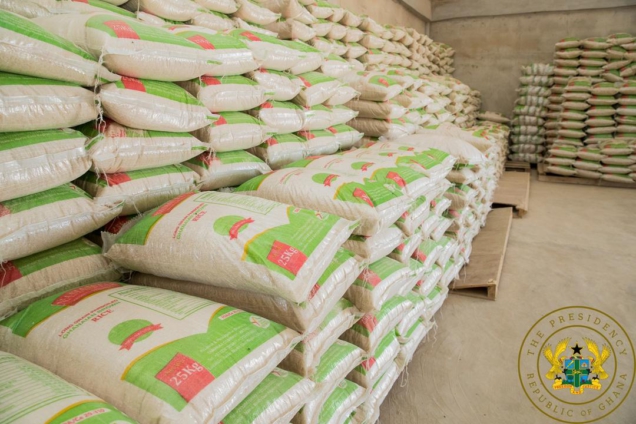
Mr Ampem noted that the move is part of a broader strategy to prevent food waste and support local farmers following this year’s surplus harvest. According to him, the President has already directed the Finance Ministry to release funds to address the situation.
“The President directed us to make available 200 million cedis immediately to purchase this food glut all over… by next week to Buffer Stock to go and mop up all these food excess that we have and store,” he said.
He welcomed the accompanying instruction requiring schools and government institutions to prioritise local produce. “All schools, all government institutions that are buying food must buy from the Buffer Stock store, buy locally. And we expect the Minister for Education and Director General for GES to implement this strictly.”
Mr Ampem warned that farmers could scale back production if their harvest continues to go to waste. “If we are not able to do this and farmers’ produce goes to waste, do you think they will be encouraged to produce again next year?”
He stressed that strict enforcement will be essential to making the policy work. “It is about enforcement and cracking the whip when you have to… Everybody has a responsibility to play a role in making sure that all these policies work.”
He urged school heads and other public-sector buyers to understand the rationale behind the local procurement push. “It is important that we let headmasters… appreciate that you are doing this because you are helping the government solve this problem. If we consume made-in-Ghana food, we are keeping farmers in their jobs here.”
He also encouraged the media to highlight any breaches. “If you have cause to suspect that someone is flouting this, bring it to our attention and we’ll crack the whip.”
The Deputy Minister added that boosting demand for local produce will help stabilise prices and support long-term economic growth. “If we are able to bring down food inflation… we will be able to bring down inflation in this country, and the benefits will be there for all of us.”
Latest Stories
-
111 IGP Special Operations Team deployed to combat crime in Kumasi
5 minutes -
UN slavery resolution opens door for global reparatory justice – Ablakwa
7 minutes -
The world has affirmed that trafficking of enslaved Africans is the gravest crime against humanity – Ablakwa
23 minutes -
Gold reserves not being sold off, funds reinvested for returns – Sammy Gyamfi
36 minutes -
Three killed, burnt beyond recognition in Nkwanta South conflict
37 minutes -
Claims of disruption in Parliament business false – Dafeamekpor
39 minutes -
GoldBod Jewellery sponsoring ‘Women of Valour’ London programme false – Sammy Gyamfi
40 minutes -
This is an emphatic victory for justice – Ablakwa hails UN slavery resolution
43 minutes -
Communications Minister champions fintech-led growth at 3i Africa Summit 2026 launch
45 minutes -
National AI Masterclass Cohort 2 begins to boost public sector digital skills
50 minutes -
Ghanaian journalists receive advanced science training at Imperial College London
54 minutes -
The world has spoken the truth through UN slavery resolution – Ablakwa
1 hour -
We can’t change history but we can change how we remember it – Ablakwa on UN slavery resolution
1 hour -
South Asia remains one of the world’s most polluted region in 2025, report shows
1 hour -
Amnesty International hails UN Slavery Resolution as ‘momentous step forward’ for reparations
2 hours