

Audio By Carbonatix
The Ghana Revenue Authority (GRA) has been urged to develop unique techniques to ensure tax compliance by the informal sector to prevent a reoccurrence of the current economic crisis.
Ghana’s informal sector, even though makes up about 60 percent of the workforce contributes less taxes to the economy.
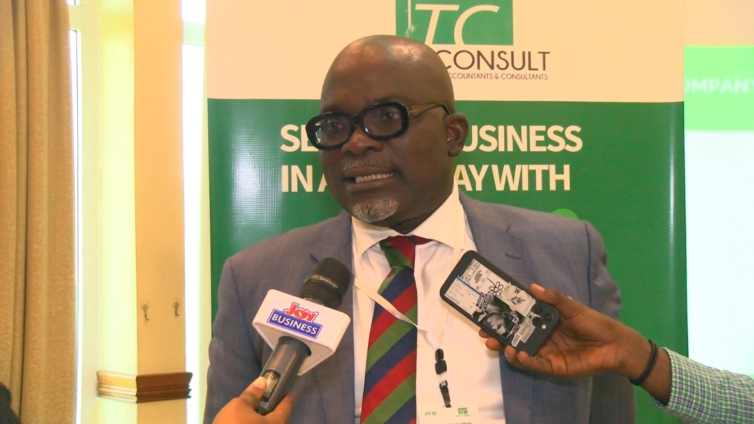
Speaking on the sides of a Public Financial Management (PFM) Seminar, Managing Partner of Trust Consult, Charles Mensah also urged the public to play their role as citizens by religiously filing their taxes.
“People should learn to pay taxes, people should learn to collect receipts. People do not know that every April, the following year, one needs to file and pay their tax”.
Using developed countries as an example Mr. Mensah said in advanced countries filing of taxes are a serious requirement for individuals and businesses that must not be breached.
“In other countries, citizens file their taxes religiously but here, people only file taxes when they need a service which needs documents indicating that they are tax compliant,” he said.
He warned that non-compliance will deny the country of the needed revenue required to develop the country.
“To prevent a recurrence of the current economic crisis, I think whatever findings are in the Public Financial Management report are implemented to the later”, he said.
He argued that there is the need to educate Ghanaians to be conscious of the collective wellbeing of the country through tax payment.
“I think there should be commitment across all board. Also, we need to look at the public good. The public good here means that all the services we enjoy must be funded but donor funding will not help us”.
Mr. Mensah maintained that Ghanaians must be reminded of the importance of generating revenue internally as opposed to going out to beg for aid.
“What we need is our own sources of funding; which is taxes. We need to implement a system where cars go to markets and other places to help people in the informal sector file their taxes,” he said.
Mr. Mensah indicated that if organisations operate in the light of public good, they will build the capacity of their account holders which will in turn, ensure proper accountability of funds.
“After listening to some spending officers and account holders, we realised that they needed a refresher course or training. We feel that things happen in institutions not because people have the intention of making it happen but people do not actually know the rules. So we organised this training to take them through the rules, the procurement act and the legislative instrument supporting the PFM act,” he stated.
His message to Public Financial managers was “make sure that whatever you do in the office, you’re doing it for the public good and therefore, do things right.”
Latest Stories
-
Semenyo reports to Black Stars camp after Carabao Cup win
39 minutes -
Akurugu delivers first state of Constituency address, highlights development gains in Dome-Kwabenya
5 hours -
Journalism out loud: Defending truth in a divided world
5 hours -
Heath Goldfields partners local firm, receives new mining fleet to revive Bogoso-Prestea mine
5 hours -
Korle-Bu overcrowding driven by broken referral system, not just bed shortage – Doctors
5 hours -
MC Portfolio named red carpet host for 2026 Ghana Music Awards USA
6 hours -
Oda-Akyem Swedru road develops dangerous potholes
6 hours -
U.S. Embassy explains Visa process for Ghanaians ahead of World Cup
6 hours -
Viral video on emergency care at Korle-Bu Teaching Hospital is ‘authentic’ – Emergency Medicine Residents
6 hours -
Ahmad Abdul-Samad, Rachael Quarcoo dominate 1st quarter All Ghana Badminton Championship
6 hours -
ActionAid calls for strong partnerships to advance water, gender, and climate justice
6 hours -
DVLA begins nationwide clampdown on expired DV plates from March 24
7 hours -
Ghanaian Commonwealth Youth Leader meets King Charles III, pushes for youth economic empowerment
7 hours -
Former President Akufo-Addo takes on new role in Anglican Church
8 hours -
MTN Ghana steps up sensitization on efficient and safe data usage
8 hours