

Audio By Carbonatix
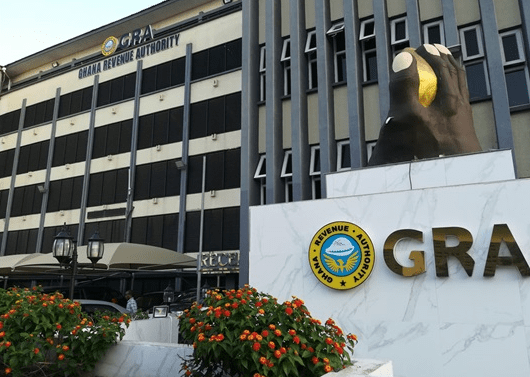
Ghana continues to lose significant domestic revenue due to poor tax compliance, with the Ghana Revenue Authority (GRA) warning that closing existing tax gaps could sharply reduce the country’s reliance on IMF support and external borrowing.
Addressing an Executive Business Dialogue organised by Markers & Partners, the Acting Commissioner of the Domestic Tax Revenue Division, Dr Martin Kobil Yamborigya, described the scale of income tax losses as troubling for an economy seeking long-term fiscal stability.
According to him, Ghana currently collects only about a third of income taxes due, leaving a compliance gap of 67 per cent.
“It is quite unfortunate that in Ghana, our income tax gap stands at 67 per cent. This means we are collecting just 33 per cent of what is due,” Dr Yamborigya disclosed.
He said the situation is similarly worrying in the Value Added Tax (VAT) regime, where the compliance gap is estimated at 61 per cent, translating into the collection of only 39 per cent of potential VAT revenue.
Dr Yamborigya stressed that meaningful tax reforms must prioritise widening the tax base, sealing compliance loopholes and minimising revenue leakages, while ensuring that the system remains efficient, transparent and predictable for businesses.
“In an evolving economy like ours, effective tax reforms should broaden the tax base, close compliance gaps and reduce leakages, while maintaining a system that businesses can trust and plan around,” he said.
He argued that improved compliance alone could significantly alter Ghana’s fiscal trajectory, reducing the need for international bailouts and excessive borrowing.
“If we are able to close the tax gap, we would not need to run to the IMF or borrow from elsewhere,” he noted, adding that many income-generating activities across the country remain outside the tax net.
“These incomes are being earned every day. The real question is whether the taxes due on them are being paid,” he said.
Dr Yamborigya reiterated that the overarching aim of current tax reforms is to bring more individuals and businesses into the formal tax system to support sustainable economic growth and fiscal independence.
Latest Stories
-
Teacher unions strike: Gov’t presents fresh proposals as talks end inconclusively
16 minutes -
51,000 teachers’ promotion arrears to be validated for October payment – Education Minister
46 minutes -
Kwabena Boamah appointed Board Chair for Impact Investing Ghana
53 minutes -
Striking teacher unions to meet Fair Wages and Salaries Commission on October 6
1 hour -
EOCO working with AG to arraign Nana Baffour Awuah before weekend court
1 hour -
Duraplast reassures customers after fire, announces October 5 reopening
1 hour -
Call off strike, gov’t will not renege on promotion arrears pledge – Haruna Iddrisu appeals to teacher unions
1 hour -
Committee set up to validate teachers eligible for 20% deprived-area allowance – Education Minister
1 hour -
Five-member committee to search for new Black Stars coach after Sports Ministry-GFA meeting
2 hours -
Pinktober: Breast cancer survival exceeds 90% when detected early – Breast Society of Ghana
2 hours -
TCDA to adopt Upper West’s MATCO mango farm as northern prototype, issues warning against felling shea trees
2 hours -
‘Fear delegates’ tag: Afoko touts genuineness among delegates ahead of NPP delegates conference
2 hours -
John Boadu: The leader our party needs at this time – Amb. Edward Akwasi Boateng
2 hours -
Baffour Awuah: EOCO arrested, detained MP after hours of waiting, questioning – Afenyo-Markin
3 hours -
EOCO court warrant authorised search of Baffour Awuah’s law firm, not residence – Afenyo-Markin
3 hours