

Audio By Carbonatix
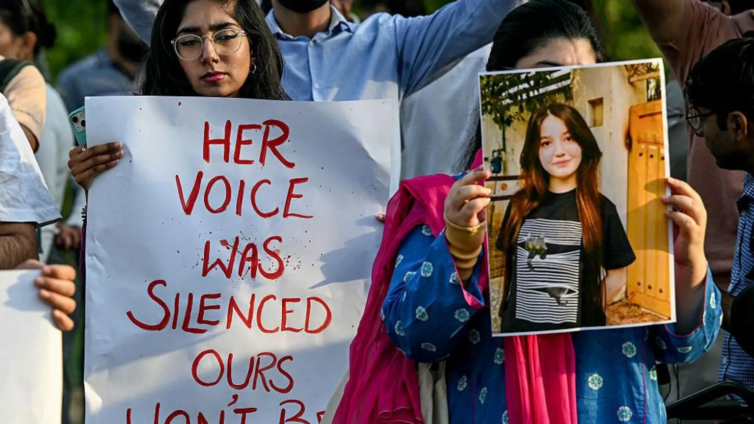
A court in Pakistan has sentenced a man to death over the murder of a teen social media influencer who sparked uproar across the country.
Umar Hayat broke into the home of 17-year-old TikTok star Sana Yousaf in June last year after she rejected his repeated advances and shot her dead.
Hayat, now 23, admitted his crime in July, saying he had developed a one-sided obsession with Yousaf after some interactions online.
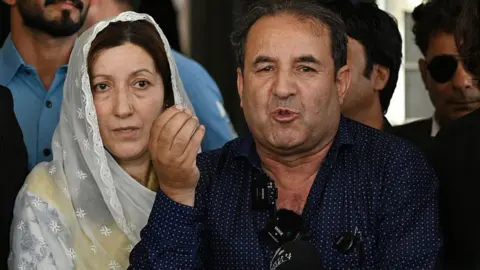
Yousaf's father, Syed Yousaf Hassan, said the verdict handed down by the Islamabad court was "a lesson for all such criminals in society", local media reported.
The court also ordered Hayat to pay 2.5 million rupees ($9,000; £6,700) as compensation to Yousaf's family.
During investigations, Hayat said he had travelled to Islamabad days before the killing to wish Yousaf well on her birthday. Despite Yousaf's refusal to meet him, he managed to make his way to her home – where the two had an argument which escalated into the killing, according to Pakistani media.
Yousaf had more than a million followers on TikTok and half a million more on Instagram before her death. She was well-loved by fans for her light-hearted content, including that of her trying out fashion trends, lip-syncing to songs, and just hanging out with friends.
Activists said Yousaf's murder was part of a larger pattern of violence against women in Pakistan.
Police raided locations across the capital, where Yousaf lived with her family, and the province of Punjab, scanning footage from 113 CCTV cameras in all.
While many have shared their outrage over Yousaf's death, there has also been backlash towards her work as an influencer.
Usama Khilji, director of digital rights advocacy group Bolo Bhi, told the BBC in an earlier interview that such criticism had been coming from a small portion of mostly male internet users, some of whom have cited religious grounds.
"They're asking why she was putting up all this content, and even suggesting the family should take down her Instagram and TikTok accounts because they add to her 'sins'," Khilji said.
Farzana Bari, a prominent human rights activist, argued the reaction is "misogynistic" and "patriarchal".
Yousaf had her "own voice", she said, adding that the discourse online is a reminder that social media has become a "very threatening place for female content creators" in Pakistan.
Latest Stories
-
Don’t let speed of information become your judgement – CJ tells new lawyers
17 minutes -
World Cup visa scandal: People have leveraged public office to facilitate fraud – Senyo Hosi
22 minutes -
Glut! Farmers count losses as prices crash, customers happy
58 minutes -
GSA postpones auction of unserviceable vehicles
1 hour -
Man charged with attempted murder after stabbing
1 hour -
World Cup visa scandal: Senyo Hosi says issue goes beyond calls for Sports Minister’s resignation
1 hour -
Yaw Ampofo Ankrah hasn’t taken or received any money to facilitate visas – Lawyer insists
1 hour -
World Cup visa scandal: Senyo Hosi urges focus on constitutional accountability
1 hour -
La Beach demolition: Senyo Hosi condemns lack of consultation
2 hours -
Russian glide bomb attack on Zaporizhzhia kills at least 15 people
2 hours -
Jinapor warns underperforming energy sector CEOs of consequences, says no protection for failure
2 hours -
Fire destroys head of tipper truck on Lower Volta Bridge
2 hours -
Palmer signs new Chelsea contract until 2034
2 hours -
World Cup visa scandal: Mahama will act on corruption allegations – Abass Nurudeen
2 hours -
Abass Nurudeen accuses Minority of ‘scandal scavenging’ over World Cup visa controversy
2 hours