

Audio By Carbonatix
The Middle East stands at a volatile inflexion point as the United States enforces a total naval blockade of Iranian ports while simultaneously signalling a potential diplomatic breakthrough. Even as U.S. Central Command confirms that maritime trade, powering 90% of Tehran’s economy, has been severed at the Strait of Hormuz, President Donald Trump has teased a high-level second round of peace talks in Islamabad that could occur within the next 48 hours.
Vice President JD Vance is expected to lead this delegation. This "maximum pressure" military campaign is unfolding alongside a parallel diplomatic milestone in Washington, where Israeli and Lebanese ambassadors held their first direct discussions in decades, suggesting a broad, if precarious, push for regional stabilisation amidst active hostilities.
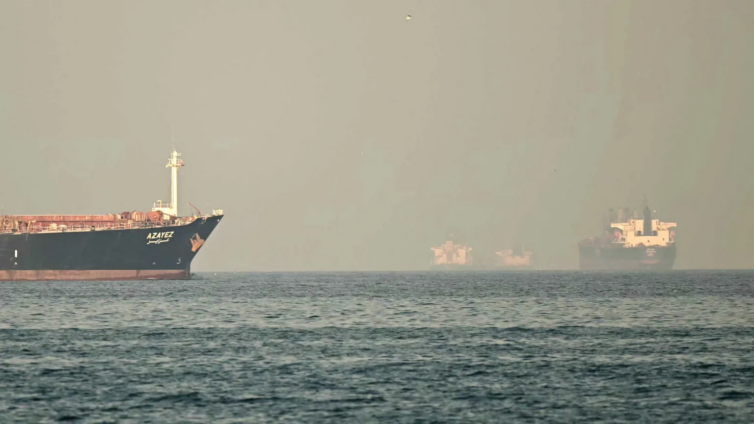
The United States Central Command confirmed Tuesday that a total naval blockade of Iranian ports is now fully operational. This military manoeuvre effectively severs Tehran’s international sea trade, which accounts for approximately 90% of the nation's economic activity. General Brad Cooper, the Centcom commander, announced that the blockade achieved full implementation within 36 hours of President Donald Trump’s executive order. “A blockade of Iranian ports has been fully implemented as U.S. forces maintain maritime superiority in the Middle East,” Cooper said. He further stated that “U.S. forces have completely halted economic trade going in and out of Iran by sea.” This strategic strangulation targets the $109.7 billion in annual seaborne trade that passes through the Strait of Hormuz.
Economic Toll and Maritime Enforcement
Financial analysts estimate the blockade inflicts roughly $435 million in daily economic damage on the Iranian state. Miad Maleki, a senior fellow at the Foundation for Defence of Democracies, noted that Iran lacks viable alternative trade routes to bypass the maritime restriction. The operation involves 10,000 U.S. troops, a dozen Navy vessels, and advanced fighter jet wings patrolling the Gulf of Oman and the Arabian Sea. While U.S. forces reported that six merchant vessels were ordered to turn back, maritime intelligence firm Windward identified at least two vessels that bypassed the Strait, including a U.S.-sanctioned Chinese-owned tanker, Rich Starry. Additional MarineTraffic data showed one tanker departing an Iranian port on Wednesday despite the claimed blockade. Windward analysts noted that “transit through the Strait remains limited and concentrated among sanctioned, falsely flagged, and high-risk vessels.”
Geopolitical Friction and Global Market Instability
The blockade has drawn sharp international condemnation and heightened concerns regarding global energy security. China on Tuesday called the U.S. blockade a “dangerous and irresponsible act” that will only further enflame tensions in the region. Beijing and New Delhi remain primary consumers of Iranian crude, and the disruption threatens to strain Washington’s relations with these key partners. Consequently, the International Monetary Fund reduced its 2026 global growth forecast to 3.1%. The IMF cautioned that the world is moving toward an “adverse scenario” where oil prices could persist at $100 per barrel. The executive director of the Port of Los Angeles warned that shipping curtailments will soon have ripple effects on global inventories of electronics, furniture, and consumer goods.
Diplomatic Overtures Amid Military Escalation
Despite the aggressive military posture, the White House continues to signal interest in a diplomatic resolution. President Donald Trump suggested that a second round of negotiations could occur in Islamabad within the next 48 hours. Speaking to the New York Post, Trump remarked that “something could be happening over the next two days, and we’re more inclined to go there.” U.N. Secretary-General António Guterres described the resumption of talks as “highly probable,” citing meetings with Pakistan’s Foreign Minister Ishaq Dar. These diplomatic signals have provided a slight reprieve for energy markets, with U.S. crude oil futures dropping 0.88% to $90.4 per barrel.
Nuclear Enrichment Remains Primary Negotiating Hurdle
The central obstacle to a permanent peace agreement remains Iran’s nuclear infrastructure. The U.S. is demanding the total dismantling of major nuclear enrichment facilities. During previous talks led by Vice President JD Vance, the U.S. demanded a 20-year suspension of uranium enrichment. Tehran countered with a proposal for three to five years, a duration the Trump administration rejected. Vance stated, “We must have the enriched material out of Iran,” adding, “We must have their conclusive commitment to not develop a nuclear weapon.” While Tehran insists its program is peaceful, the International Atomic Energy Agency estimates Iran has enough highly enriched uranium for 11 nuclear weapons. Iran has offered a “monitored process of down-blending,” but Washington continues to demand the total removal of the material.
Regional Conflict and Parallel Peace Tracks
The conflict, now entering its seventh week, has resulted in significant loss of life. Casualties include at least 3,000 people in Iran, 2,100 in Lebanon, 23 in Israel, and more than a dozen in Gulf Arab states, alongside 13 U.S. service members. In a separate diplomatic development, the State Department facilitated the first direct talks between Israeli and Lebanese ambassadors since 1993. Israeli Ambassador Yechiel Leiter stated both nations are “on the same side of the equation” in “liberating Lebanon” from Hezbollah. Lebanese Ambassador Nada Hamadeh Moawad called the meeting “constructive” but urged an end to the ongoing conflict, which has displaced over 1 million people in Lebanon.
Satellite Intelligence and Internal Repression
Newly released satellite imagery has revealed the remains of U.S. aircraft at a remote airstrip in central Esfahan province. The site was used in a daring rescue operation for a weapons systems officer whose F-15E was shot down earlier this month. Two MC-130J transport aircraft were damaged and subsequently destroyed by U.S. forces to prevent them from falling into Iranian hands. During the ceasefire, Iran has reportedly used heavy machinery to clear debris from underground "missile cities." Intelligence assessments suggest roughly half of Iran’s missile launchers remain intact.
The humanitarian situation is further complicated by a surge in internal state violence. Rights groups report that Iran executed at least 1,639 people in 2025, the highest total since 1989. Advocates warn that Tehran is using the current wartime conditions as a tool of political repression to silence dissent.
Domestic Political Pressure and Future Outlook
The Trump administration faces mounting domestic pressure to resolve the conflict as inflation and gas prices rise. With midterm elections approaching in November, the White House is navigating the thin line between military pressure and diplomatic compromise. “I think they want to make a deal very badly,” Trump said in an interview scheduled for Fox Business Network. He added: “I view it as very close to over.” Experts suggest both nations are looking for an "off-ramp." Ross Harrison of the Middle East Institute noted that “despite all of the bluster, both sides would like to go down the escalation ladder,” as “the only way really to resolve this is through negotiation.”
The convergence of a total naval blockade and the potential for high-level talks in Islamabad places the U.S.-Iran relationship at a historic crossroads. While the economic cost to Tehran is mounting by the hour, the ultimate success of this strategy remains tethered to whether a nuclear compromise can be reached before the current ceasefire fractures. For now, the global economy sits in a state of suspended animation, waiting to see if the "grand deal" alluded to by Vice President Vance can be realised or if the maritime standoff leads to a broader regional conflagration.
Latest Stories
-
He entered at eight. He is now 16: Ghana’s children growing up in prayer camps
42 minutes -
‘Development must not always begin from Accra’ — Anwelle Foundation launched in Jirapa
44 minutes -
PKO trio eye victories at Odwira Festival
3 hours -
346 Ghana Navy recruits pass out after 26 weeks of intensive training
3 hours -
Newsfile to discuss EOCO-MP arrest, drug trafficking, speech arrests and $235m water debt
4 hours -
JoyNews gets results as listeners raise GH¢40,000 to help 17-year-old student with cerebral palsy attend SHS
4 hours -
Vice President calls for stronger local pharmaceutical production to reduce medicine imports
5 hours -
The brewing tension at KNUST; Beware the Ides of October….
5 hours -
Health Ministry moves to integrate traditional medicine into mainstream healthcare
5 hours -
550 pupils in Kintampo South get educational lifeline as ‘Seeds of Hope’ reaches farming communities
6 hours -
Opoku Mensah urges Christian Council, House of Chiefs to speak up on democratic freedoms
6 hours -
Teacher unions’ strike: Minority demands immediate payment of teacher arrears, 20% deprived area allowance
6 hours -
The Accra-Kumasi Expressway: Building it right
6 hours -
Beyond gold exports: Building value and economic resilience from Ghana’s gold
6 hours -
2027 AFCONQ: Ghana under pressure as Gambia beat Somalia 2-1
7 hours