

Audio By Carbonatix
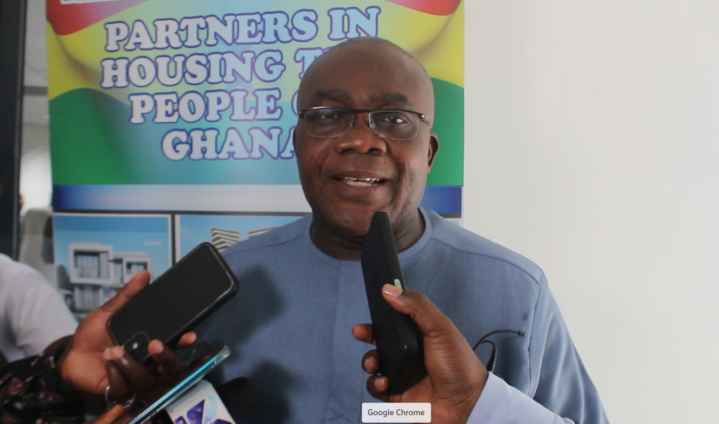
The Ghana Real Estate Developers Association (GREDA) is urging suppliers and manufacturers of building materials to reduce prices in line with the recent appreciation of the Ghana cedi.
According to its President, Dr. James Orleans-Lindsay, the strengthening of the local currency should translate into lower costs for construction inputs such as cement, iron rods, and other essential materials.
He argues that the continued high prices of these items, despite favorable currency movement, place an undue financial burden on Ghanaians particularly prospective homeowners and developers.
Speaking to Joy Business on the sidelines of a stakeholder briefing session with the Ghana Revenue Authority (GRA), Dr. Orleans-Lindsay stressed the importance of market responsiveness to currency fluctuations.
“We are saying we will continue to price in the cedi equivalent, but prices of our component should be reduced. The developer is losing because we are still buying cement at the same high prices,” he bemoaned.
The real estate sector, which plays a critical role in addressing Ghana’s housing deficit, has faced significant challenges in recent years due to the rising cost of building materials.
Developers argue that price hikes, often driven by currency depreciation and import costs, have made it difficult to complete affordable housing projects.
With the cedi showing signs of strengthening against major international currencies, GREDA is calling for immediate action to reflect this positive development in the pricing of local and imported construction inputs.
“We are not asking for favors, we are simply asking for fairness. Let the strength of the cedi bring some relief to the ordinary Ghanaian trying to build or buy a home,” Dr. Orleans-Lindsay added.
The call from GREDA comes at a time when both government and private stakeholders are working to make housing more accessible and affordable in Ghana.
The association believes that realigning the prices of construction materials could be a significant step in the right direction.
The stakeholder briefing session with the Ghana Revenue Authority (GRA) on the government’s new 5% tax policy targeting landlords was aimed to clarify the implementation strategy, compliance expectations, and its impact on the real estate and rental sectors.
Latest Stories
-
Edmond Boateng takes up secretary role at Honorary Consular Corps of Ghana
1 minute -
Gambia appoints British barrister to prosecute gruesome Jammeh-era crimes
18 minutes -
Girl group Flo on entering into their ‘bombastic, confident, strong’ era
28 minutes -
Germany suspends military approval for long stays abroad for men under 45
44 minutes -
Liverpool face uphill Champions League task after PSG thrashing in Paris
44 minutes -
‘Ketamine Queen’ sentenced to 15 years in Matthew Perry overdose death
55 minutes -
Nigeria begins mass trial of 500 terrorism suspects
1 hour -
Atletico Madrid stun 10-man Barcelona to seize Champions League semi-final advantage
1 hour -
Black Stars coach to be announced by next week – Sports Minister
2 hours -
Chiefs, queen mothers and principal elders of Odau group denounce ‘rebellious Etweresohene’, pledges allegiance to Okyenhene
2 hours -
KNUST library dress code sparks online backlash over strict rules
2 hours -
Cultural Diplomacy in Action: Ghanaian youth leaders present symbolic smock to U.S. Chargé d’Affaires
2 hours -
Ghana Card payment activation under review – NIA breaks silence on financial integration
2 hours -
Ofori-Atta’s ICE release on bail positive; he poses no risk – Amanda Clinton
2 hours -
Ken Ofori-Atta’s passport seized after bail, set to reappear in US Court on April 27
2 hours