

Audio By Carbonatix
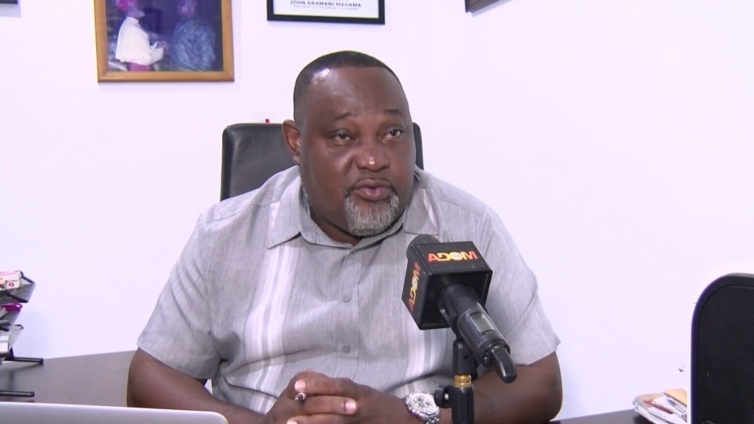
Executive Secretary of the Ghana Real Estate Developers Association (GREDA), Samuel Amegayibor, has called for the immediate establishment of a National Housing Fund and a National Housing Authority to tackle Ghana’s persistent housing challenges.
His call follows a JoyNews Research analysis of the 2021 Population and Housing Census, which revealed that while the country’s total dwelling units increased from 5.82 million in 2010 to over 10 million, nearly 1.3 million of these units remain unoccupied.
Speaking on Adom FM’s Dwaso Nsem show, Mr. Amegayibor expressed frustration over the country’s failure to implement long-promised solutions to make housing affordable and sustainable.
“The lack of continuity culture in the country is very problematic. We always want to engage in ad-hoc measures and end up recycling our problems,” he lamented.
He noted that although private real estate developers are making efforts, housing costs remain beyond the reach of many Ghanaians due to high interest rates and the absence of structured financial support.
“Individual real estate developers are doing their best, but what they may put out as the minimum price will not be affordable for many people — that’s the reality,” he explained.
Mr. Amegayibor added that developers face steep financial barriers when sourcing funds for housing projects because banks classify them as high-risk borrowers.
“When a developer goes to the market for a loan to build, he is rated as a higher risk compared to someone importing chicken or sugar from abroad, so the interest rate will be high,” he said.
He recalled that as far back as 2015, Ghana’s national housing policy proposed the creation of a special fund to provide developers with affordable loans for housing construction. However, a decade later, the fund has yet to materialise.
“Since 2015, when we included in our national housing policy the creation of a fund for developers to access affordable loans to build houses, we haven’t been able to do so — ten years on,” he emphasised.
Mr. Amegayibor also reiterated the need to establish a National Housing Authority, run by technocrats rather than political appointees, to ensure long-term planning and execution of housing projects.
“The proposal was to establish a National Housing Authority that would be managed by professionals with the technical know-how, not politicians. The technocrats would handle execution and supply of houses, while the government supports with legislation and other enablers,” he explained.
He concluded that only consistent policy implementation, supported by a dedicated housing fund and an independent authority, can help bridge Ghana’s growing housing deficit and make homes more affordable for citizens.
Latest Stories
-
Nana B passport claims a diversionary tactic — Abu Jinapor
52 minutes -
Pope Leo diagnosed with cancer as doctors remove lobe of lung, Vatican says
52 minutes -
Legal Aid Commission takes free legal services to Techiman main lorry terminal
57 minutes -
Nana B denies seeking passport favour, accuses Ablakwa of failing to account for GH¢16.4m
1 hour -
Young girls demand climate action, stronger protection against child marriage
1 hour -
Ex-gang boss sentenced to 40 years for orchestrating Tupac Shakur’s murder
1 hour -
From near-deferral to three awards: UMaT graduate’s academic journey
1 hour -
Atta Akyea denies seeking presidential pardon for Wontumi in galamsey case
2 hours -
Photos: Mahama commissions 85-bed Police Hospital ward, donates two ambulances
2 hours -
GTEC directs Ghana’s public universities to reopen by October 16 and begin lectures on October 19
2 hours -
Star Oil donates GH¢1million towards construction of new CID facility
2 hours -
Court hands Adjetey Sowah, two others lifetime bans after Amputee Football legal dispute
2 hours -
NDC appoints Julius Kwame Anthony as a Deputy Communications Director
2 hours -
Ghana repatriates 120 Nigerians rescued from suspected cybercrime centres
2 hours -
NPP rejects Emelia Agbenyo’s appointment as Deputy EC Chair, demands withdrawal
2 hours