


Audio By Carbonatix
Corn, also known as maize, is one of the most commonly used staple crops, particularly in Ghanaian homes.
The crop can be cooked and consumed in different ways per the individual’s prescription.
However, no matter the dish it is used for, the quantity should be a major concern, as health experts have revealed a gripping secret of eating one roasted maize on the cob compared to a ball of banku.
Usually, one would be satisfied after eating one cob of corn but may not feel the same after eating a ball of banku.
The experts say the quantities of both edibles vary, which people should take note of because it is a hidden cause of obesity-related diseases in recent times.
“One cob of corn is about three-quarters (3/4) of a cup. Imagine when you’re going to prepare banku and you take that to the mill; you won’t even get anything coming out. So you can imagine just how much corn is in one ball of banku, and with kenkey, we press it down and add more till it’s saturated.
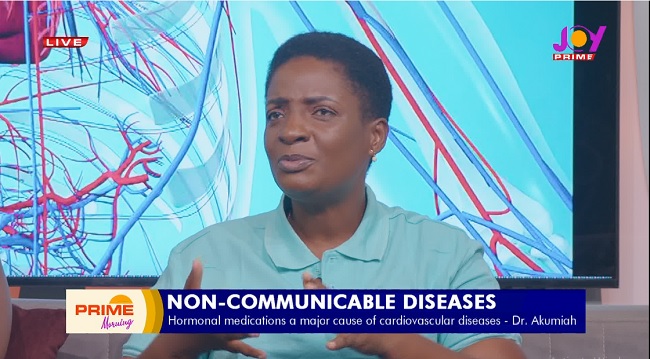
"How many cobs are in one ball of banku? You’re eating 10 plus, and in Kenkey, you’re eating 30 plus, while if I put 30 cobs of corn here, you can’t eat it. So those are the things that you should have at the back of your mind,” physician Dr. Nana A. Konadu Darko told on Joy Prime’s Prime Morning show.
Eating the cob of corn can be okay, but it is advisable to add other preferred edibles like groundnuts, coconut, or tangerine when eating it, which is mostly the reason some vendors sell coconut or salted water in addition to the corn to balance the diet.
But coconut must also be taken in moderation due to the amount of cholesterol it contains.
Banku, on the other hand, the physician noted, must be eaten in smaller quantities with plenty of soup.
“How much okro are you taking? They’ll drizzle the okro on top just to push the banku down. Whilst the okro is the vegetable; so, the okro should be more while your banku is less, so you can still feel full. Your soup should be more.”
Most of Ghana’s staples are heavy starch-based foods, particularly corn, which makes it difficult for them to tackle obesity because the majority of individuals prioritise the starch in their daily meals instead of the soup since that is the only available option.
In 2022, the World Health Organisation (WHO) reported that more than 2 billion adults were recorded to be overweight or obese globally, which is equivalent to a little above 40 percent of the world’s population. In Ghana, studies reported that more than 50 percent of people were obese.
Obesity is a chronic, non-communicable disease identified by excessive fat deposits that can impair health. It can lead to an increased risk of type 2 diabetes and heart disease, as well as affect bone health and reproduction. It also increases the risk of certain cancers and influences the quality of living, such as sleeping or moving.
Latest Stories
-
IMANI Africa President urges greater awareness and support for Parkinson’s Disease patients
4 minutes -
T-bills: Government records undersubscription of 29%; interest rates continue to surge
5 minutes -
Perceptions of Judicial partisanship ‘unfortunate’ – Justice Adjei-Frimpong urges greater public engagement to build trust
9 minutes -
Ghana to honour Christina Hammock Koch for historic Artemis II mission
1 hour -
Supreme Court appointments require more than 15 years’ experience – Justice Adjei-Frimpong
1 hour -
Fire destroys 3-bedroom house at Bogyawe
2 hours -
Why the Supreme Court is a “policy court” – Justice Richard Adjei-Frimpong breaks it down
2 hours -
Playback: The Law discussed Supreme Court @150
3 hours -
MTN Momo staff walk to promote wellness and fitness
3 hours -
Assafuah: Sedina Attionu’s return from Nevada will test government’s commitment to accountability
3 hours -
How GRA’s Modified Taxation Scheme is boosting revenue compliance & SMEs competitiveness
4 hours -
Stonebwoy Can Do It: A call to unite behind 2026 BHIM Fest
4 hours -
World Shea Expo returns to Tamale for 2026 edition
4 hours -
Prioritise cocoa sector with better prices, timely payments-Annoh-Dompreh urges NDC
5 hours -
Lands and Mines Watch Ghana endorses Heath Goldfields’ mining capacity
5 hours